
The fashion designer making pretty and 'vivid' treasures from Scottish Ballet's cast-offs
This new project is en pointe
Box fresh accessories are all very well, but it’s surely more interesting to own something with a story.
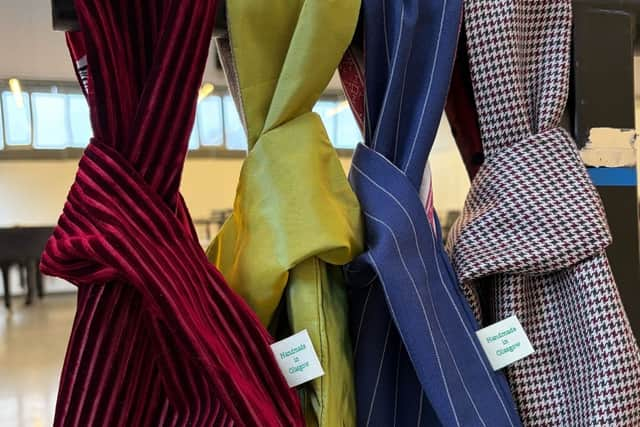
The new tote bags from Glasgow-based Govanhill Baths Community Trust project Rags to Riches are a good case in point. They were created after Scottish Ballet teamed up with the initiative and their textile artist, Gail Power, for a sustainable venture that would turn retired costume fabrics from productions including Hansel & Gretel, Cinderella or A Streetcar Named Desire, into limited-edition totes - now sold out - and their newest £40 knot bags. We asked Power to share more about the process.
Tell us about the collaboration
I work as a textiles facilitator for Govanhill Baths Community Trusts’ innovative reuse and upcycling project. My role involves planning and delivering sewing and upcycling workshops within our local community and outreach work with other communities across Glasgow. Our work is in direct response to the environmental impact caused by waste mismanagement and overproduction, so the materials we work with are things that were otherwise destined for the waste stream. Through making desirable products from someone else’s cast offs, I hope to inspire others to recognise the treasure in their tat and the creative potential in their own hands.
We were approached by Scottish Ballet with their idea to make use of some deadstock from the costume department. I assume they came to us as we are reasonably well known within the Southside creative community where Scottish Ballet are also based. Our tutor team is composed of skilled artists, designers and makers with their own professional practices alongside their roles for Govanhill Baths, so it seems to me like a logical fit.
How did you decide on the final bag design?
I was originally asked to design a simple tote bag, with a lining and interior pocket from two contrasting fabrics. The design is simple and works loosely with zero waste principles and careful cutting to utilise as much of the fabric as possible. Even with this design approach I was left with remnants too small for the tote bag design. The tote bags were so popular that we wanted to make something with these smaller pieces and a knot bag was suggested. I designed this with consideration of the sizes of pieces I had remaining to again maximise on usage, to avoid waste wherever possible. The original tote bags were matched by the productions they had been used in, i.e. both inner and outer fabrics from Nutcracker or Sleeping Beauty etc. With the knot bags the proportions remaining are now so varied that I’ve matched by colour palette or texture qualities and it’s interesting to see how unusual pairings have combined. The totes have a shoulder carry length strap and these adorable little knots are designed to hang from the wrist or be held in the hand.


What were your favourite fabrics that you received from Scottish Ballet?
It’s been wonderful to work with such a wide range of high quality fabrics, from beautifully woven wools to embroidered silk, each fabric type bringing its own unique qualities to the look of the finished bag. For example the silver silk is densely woven and has a rigid quality that once sewn together holds the structure of the bags very crisply. While one of the vivid, venomous, green silks is very fluid lending the finished bag a more casual, relaxed vibe. As you can probably tell I love them all, and I’ve definitely spent far too much time gazing at them and enjoying their colours and textures as they lie on the cutting table before I get busy with shears.
In my work as a textile workshop facilitator I am most often working with pre-used fabrics, domestic household linen, curtains and grannies’ attic de-stash fabrics. I see a lot of synthetic fabrics and blends such as polycotton, which are non recyclable or biodegradable and I’m seeing them in larger and larger amounts with the overwhelming growth of fast fashion. We also receive plenty of natural fibres such as cotton and wool, and upholstery fabrics with wonderful woven designs. Working with pre-used fabrics can often involve a lot of unseen work to prep the fabrics before you can start using them. They might need seams unpicked or cut into their separate parts, with a surface scan for areas to avoid due to fabric damage. Despite the extra work it’s worth it to give new life to these once loved fabrics. It's also a great way to demonstrate that textiles are not disposable and with care can carry on keeping you warm or carrying your groceries or helping you make a fabulous entrance in a garment you made yourself from your old curtains.
Which prints do you think will be bestsellers?
I think there is such a wide range of colours and designs that they will all be popular with someone. I think the vibrant ones will draw initial attention, but I think the more traditional tartans and pinstripes will be popular classics. I’m mentioning the silver silk again but that is such a versatile one in terms of colour and could be styled casual or formal.
Can the bags be identified from specific Scottish Ballet productions?
For those looking to connect with their favourite ballet shows the bags each have a label stating the production the fabric was originally used in. I stitch in the labels and once the completed bags are delivered to Scottish Ballet the labels are filled in with the relevant ballet production information. I really love this detail. The labels are exactly the same as the ones that are stitched into theatrical costumes, a nice wee reminder of the journey of the fabrics and the characters and ballets they relate to.
Are there plans to do anything else with the fabrics?
I’m currently working on another small batch of knot bags, which will use up the last larger pieces of fabrics designated for this project so far. There are some smaller pieces remaining and ideas are formulating. Watch this space.
Read more: “The loud, cheery and comfy fashion shop that's landing on Edinburgh cobbled street for Christmas”
Comments
Want to join the conversation? Please or to comment on this article.