
As we had a scorching summer this year, we’re more sanguine about autumn’s arrival.
That’s especially since the season of mellow fruitfulness is arriving alongside a new selling show, Harvest: Contemporary Craft Fair. Alongside a programme of talks and workshops, it will run from October 11-19 at Edinburgh’s City Arts Centre and will feature the work of 80 designers, who were selected by a panel including chief people officer of Liberty, William Le Clerc, and Craft Scotland director, Irene Kernan.
Designed by guest curator Stacey Hunter , the focus is on storytelling, sustainability and process. We asked five of the designers to tell us more.
AKIKO MATSUDA, EDINBURGH
Tell us about your discipline?
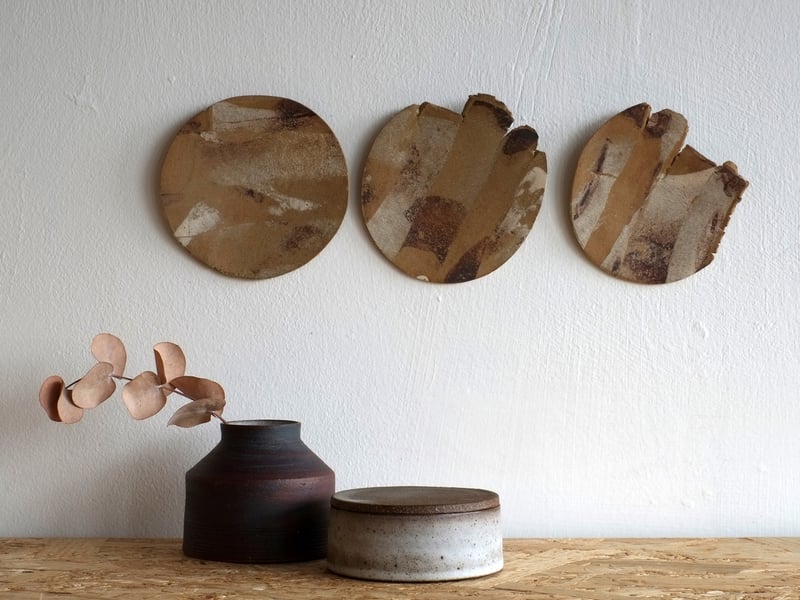
It’s ceramics. I create works that combine utility and beauty, often forming shapes on the wheel, then altering or carving them. I paint the surfaces with clay that’s sourced from regions that hold personal connections, adding unique textures and tones. This approach allows me to highlight the locality and to honour the process of making that is deeply rooted in the environment.
Where did you study, and what are your inspirations?
I studied ceramics at Tama Art University in Tokyo. Our department encouraged us to experiment extensively with glazes and production techniques, and the students’ works often reflected a very contemporary approach. My inspiration comes largely from sculpture, particularly where it finds beauty in collaboration with nature. Recently, I have been deeply inspired by Jupiter Artland, and I also find the UK gardening culture inspiring.
Which pieces will you be exhibiting at Harvest?
My latest ceramic works. The Circle Handle Mug Cup is part of a series called EN_Cup, which I have been developing by exploring designs and forms around the theme of the circle and connections, inspired by my participation in the Dundee Design Festival.
MONICA FINDLAY, GLASGOW
Tell us about your discipline?
I am an emerging silversmith and my work centres around reliquaries. I make boxes that respond to personal mementos, and ancient Scottish artefacts. By creating precious homes for cherished objects, I aim to encourage thoughtful connection to the material world. I source and create everything in Scotland where I can, from stones, to hallmarks, to fallen wood, as highlighting local industry is central to my practice.
Where did you study, and what are your inspirations?
I graduated from the Glasgow School of Art in 2021 with a collection of boxes exploring the material presence of the past, and since then I have undergone an apprenticeship with master silversmith, Rod Kelly, through The South House Silver Workshop Trust in Shetland. This hands-on time has really allowed me to develop the concepts I explored during my time at Glasgow, and I’m delighted to now be bringing larger silver pieces to life. I am inspired by a combination of things both personal and historical - my work explores my curiosity for untold stories from grandma’s knickknacks to ancient artefacts.
Which pieces will you be exhibiting at Harvest?
A collection of ‘everyday artefacts’ - jewellery and objects that ritualise every-day encounters. I really wanted to lean into the brief of harvest, and focus on the theme of ’setting the table’ - bringing along objects that encourage conversation and storytelling over a candlelit dinner with loved ones. My selection of work will include matchboxes, lighters and candle snuffs, as well as boxes, of course.
Why is it important to have a showcase like this?
We have so many talented makers and a large exhibition in the centre of the capital is a really exciting way to engage a wide audience.
CAROLINE DEAR, SKYE
Tell us about your discipline?
I work with native local plants, most of which were used in the past. I use traditional techniques, like rope making, coiling and looping, to celebrate these unsung and unnoticed plants. I studied architecture and have worked as a landscape architect which is why I am interested in structure, and how far something like a stem of grass can be manipulated.
What are your inspirations?
Gaelic culture, botany, archaeology and traditional hand craft skills. I like to make work which has underlying depth while also having relevance for us today. I am interested in our changing interactions with the natural world around us now.
Which pieces will you be exhibiting at Harvest?
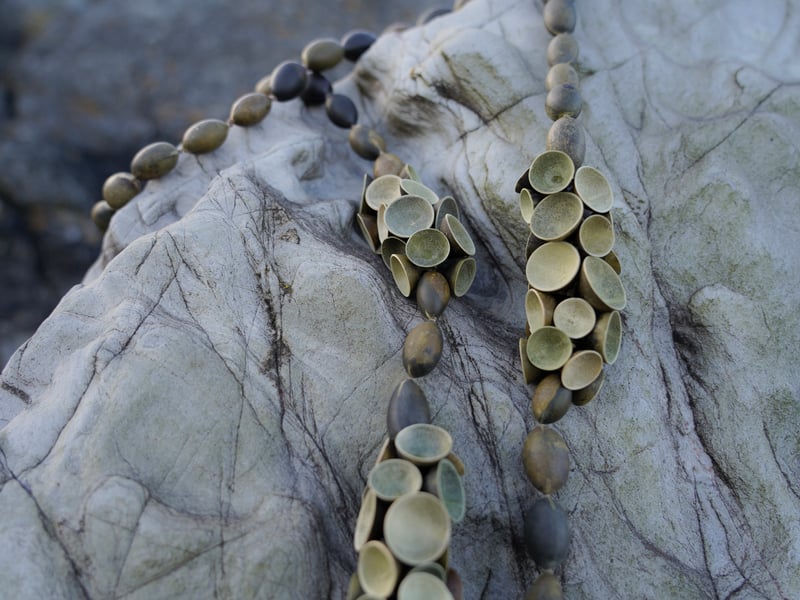
I am exhibiting We Reap What We Sow, which is a collection of small 'seed' baskets each made using different materials and techniques. They are not practical but reference the idea of a handful of seeds and what they represent.
Why is it important to have a showcase like this?
It brings makers together who may not be part of a more central belt focus.
ROBERT HUNTER, GLASGOW
Tell us about your discipline?
I’m a ceramic artist exploring the balance between form and function, developing glazes from materials I source myself. From large vessels to everyday tableware, I aim for my work to stay connected to time, place, and materials.
Where did you study, and what are your inspirations?
I studied ceramics at Gray’s School of Art in Aberdeen (2013–2017), where the granite and shoreline materials sparked my interest in working with what’s around me. Later, in Mallorca with Maria De Haan (2017 and 2022), I honed my skills, learning to throw larger, run a studio, and teach throwing in detail. My inspiration is rooted in place: the materials I gather and the stories they hold, which guide both my forms and my glaze research.
What pieces will you be exhibiting?
I will be exhibiting work developed during my recent residency at Starworks Ceramics in North Carolina. There, I focused on throwing and creating natural glazes from local wild clays, pine wood ash and rocks, resulting in surfaces that cannot be reproduced. Most of these pieces were wood-fired for 36 hours, making them entirely unique. Alongside this limited edition work, I will also show a selection of my tableware.
JULIA REBAUDO, SCOTTISH HIGHLANDS
Tell us about your discipline?
I weave rugs and wall hangings using unspun, raw fleece which I blade-shear by hand from my small flock of Shetland-Soay sheep. Once harvested, I carry the fleece a few metres to my weaving studio where I start working with it directly on my loom. I am passionate about showcasing the natural colour, texture and beauty of each fleece and will use as much of an entire fleece as I can in my work. I do wash as part of my process, but only after a finished piece has come off the loom.
Where did you study, and what are your inspirations?
I studied philosophy at Edinburgh University, trained as a journalist and have worked as a writer, photographer and blogger for many years. However, moving to the Highlands, I was inspired by the surplus of unused local fleece, an annual harvest, and began to experiment with a very direct method of working with this fibre, which in many instances remains undervalued in its raw form. The softness and the idea of working with the wonderful palette of natural colours from rare breed flocks drew me in. I then bought quite a large vintage floor loom. And shortly after, my own sheep. Fascinated with the natural beauty of raw wool, I wanted to create something beautiful and strong from woollen fleece in its most simple and natural state and show that it was possible to work with raw wool - unspun and minimally processed - and create something beautiful, lasting and functional for the home. I love working with the beautiful colours and different textures from my flock, creating both visual and tactile contrast and echoes within the pieces I weave.
Which pieces will you be exhibiting?
I will be showing a rug from my Celtic Wheel collection, entitled Mabon to celebrate the autumn equinox. It’s woven from two different darker toned fleeces from my Shetland-Soay crosses, India and Constellation. Along with the fleece grown from my own flock, I sometimes weave with fleece from similar, small flocks. A wall hanging that will also be on show at Harvest, Yin & Yang, is woven from the fleece of two pedigree Shetland sheep (ewes Susie and Eva) from a small flock up on the West Coast near Gairloch. I’ve used Eva’s interesting pale grey and Susie’s chocolate brown in contrast. I love that both fleeces contain a matching dark grey which I have woven to feed into each other, meeting in the middle at various points. I am also showing a small selection of coasters made from the fleeces of two of my own sheep, Bumblebee and Wyld.
Read more: “Look inside the charming Edinburgh dog exhibition that’s already selling out of paintings”
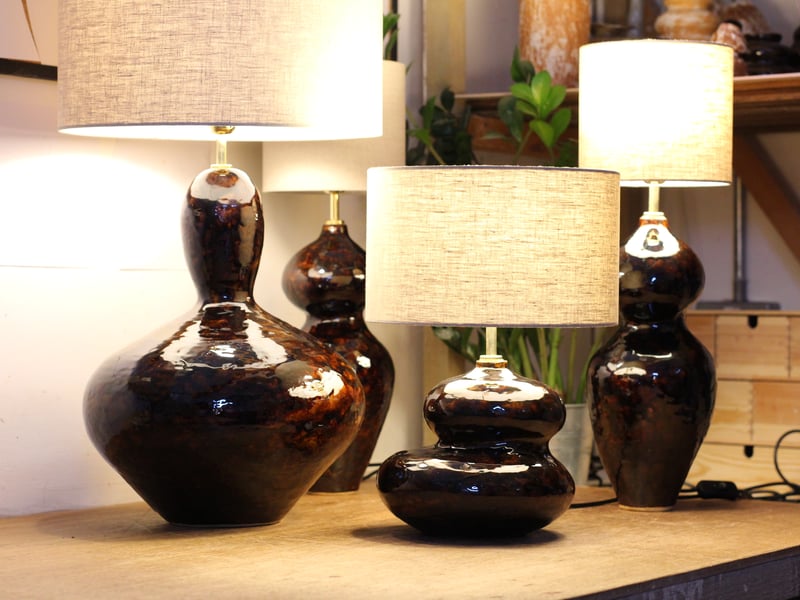
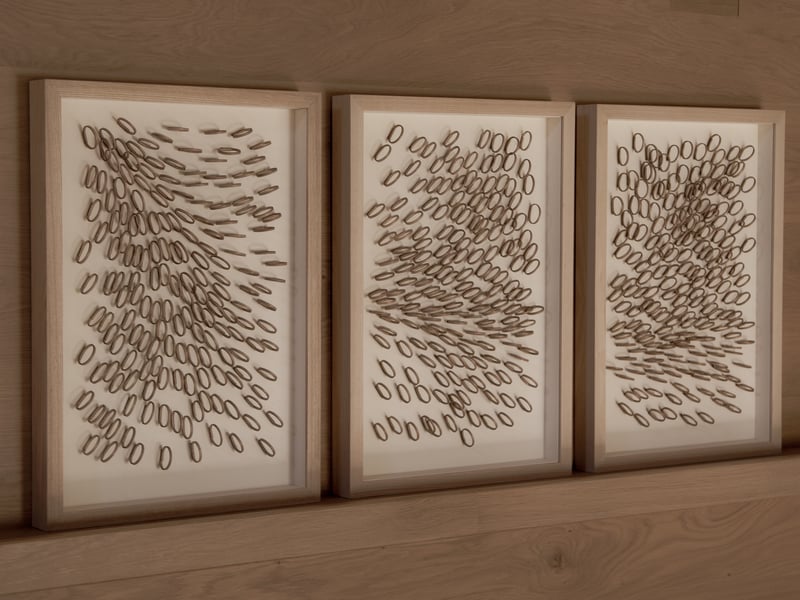
10. Naomi Mcintosh Inflorescence - Falling in Love with the Ground Triptych
Naomi Mcintosh Photo: Naomi Mcintosh