
Every year, the Scotland Collected auction at Lyon & Turnbull offers buyers the chance to own some of the country’s finest treasure.
This year is no exception. On August 20 and 21, with a public viewing at their 33 Broughton Place premises from August 17 to 20, they’ll be selling over 700 incredible lots. You could end up being the proud owner of, among many other things, an Edwardian sporran, a Victorian style antler settee, a Flying Scotsman train set, a bust of Robert Louis Stevenson, or a bottle of rare whisky.
We spoke to head of sales John Mackie, and a few of the other specialists, about the forthcoming sale.
Are the Scotland Collected auctions especially popular?
As Scotland’s oldest auctioneers, we are proud to hold our annual Scotland Collected auctions. This sale attracts buyers from all over the world, particularly those with Scottish lineage or those with an interest in our history and its craft.
Are your buyers usually from abroad, or from here in Scotland?
We have a mix of collectors, those who are based in the UK and those in countries like the USA, Canada and Australia with a strong Scottish connection. However, it is always surprising to see what wide and varied quarters the bidders come from.
What particularly interesting lots do you have in the sale?
Following on from the record-breaking Cairncross Collection auction in August 2025, we are excited to announce the largest private collection of Scottish freshwater pearl jewellery ever to come to market. Carefully collected over a number of years with the assistance of Cairncross of Perth, this collection was amassed by a private connoisseur who hopes their enthusiasm can now be passed on to a new generation of collectors. It is a remarkable opportunity to see, not only a comprehensive record of the renowned Perthshire jewellers designs celebrating the flora of Scotland, including designs rarely found at auction, such as the Timorous Beasties’ brooch and a horse-chestnut design; but also a vast array of of Scottish freshwater pearls, showcasing the wide range of colours, shapes and lustres this magical Scottish gem can take.
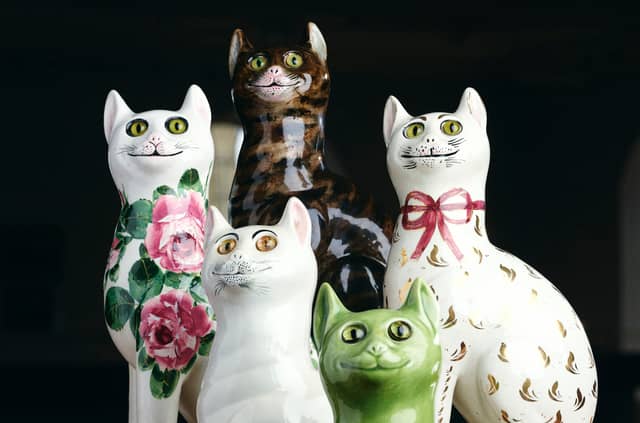
This year’s auction is particularly varied with a range of Wemyss Ware, provincial and Scottish silverware, hardstone jewellery, Jacobite works of art and collections formed by individuals and families over many years.
It also includes one of the largest collections of Scottish pistols to come to the open market in perhaps decades. These and other weapons link closely to the nation’s turbulent past but are made with such quality they are works of art in their own right. These connect in with our wider Jacobite section which is always a very popular area to collectors. The collection spans early 17th century examples, which are extremely rare, to the iconic silver and steel Doune pistols.
We are also delighted to present a collection from the former Earls of Airlie - a lineage stretching to Robert the Bruce and King James VI of Scotland and II of England. The Ogilvy family was established with lands in Angus as early as the 15th century, with Airlie Castle’s foundations laid in 1432. For successive centuries, they have always had a close relationship to the monarchy; raising armies during the Jacobite rebellions to more recently, Lord Ogilvy 13th (8th) Earl of Airlie (1926-2023), who, acting as Lord Chamberlain to Queen Elizabeth II, saw him oversee many significant Royal events.
Which items do you expect to do particularly well?
A wonderful lot in the sale is a dress worn by Lady Margaret Ogilvy, the Countess of Airlie, which reputedly was worn when she was a guest at Holyrood Palace in 1745, where Bonnie Prince Charlie was in attendance. Lady Ogilvy and her husband, David Ogilvy, 6th Earl of Airlie, were prominent Jacobites and supporters of Bonnie Prince Charlie in Scotland. Eighteenth-century Scottish clothing with provenance is rare, but to have a piece connected to such a remarkable original owner, and one who may even have danced with the Prince himself, sets the imagination alight.
Do the staff have any personal favourites?
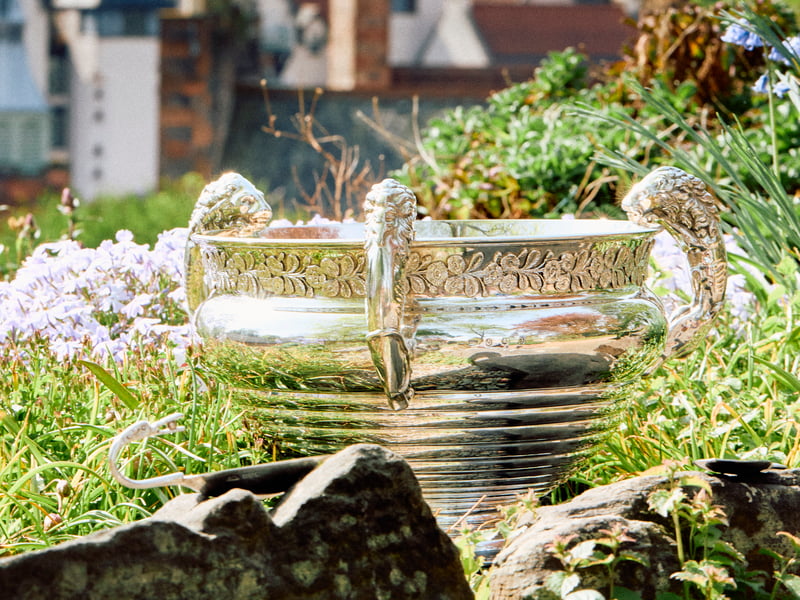
Kier Alexander, silver specialist: “We usually offer a fine selection of work by the Scottish silversmith Graham Stewart,and this year is no exception, featuring his iconic honeycomb candlesticks, a beautifully engraved bowl, and a remarkably large centrepiece.”
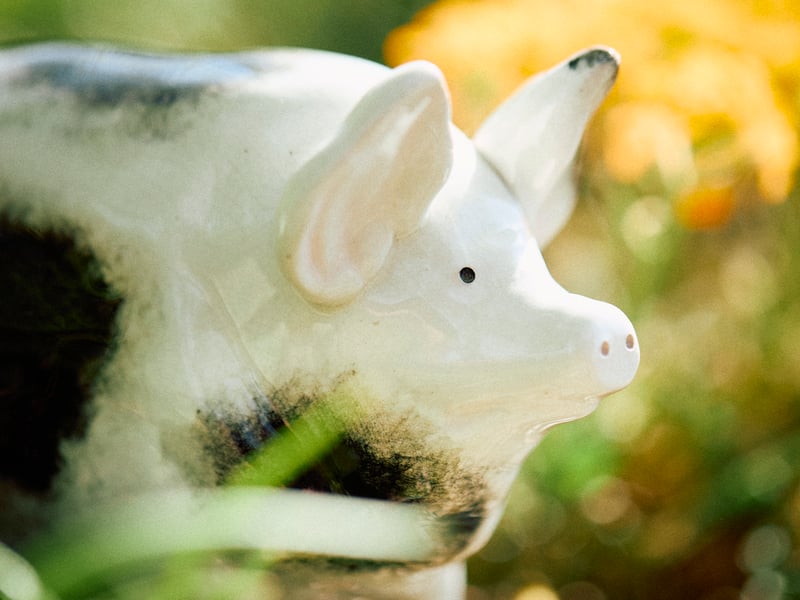
John Mackie, head of sales: “At this time of year with the countryside in full abundance just looking at a hedgerow with its dog roses, buttercups and other wildflowers reminds me of the myriad patterns that inspired the well-known and collectable Fife pottery Wemyss Ware. Personally, I am very fond of the small pigs that the factory produced from the late 19th century onwards – the early examples are well-modelled and their slightly bewildered expressions are very engaging!”
Colin Fraser, specialist: “It has to be the 18th century invalid feeder, made by Hugh Clark of Perth. Not only is he a particularly rare maker, but invalid cups are seldom seen. This appears to be the only known example from Perth. Although it looks just like a rather odd cream jug this would have been essential to making sure a patient received food and most likely medicine from their carer.”
Anything that’s particularly rare?
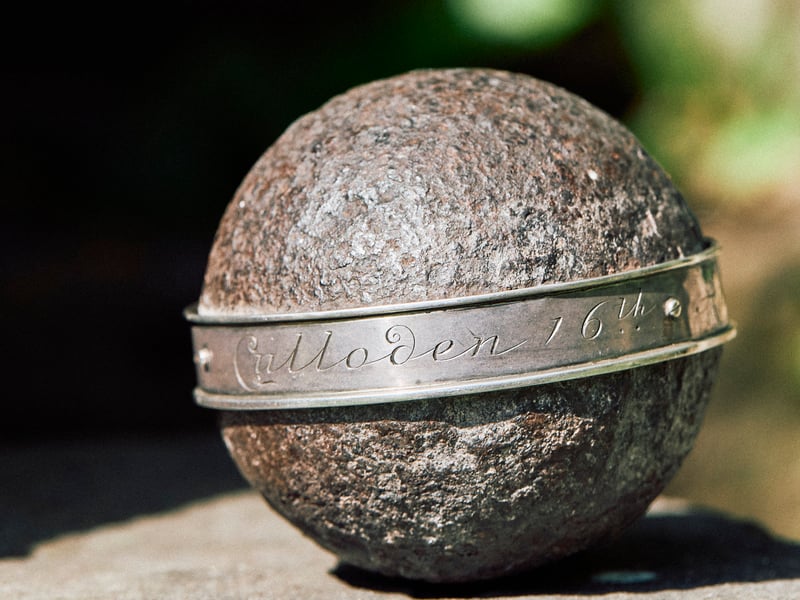
Colin Fraser: “Rare items include a cannonball recovered from the battlefield of Culloden which is a wonderful example of a Scottish relic with an incredible story and provenance back to a family closely connected with the cause. Having been in an exhibition previously this is the first time it has ever been offered for sale.”
Any items that are very collectable?
Wemyss Ware was developed in the late 19th century as a more sophisticated, decorated range to complement the standard transfer-printed and other wares produced at the Fife Pottery. In many ways Wemyss is perfect for collectors, with its myriad range of patterns and shapes, each hand-painted by a particular artist and, by and large, identified by a maker’s mark. It is an instantly recognisable aesthetic: the brightly coloured decoration on a stark white background, drawing inspiration from the Fife countryside.
For more information, see www.lyonandturnbull.com
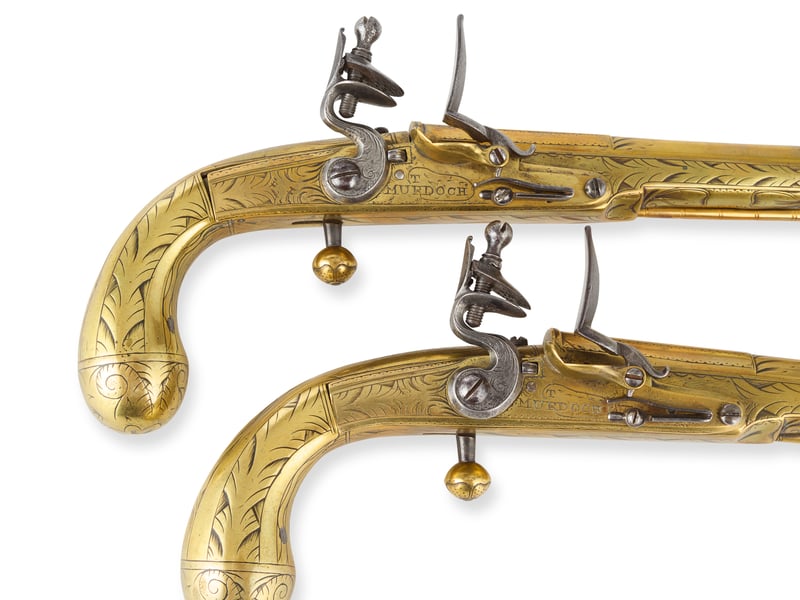
3. Scottish Seventeenth century pistols, £18,000 - £20,000
Lyon & Turnbull Photo: Lyon & Turnbull