
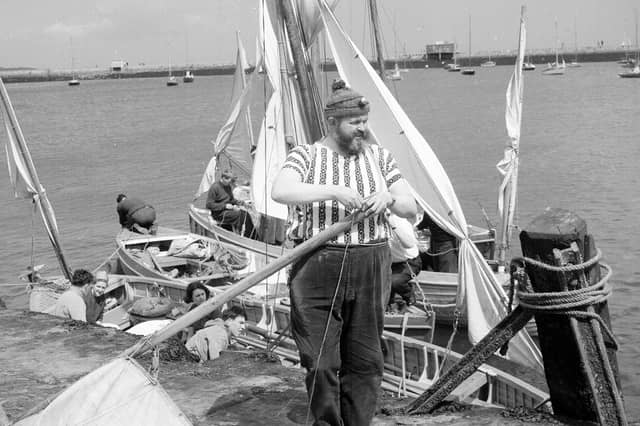

The first mention of Granton, thought to mean either Grant’s Town or Grant’s Hill, dates back to maps of the 17th century with mentions of Granton Castle, Granton Burn and Granton Beach.
The castle dated back to the 15th century, when it was owned by John Melville of Carnbee and his descendents, before being bought by Lord Advocate Sir Thomas Hope in 1619 who altered, renamed and extended the building.
It fell into disrepair in the 18th century, before being all-but destroyed by quarrying in the early 20th century, meaning only fragments remain today.
The area’s industrial glory days were heralded when it was decided in 1834 that Edinburgh needed a new harbour, with Granton being chosen as the location and work beginning in 1837.
The central pier was opened on the same day as the coronation of Queen Victoria in 1838 and the monarch would later land at the harbour during her first official visit to Edinburgh in 1842.
Granton Harbour became key port for the export of coal and the import of the raw materials to make paper, while a growing fishing industry meant that by World War II there were more than 80 trawlers based there.
It was also the location of the world’s first ‘ferry-train’, with a paddle steamer carrying locomotives over the estuary from 1850 until the Forth Bridge was completed in 1890.
During World War I Granton Harbour was used as a base for minesweeping ships, while from 1942-1946 is was home to HMS Lochinvar – a minesweeping training facility.
Read more:
Edinburgh Old Town Heritage in Pictures: Here are 28 fascinating photos of the city's historic centre in the 1950s and 1960s - from parades to pubs
Other industries that have thrived in the area over the years include Granton Quarry, which provided stone for parts of Holyrood Palace, and the Madelvic Motor Carriage Company, established in 1898, which held the title of Britain’s oldest surviving car factory before it was demolished just five years ago.
Granton Gasworks was also a familiar sight to Edinburgh residents and one of the three huge gasometers is now a listed building that can be seen from as far away as Fife.
From 1932, Granton was developed as a residential area by the council, with over 1,500 homes being created by City Architect Ebenezer MacRae – many of which remain in use today.
Much of West Granton was demolished in the 1990s and the area is now part of ambitious ongoing redevelopment plans that also includes nearby Leith.
The former gasworks site has been redeveloped as ‘the Forth Quarter’, with housing, offices, local services, a park, and a new campus for Edinburgh College.
Here are 31 pictures to take you back Granton in the 1950s and 1960s.
Make sure you don't miss a moment of breaking news from across Scotland by signing up to our free newsletter here.
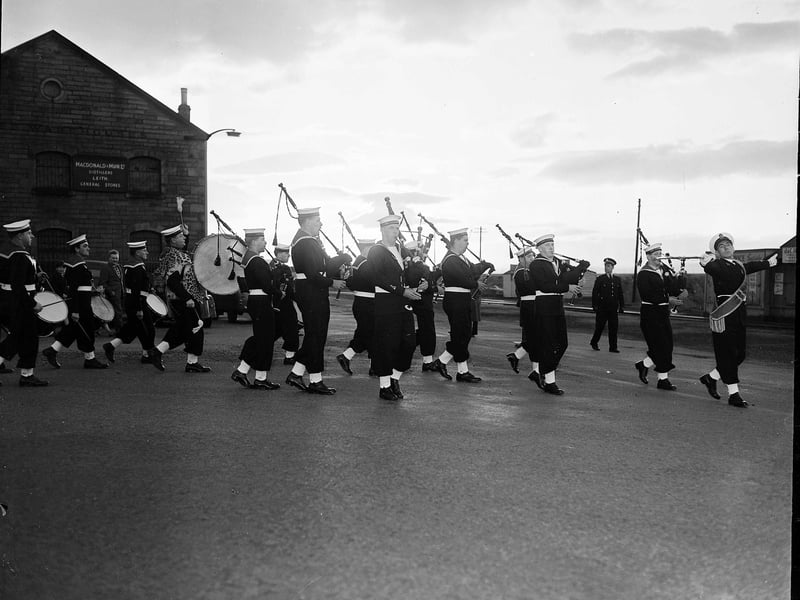
1. On the march
The HMS Claverhouse pipe band marches back to the training centre at Granton after an inspection in May 1962. | TSPL
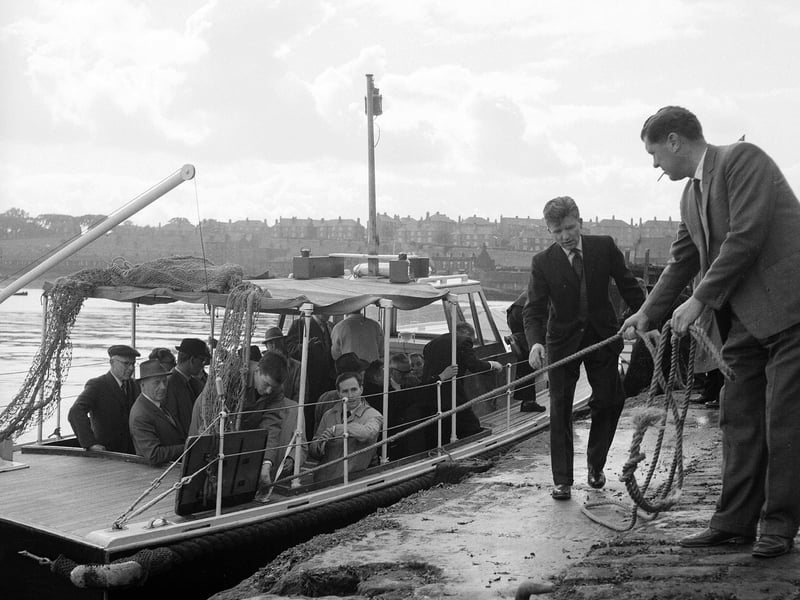
2. Testing
The Lothians River Purification Board annual inspection at Granton Harbour in September 1963. | TSPL
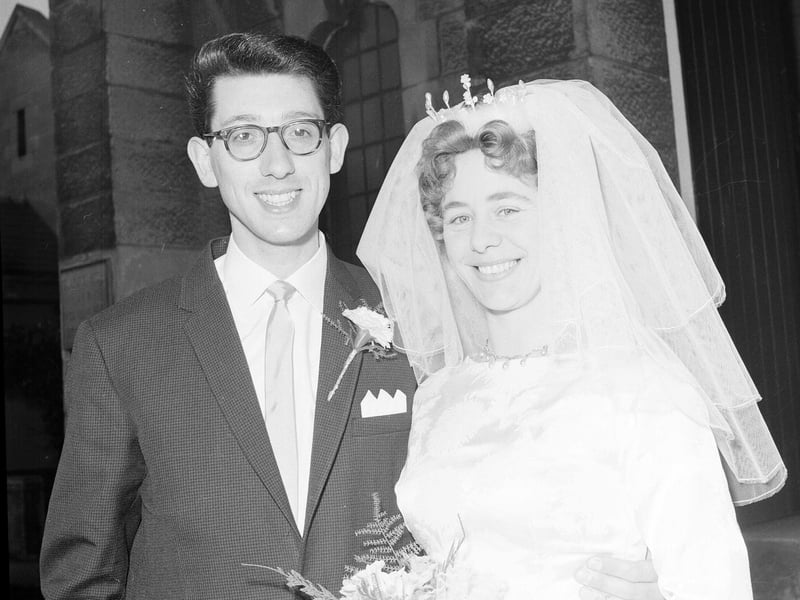
3. Spliced
The Gourlay - Dinse wedding in Granton Congregational Church in February 1963. | TSPL
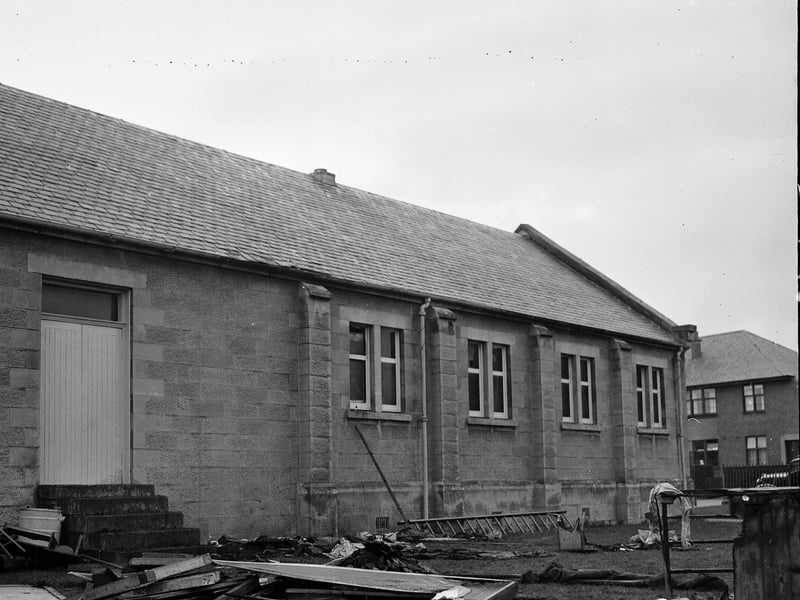
4. Fire damage
The aftermath of a fire at Granton Congregational Church Hall in December 1962. | TSPL