
'We're not interested in exploiting it' - the tiny Scottish island keeping tourism in check
The small island with no roads has seen a recent surge in visitor numbers because of Banjo and Ro’s Grand Island Hotel.


At the edge of Scotland’s west coast, a tiny island community is demonstrating what it means to remain in control of rising visitor numbers.
Ulva, a small island off Mull, has seen a recent surge in tourists following the BBC series Banjo and Ro’s Grand Island Hotel. With no roads, no cars and just 16 permanent residents, it quickly became clear that some changes were needed to ensure island life could continue at its own pace.
The solution was quite simple: stop the ferry for an extra day.
Historically, the service has not run on Saturdays for maintenance. Now, the vessel will also remain docked on Sundays, giving the community an extra day without visitors.

In many places, a sudden burst of television fame might be seized as a commercial opportunity. On Ulva, an island that stretches just 7.5 miles long by 2.5 wide, residents decided instead to manage the influx.
“We’re in control,” said Rhuri Munro, who has spent most of his life on Ulva and works as the island’s sole ferryman.
“If I wanted, and if others wanted to, we could open seven days a week and make it all about money — but it’s not all about money. It’s about a way of life.
“We’re not interested in exploiting it.”

Mr Munro said the decision was less a reaction to overwhelming crowds, but rather an attempt to preserve balance before conditions reached that point.
“There has been a noticeable upturn in visitor numbers because of the TV programme, but it’s always been a sought-after destination and we have really busy periods, especially with the good weather,” he said.
“It’s early days to see the long-term impact of this increase in visitor numbers. But you find places all over that have had TV programmes or similar that increase numbers and it doesn’t always last. This was just a simple decision to help us cope for now.”
Local resident Sam Yates, who runs the increasingly popular Boathouse restaurant, said the decision to stop the ferry for an extra day had been mutual.
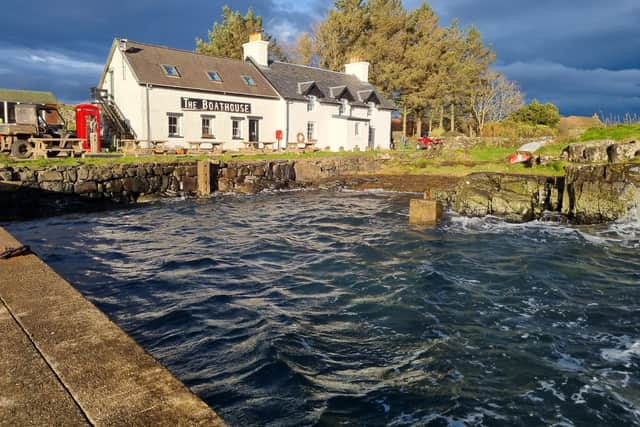

“The island hasn’t changed in any way,” he said. “This was just a simple way to make sure everyone gets a rest during busier periods.
“Rhuri, for example, is repairing the boat or doing maintenance on a Saturday so he can’t take his children out for the day, so having the Sunday allows him to have those moments.”
An extra day without the ferry, though, does not necessarily mean a day of rest. Like many islanders, Mr Yates wears several hats. Alongside running the restaurant, he helps manage livestock on the island and is working on a charcuterie business.
“The extra day gives us more time to get the cows in off the hill or shear sheep if we need to,” he said.
“It’s important to remember that the whole island is not a curiosity, it’s a real working place.”
With no fishermen landing catches on Saturdays, Sundays had also become particularly difficult at the Boathouse, which relies on local produce.

“Often we’d get fish just a minute before lunch begins on Sunday,” Mr Yates said. “Logistically, the decision for the ferry not to run was a good one for everyone.”
The islander said living in such a small community also required decisions that suited everyone.
“It would be unfair to push tourism on everyone for people who don’t work in tourism here,” he said.
“That’s not how a very small community works. We need to find what works for everyone.
“The success of the show has obviously been a massive boost to the island economy, which is a good thing.”
The decision reflects a wider tension across Scotland’s islands and rural communities, many of which depend economically on tourism while simultaneously struggling to absorb its pressures.
On Ulva, however, residents insist they are far from being overwhelmed and said they are aware of the limits.
Andrew Primrose, who runs Ulva Hostel with his wife, said visitor numbers are naturally restricted by the island’s geography and infrastructure.

“There’s one ferryman,” he said. “There’s not many of us here and we just have limited capacity anyway.”
That capacity is visible everywhere on the island. Visitors arrive on foot. There are no cars, only a handful of quad bikes and electric buggies used by residents. Beyond the eastern shoreline, much of Ulva remains empty and quiet.
“There are still parts of the island untrodden since the Clearances,” Mr Primrose said.
“People can still come here for that peace and quiet, which many visitors come here for.
“The hostel is busier, but still not massively busy. It’s busy round the Boathouse, which has always been the way. The rest of Ulva is still Ulva. It’s still a remote island.”
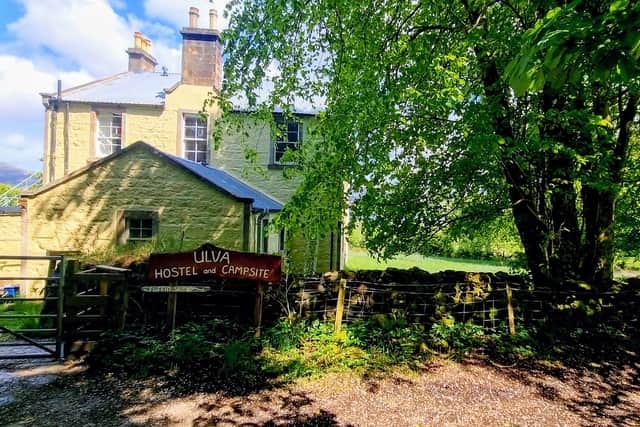
Mr Primrose has a daily hour-long commute across the island by quad bike from his home on Gometra, a neighbouring tidal island connected to Ulva at low tide.
He said the rise in visitor numbers had brought welcome stability to fragile businesses operating within what can, at times, be an unforgiving seasonal economy.
“The seasons are short,” he said. “We try to make enough during the high season to survive through the winter so we can get through to the next season. That’s just how life on islands like this works.
“This is a bumper year. Bumper years, a bit like bumper harvests, are welcome.”

With the ferry now not running for two days of the week, Mr Primrose said it means guests come for longer weekends, unless they book shorter trips during the week. The slower pace is increasingly being presented not as an inconvenience but as part of the appeal.
Ulva’s approach mirrors a growing movement within Scottish island tourism that encourages visitors to slow down and adapt to local ways of life rather than expecting communities to reshape themselves around tourism demand.
Scottish Community Tourism launched its “Become a Local” campaign last year, encouraging travellers to engage more thoughtfully with island communities.
It comes after visitor numbers have put pressure on islands including Skye, now the second most visited place in Scotland after Edinburgh.
Mass tourism has resulted in the island, home to about 13,000 residents, seeing an estimated one million visitors a year. Road congestion and slow commutes behind campervans have become part of island life rather than merely a peak-season frustration. The lucrative second-home and holiday-let market has also contributed to significant housing shortages and declining school rolls.
For Ulva, however, the long-running trend of depopulation is moving in reverse.
Since the community buyout was completed in June 2018, when ownership of the 5,000-acre estate transferred from private ownership to the North West Mull Community Woodland Company, the population has more than tripled from five residents — four of whom belonged to the same family — to around 16 today.
The challenge for Ulva since then has not been about resisting tourism, but absorbing it without losing the qualities that drew people there in the first place.
“More numbers has been great for businesses and people living somewhere where it can be really difficult to make a living” Mr Primrose said.
“It feels like an island that is breathing.”
Comments
Want to join the conversation? Please or to comment on this article.