
Something’s proving ‘clucking good’ as pubs giant Wetherspoon raises a glass to the Black Stuff
“Sales volumes, which were very slow post-pandemic, have recently overtaken pre-pandemic levels” – Sir Tim Martin
JD Wetherspoon’s founder and chairman Sir Tim Martin has hailed Guinness as a “standout performer” in recent months while sales of chicken products have “put in a clucking good performance” at the pubs giant.
His comments came as the group said overall sales increased by 5.1 per cent in the 12 weeks to July 20, compared with the same period last year.
The volume of sales recently overtook pre-pandemic levels, the company revealed, having previously flagged a slow recovery across its estate. Releasing a trading update ahead of its results in early October, the group - commonly referred to as Spoons - highlighted strong draught sales, particularly Guinness, as well as growth for wine and an improvement in spirits.


Guinness maker Diageo has consistently said demand for the famed Irish stout has been growing rapidly.
Furthermore, the warm weather in recent weeks has boosted visitors, with a raft of Wetherspoon pubs benefiting from beer gardens.
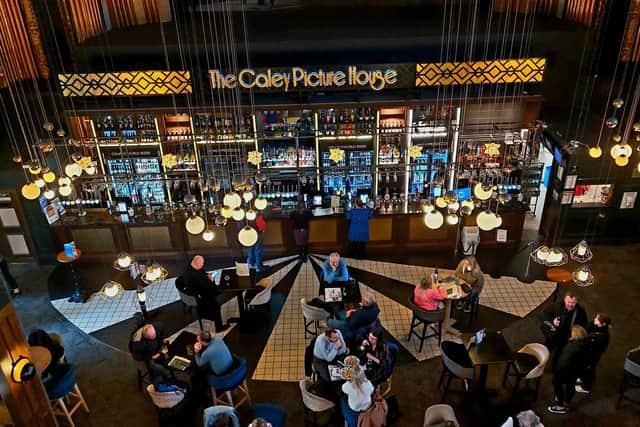
The group runs 794 pubs in the UK and Ireland, including the likes of the Caley Picture House in Edinburgh and Dunfermline’s Guildhall & Linen Exchange.
Martin - who founded the chain in the late 1970s with a single pub in Muswell Hill, London, naming the business after one of his teachers - said: “Sales volumes, which were very slow post-pandemic, have recently overtaken pre-pandemic levels. Wine, for example, has shown strong growth, with Villa Maria from New Zealand and Prosecco from Italy both shooting the lights out. Spirits have improved in recent months and whisky volumes are significantly above pre-pandemic levels.
“Draught volumes are performing strongly with Guinness being the standout performer. On the food front, breakfasts, terribly slow post-pandemic, have recovered their lustre and are now well ahead. Chicken, also, has put in a clucking good performance and volumes in recent weeks are up by about 50 per cent compared to pre-pandemic levels.”
He added: “The company has benefitted from favourable weather in the fourth quarter, so that profits are anticipated to be in line with market expectations, notwithstanding the high tax and labour increases for the hospitality industry, which have been widely reported.”
Wetherspoon has previously warned it is facing a £60 million hit from the higher business costs. Nonetheless, the group has said it plans to invest in its pubs over the year ahead, including staff rooms and gardens, and hopes to open another 30 sites.
Martin, who has been vocal on a range of matters including Brexit and Covid lockdowns, told investors: “In the next financial year, as well as investing in areas such as staff rooms, glass racks for ‘branded’ glasses, and gardens, the company plans to open approximately 15 new managed pubs and about the same number of franchised pubs.”
The generally upbeat news from Spoons came just a day after it emerged that BrewDog was to close ten of its bars, including its flagship venue in Aberdeen. The Scottish craft brewing giant said it has made efforts to preserve the sites, but it “has simply not been possible to make these bars commercially viable”.
Adam Vettese, market analyst for eToro, said JD Wetherspoon’s latest update had served up a “reassuring performance” as punters flock to its pubs during the recent favourable spell of weather.
“Still, it’s not all plain sailing,” he added. “The company continues to face a hangover from rising wage and tax costs, forecast to add around £60m a year to the bill, putting pressure on operating margins. Net debt is expected to edge up to £720m, as Wetherspoon invests in freeholds and refurbishments.
“While full-year profit guidance remains intact, it’s clear that cost inflation is nibbling away at the group’s bottom line.”
Third Bridge analyst Alex Doran noted: “Our experts say Wetherspoon is in a strong position as the UK pub sector steadies after a tough few years. The industry should see margin pressures ease slightly over time as operators improve labour efficiencies and embrace digital tools, but customers are still careful about spending.
“For Wetherspoon, its position as a value-led, wet-led operator with strong tech adoption continues to underpin its resilience.
“Wetherspoon’s app for ordering and paying at the table has become a clear advantage. Customers like seeing what they are spending, and this helps them feel they are getting value for money.
“While many operators cut hours to save costs, Wetherspoon has stuck to being open, building trust with customers who know they can rely on the brand any day of the week. This has helped the business gain market share,” he added.
Upbeat
Richard Hunter, head of markets at investment platform Interactive Investor, said that what was a relatively brief trading update had revealed “an upbeat tone”.
He added: “Wetherspoon has fought its corner for many years and has overcome some serious hurdles, but the outlook for the wider domestic economy and the higher levels of staff costs continue to weigh heavily. While the shares have been rewarded over recent months for the group’s valiant efforts, which still leave the price undemanding in terms of valuation, the market consensus of the shares as a hold reflects some investor unwillingness to take the plunge just yet.”
He noted that the group’s share price remained some 54 per cent shy of the £16.94 achieved in December 2019.
Wetherspoons has a longer term target of 1,000 pubs in the UK and Ireland.
Comments
Want to join the conversation? Please or to comment on this article.