
Scots are drinking less beer, breweries are closing, but Tennent's is thriving - here's why
“It is very difficult in this market to pass price increases on to cash-strapped customers” – Ralph Findlay, chairman and CEO
Tennent’s performance has been hailed as “outstanding” after Scotland’s best-selling beer gained further market share over the summer despite poor weather and tens of thousands of travelling Tartan Army supporters impacting sales.
New figures from the brand’s Irish owner C&C Group show that Tennent’s “markedly outperformed” total beer performance in the on-trade pub and hospitality sector, increasing its market share by a further five percentage points in the 12-week summer period to August 10.
Net revenues were broadly flat in the period with higher pricing offsetting an overall volume decline of 7 per cent, the group noted.
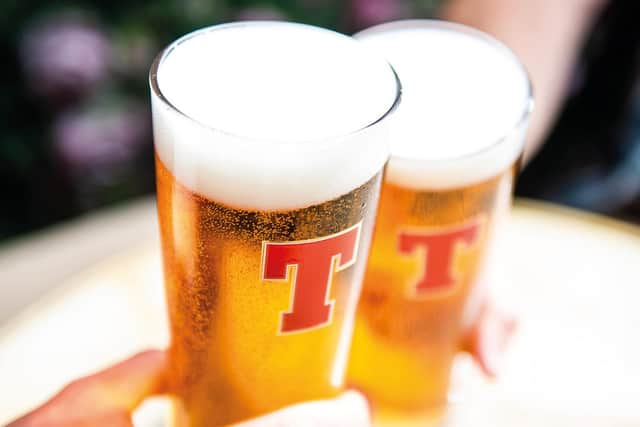

Brand investment over the summer centred on the Euro 2024 football tournament, leveraging the Glasgow-brewed lager brand’s sponsorship of the Scottish FA team.
C&C noted: “Despite positive share gains for the brand, overall beer consumption in Scotland declined over the latest 12-week period, with volumes in the on-trade down 9.3 per cent. Whilst the inclement weather undoubtedly impacted beer consumption, the 200,000 Scottish fans who travelled to Germany will also have had a temporary impact on the market.”
Speaking to The Scotsman, C&C Group’s chairman and chief executive, Ralph Findlay, admitted that the market had faced “a number of challenges” in recent months but insisted the business was in a strong position ahead of the crucial Christmas trading period.
“It certainly wasn’t the best of summers,” he said. “There has been a squeeze in terms of consumer confidence amid the cost of living pressures. Against that we had a pretty good performance.
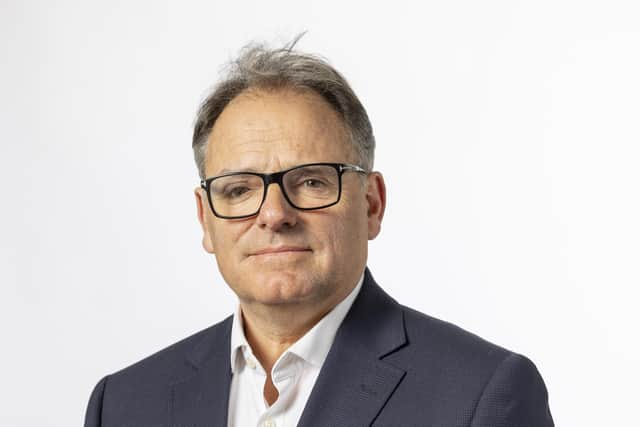
“In terms of Tennent’s, to increase your market share by 5 per cent in the on-trade is actually quite an outstanding performance. Up until the Euros we had been trading ahead of the prior year and then the tournament came and we saw quite a dip.”
Changes in UK alcohol duties have led to some lager brands, including Carlsberg and Grolsch, being reformulated to a lower 3.4 per cent ABV, but Findlay said that would not be happening with the core Tennent’s product, which has an ABV of 4 per cent and accounts for more than half of the lager segment in Scotland.
“Tennent’s is such a strong brand that to reformulate it or reduce the ABV would be a no,” he stressed. “We have lower ABV variants of Tennent’s available, so there are no plans and no need to change what is an astonishingly successful brand.”
Scotland recently saw an increase in minimum unit pricing (MUP), with the previous base price per unit of alcohol of 50p - set in 2018 - raised to 65p, in a move designed to reflect the impact of inflation. Medical experts and alcohol recovery groups have supported the increase but others have questioned the effectiveness of the policy.
Pubs, bars and restaurants already selling alcohol over the MUP threshold have been largely supportive of the hike as it closes the gap between off-trade and on-trade prices. Following the September 30 changes, a four-pack of 440ml cans of Tennent’s, at 4 per cent ABV, which could have been picked up for £3.52 previously in some supermarkets rose to a minimum of £4.58.
Findlay said: “I am fully supportive of endorsing the responsible consumption of alcohol. Health and wellbeing is a trend that has been with us for quite some time and that’s a good thing. How effective the tools available to try and influence that are is difficult to know. It’s certainly too early to know what impact the recent increase in MUP will have on consumption and buying patterns in Scotland.”
Speaking on the eve of the Budget, Findlay, who was previously the chief executive of brewery and pubs group Marston’s, warned that any measures that increase the cost of producing beer would be “unwelcome”.
He said: “If you look at the sector, whether that is brewing or pubs, it has endured a very difficult period with rising costs. You have seen that in Scotland in the last few weeks where there have been three small brewery closures.
“I think the same things are true of the pub sector. Across the UK and into Scotland there have been quite a significant number of closures. The industry is under pressure and I hope that whatever changes are brought in by this Budget will recognise the huge contribution that the sector makes to the economy. It is very difficult in this market to pass price increases on to cash-strapped customers.”
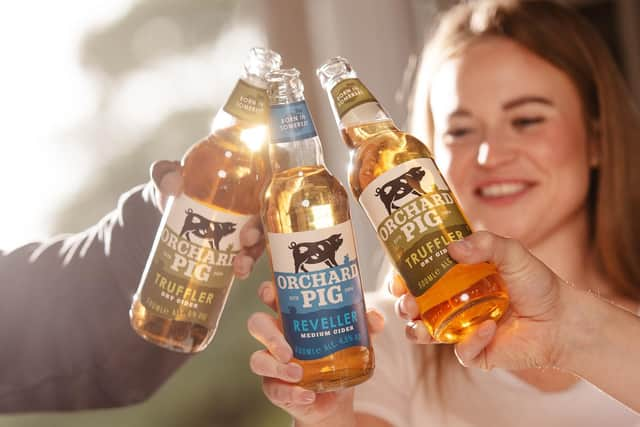
C&C Group’s interim results showed that the drinks maker and distributor, whose other brands include Magners, Menabrea and Orchard Pig, generated net revenues of €861.4 million (£716.6m) in the six months to August 31, down 3 per cent on a year earlier. However, underlying group operating profits before exceptional items grew to €40.3m, after an efficiency drive boosted operating margins.
Findlay told investors: “As we enter the busy Christmas and New Year trading period, we are committed to delivering outstanding service, winning customers, continuing to simplify the business and to further improve operating efficiency.”
Cathal Kenny, an analyst at Davy Research, noted: “Having released a detailed pre-close update on September 9, C&C’s interim result contains little by way of surprise. Nonetheless, it’s reassuring to note that despite challenging end-markets, the business is on track to achieve €80m operating profit for FY25.”
Greg Johnson at brokerage Shore Capital added: “We see the update as reassuring, with the current valuation failing to reflect the medium-term margin rebuild opportunity.”
Comments
Want to join the conversation? Please or to comment on this article.