
Labour's first Budget needs to be single-minded in pursuit of economic growth

Chancellor Rachel Reeves must avoid saddling the country with too much debt and imposing an overly high tax burden on business
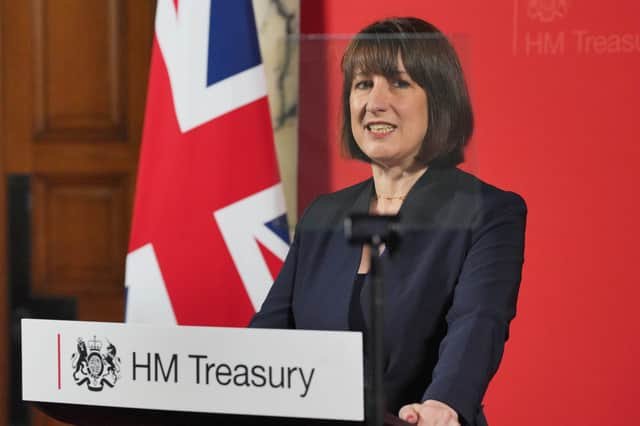
Most new governments deliver a Budget within weeks of coming to power. Perhaps allowances should be made, given the size of her task, but Chancellor Rachel Reeves has taken nearly four months.
There is much riding on what she decides to do. The previous Conservative government appeared to have largely run out of ideas; Labour now needs to show that it has a coherent plan that will, in the first instance, impress the markets and investors, and, secondly, lay genuinely strong foundations for sustained, long-term economic growth.
While the International Monetary Fund (IMF) recently increased its 2024 growth forecast for the UK from 0.7 per cent to 1.1 per cent, such a rate is hardly cause for wild celebration, for all that Reeves’ predecessor at the Treasury, Jeremy Hunt, tried to claim that it showed the “economic inheritance from the last Conservative government was strong”.
Tax rises, spending cuts and more debt
In order to balance the books, sources claim Reeves is planning tax increases and spending cuts that will make or save the Exchequer some £40 billion, which is a significant sum of money to remove from the economy. This, it is said, will mean that the government will not need to borrow to cover day-to-day spending.
However, she has also signalled she will rewrite the government’s self-imposed financial rules in a way that could allow her to borrow up to about £50 billion to invest in public infrastructure projects. In this, she is acting as some investors do, getting into debt in the hope, or the expectation, that the UK economy will provide a healthy return.

The main problem with this is that the UK’s public debts are already at a historically high level. The IMF’s chief economist, Pierre-Olivier Gourinchas, has warned that the UK and other wealthy countries need to have robust plans to stop such debt from increasing further and, indeed, to start to reduce it.
"There is a need to bring debt levels down, stabilise them when they are not stabilised and rebuild fiscal buffers," he said. "When countries have elevated debt levels, when interest rates are high, when growth is OK but not great, there is a risk that things could escalate or get out of control quickly.” The fact that other countries are in a similar position to the UK is not a source of comfort, but rather of concern and it makes ensuring the government’s finances are sound an even greater priority.
Engine of our economy
Gourinchas added that there was a "narrow path" between not hurting growth and not overborrowing. It is this path that Reeves must successfully lead the UK economy along.
We would add ‘not over-taxing’, particularly of businesses, to that equation because it is a simple fact that the UK’s private companies are the engine of our economy and only they can power the country towards better times. If businesses prosper, they employ more people, invest more and government receives increased revenues to better fund public services.
On Wednesday, Reeves will be judged on how well she lays out a coherent plan to set this virtuous cycle in motion. We wish her well.
Comments
Want to join the conversation? Please or to comment on this article.