
£2.9 billion to the good: How Scotland’s social enterprises are on the rise
“Over the past ten years, these reports have told the story of a sector that has grown in scale and confidence” – Chris Martin, Social Enterprise Scotland
The number of social enterprises in Scotland has jumped by almost a fifth in the last decade, with a third of them based in rural areas.
Those social ventures, which generate profits for good causes, contributed just under £2.9 billion of gross value added (GVA) - a measure of economic output - to the Scottish economy in 2024. The enterprises also support 90,050 full-time equivalent roles, which is a 10.7 per cent increase in headcount numbers from 2017.
The findings have emerged in the Social Enterprise in Scotland: Census 2024 study - outlining the lasting impact of Scotland’s social enterprises over a decade. The report for 2024 marks the fourth and final census under the Scottish Government’s ten-year social enterprise strategy.

Over the past decade, the census has provided a comprehensive record of the sector’s scale, contribution and evolution.
The new study found that there were 6,103 ventures classed as social enterprises in Scotland last year - a 17.4 per cent increase from 2015. There was £2.89bn of GVA contributed to the Scottish economy in 2024 - a rise of 41.7 per cent over a seven-year period, from 2017. About 33 per cent of social enterprises are now based in rural areas, up by 11 points increase from 2015.
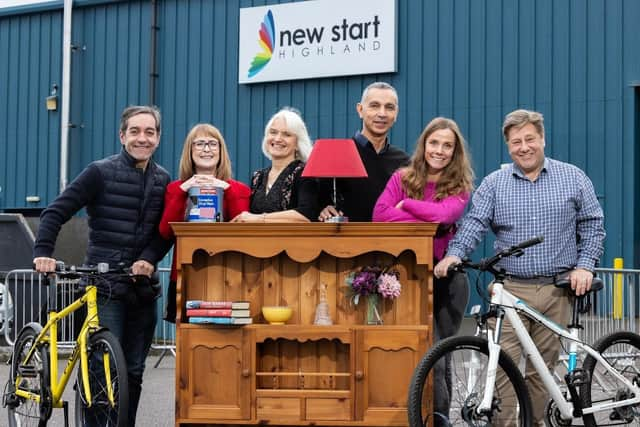
According to the report, the net worth of Scottish social enterprises is put at £8bn - a 107 per cent increase from 2015. Those enterprises operate across a wide range of sectors and include the likes of New Start Highland, an organisation which helps people live free from hardship and crisis, and provides services including housing support, employability training, furniture provision and mentoring.
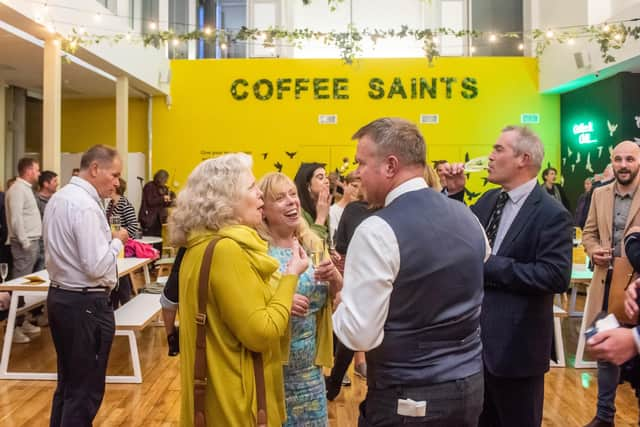
Coffee Saints, meanwhile, is an Edinburgh-based social enterprise running two popular cafes in the capital.
Chris Martin, chief executive of national body Social Enterprise Scotland, said: “The release of the Social Enterprise in Scotland: Census 2024 report is a milestone moment, not only as the latest snapshot of the sector’s contribution, but as the culmination of a decade of evidence and insight.
“Over the past ten years, these reports have told the story of a sector that has grown in scale and confidence, creating a model of business that prioritises people and planet. The 2024 census shows that, despite challenges, Scotland’s social enterprises remain at the heart of communities, driving innovation, providing secure employment, and delivering real social and environmental impact.”
He added: “If the past decade has proven anything, it’s that social enterprise is not just a resilient model, it’s a glimpse of the future of business.”
The study was co-ordinated by Diffley Partnership with support from a project steering group and funding from the Scottish Government.

The report offers insights into how social enterprises are navigating rising operational costs as well as the ongoing cost-of-living crisis. Some 70 per cent of survey respondents identified increasing costs as the primary obstacle to growth, while 76 per cent anticipate increased operating costs over the coming year. Meanwhile, 61 per cent of enterprises reported an increase in the number of people they support.
Since the first census was conducted in 2015, the sector is said to have shown consistent growth and adaptation in the face of “significant challenges”.
Economy secretary and Deputy First Minister Kate Forbes said: “These figures demonstrate the positive, growing impact that social enterprises have on Scotland’s communities and economy. As well as creating jobs and helping high streets to thrive, social enterprises benefit people by investing all their profits in social and environmental causes.
“To support the continued growth of social enterprises, we are progressing our Community Wealth Building Bill. This will encourage public bodies including the NHS and local councils to buy more products from their local businesses and promote social enterprises.”
Social Enterprise Scotland’s manifesto for next year’s Holyrood election has also been launched. The organisation said an increasing number of people were realising that “new, creative solutions for our big economic challenges are urgently needed” - with social enterprises aiming to play a key role.
In July, a social enterprise set up to support hundreds of independent artists, designers and producers hailed a successful first decade of operation, with more than half of its sellers now earning above the average income for the sector.
The Scottish Design Exchange (SDX) - established in 2015 as a profit-for-good venture to provide high street retail space for local artists, photographers, textile and jewellery designers - has enabled a substantial proportion of artists to reach income levels that compete with other industries, with one in five earning more than £40,000-a-year, according to a new survey.
This contrasts with a gloomier picture for the UK industry overall, where the median income for visual artists is just £12,500-a-year - almost half of the national minimum wage and 40 per cent less than equivalent earnings in 2010.
Support
Over the past decade, the community interest company has supported more than 300 creative microbusinesses, generating income and employment for artists, textile and jewellery designers, publishers, photographers and other craft producers.
Founded by social entrepreneur Lynzi Leroy, SDX provides traders with affordable, high-profile retail space in central Glasgow and Edinburgh as well as through its online store. Since 2022, a third SDX outlet has operated from the historic Tron Kirk on Edinburgh’s Royal Mile - a space that is now home to 21 artists who collectively employ 84 staff.
Leroy said the findings of the SDX report demonstrated the success and continued relevance of the business model, which puts artists first.
She added: “This isn’t just about sales - it’s about empowering creatives to build sustainable businesses, employ people, and contribute meaningfully to the economy.”
Comments
Want to join the conversation? Please or to comment on this article.