
Scottish Design Exchange ‘transforming artists’ fortunes’ as social enterprise marks tenth anniversary
“High streets across the UK have faced immense challenges, but SDX has demonstrated that, with the right model, independent artists can not only survive, but flourish.”
A social enterprise set up to support hundreds of independent artists, designers and producers has hailed a successful first decade of operation, with more than half of its sellers now earning above the average income for the sector.
The Scottish Design Exchange (SDX) - established in July 2015 as a profit-for-good venture to provide high street retail space for local artists, photographers, textile and jewellery designers - has enabled a substantial proportion of artists to reach income levels that compete with other industries, with one in five earning more than £40,000-a-year, according to a new survey.
This contrasts with a gloomier picture for the UK industry overall, where the median income for visual artists is just £12,500-a-year - almost half of the national minimum wage and 40 per cent less than equivalent earnings in 2010.
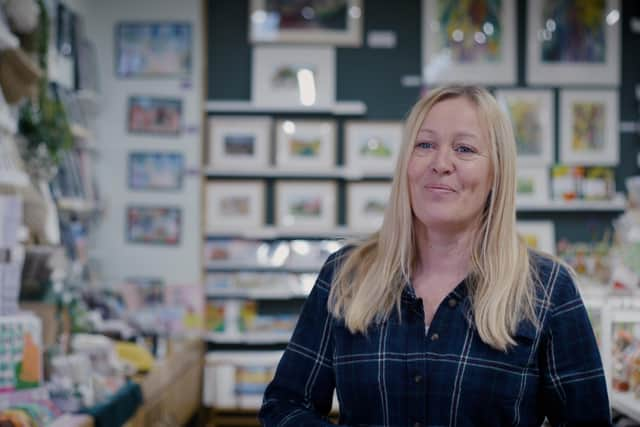

Over the past decade, the community interest company (CIC) has supported more than 300 creative microbusinesses, generating income and employment for artists, textile and jewellery designers, publishers, photographers and other craft producers.
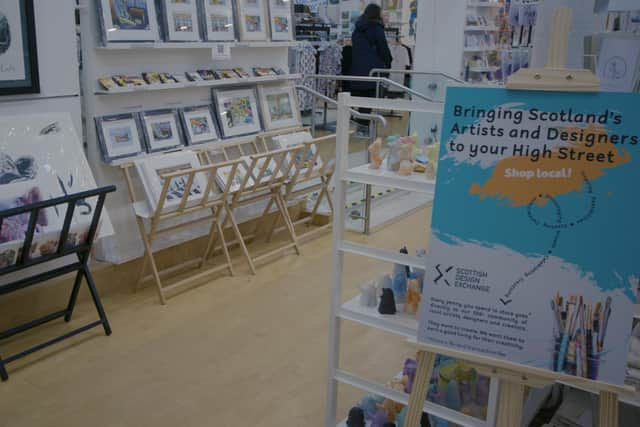
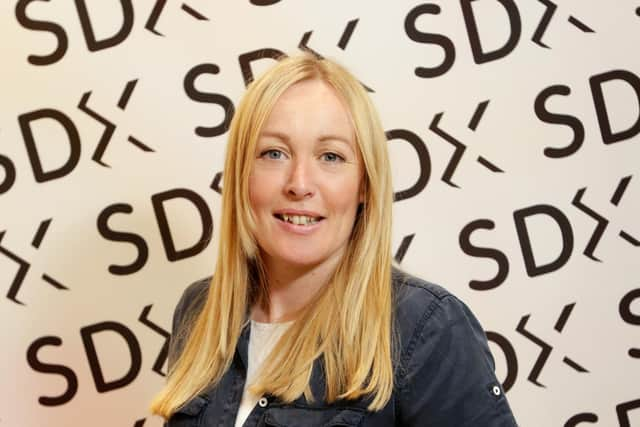
Founded by social entrepreneur Lynzi Leroy, SDX provides traders with affordable, high-profile retail space in central Glasgow and Edinburgh as well as through its online store. Since 2022, a third SDX outlet has operated from the historic Tron Kirk on Edinburgh’s Royal Mile - a space that is now home to 21 artists who collectively employ 84 staff.
Unlike most art galleries, SDX does not charge commission on items sold, with tenants paying a fixed fee to rent their selling space.
All of the businesses questioned in the survey - conducted to mark the venture’s ten years of trading - said the organisation had positively influenced their businesses, with many achieving dramatic income increases and expanding product lines, and some able to secure lucrative wholesale contracts, as well as take on staff.
Almost two thirds (65.2 per cent) said they had been selling through SDX outlets for more than five years and 7.2 per cent for a decade or so. Of those, more than 60 per cent said they earned in excess of £10,000 annually, with more than half exceeding the median income for artists, while around 28 per cent reported earning more than the £23,795 full-time national minimum wage. Around one in five (21.5 per cent) said they earned more than £40,000.
According to last year’s UK Visual Artists’ earnings and contracts report, the median annual income for visual artists across the UK was £12,500 - less than the £16,000 median income in 2010, and 47 per cent below the full-time minimum wage.
Leroy said the findings of the SDX report demonstrated the success and continued relevance of the business model, which puts artists first.
She said: "A decade on, it’s incredible to see that more than half of our sellers are now earning above the sector average. This isn’t just about sales - it’s about empowering creatives to build sustainable businesses, employ people, and contribute meaningfully to the economy.
“High streets across the UK have faced immense challenges, but SDX has demonstrated that, with the right model, independent artists can not only survive, but flourish. Our survey shows that our producers aren’t just supplementing their income - they’re creating careers. From securing wholesale deals to expanding their teams, these successes ripple out, strengthening local economies and proving that creativity is a viable, vital sector.”
The survey also revealed that a majority of artists (76.8 per cent) focus exclusively on the Scottish market, with only 4.3 per cent supplying European retailers. Some 87 per cent stock in multiple Scottish outlets.
Brexit and US trade tariffs have further limited international expansion, reinforcing the importance of local markets, noted Leroy, who was part of the Hunter Foundation’s Changemaker programme for charities and social enterprises.
She has plans to further expand the exchange, opening additional stores and tapping into new markets.
“Being part of Scotland’s Changemakers has been invaluable,” said Leroy, who represented the Scottish Business Network at Tartan Week in New York last year. “Working alongside ten other CEOs and founders from an amazing group of talented individuals, has really helped me with my vision and purpose, and I now have a clear focus on the next ten years for SDX.
“We are focused, not just on supporting artists, but helping them to grow successful businesses, with a determination to deepen the role of SDX as a champion for grassroots enterprise and economic fairness.”
She added: “The high street doesn’t have to die, but it does have to evolve, and SDX is showing exactly how that evolution can look - people-powered, community-driven, and built to last.”
Tartan Week
SDX has a physical presence on George Street and within the Tron Kirk in Edinburgh, as well as Glasgow’s Buchanan Galleries.
Leroy, a former project manager for Shell, who launched SDX as a single outlet in Leith in 2015, said there was a burgeoning market in the US for high quality goods made by independent Scottish producers, both within and out with the Scottish diaspora. She organised meetings with distributors during last year’s Tartan Week to explore potential opportunities for Scottish artists to showcase and sell their products in the US wholesale market.
“We’ve got a good thing going on, and the trip to New York presented a fantastic opportunity to delve deeper,” she added. “I was eager to explore the wholesale market for our artists, to see if there were avenues for them to tap into in the US and it was a great success, with many new potential avenues of trade opening up to us.”
Comments
Want to join the conversation? Please or to comment on this article.