
Footsie record: Why the FTSE 100 share index has hit 9,000 points for the first time


“That suggests the market is shaking off its unloved reputation and more investors like what’s on the menu” – Dan Coatsworth, AJ Bell
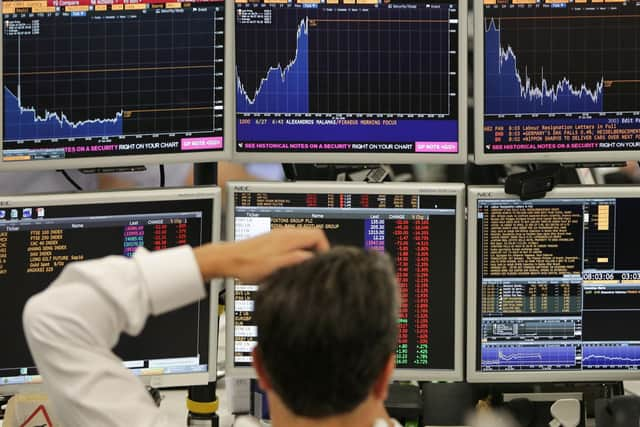
Britain’s benchmark FTSE 100 share index has claimed a new milestone after hitting the 9,000 mark.
The index of the UK’s largest listed companies pushed through 9,000 points before easing slightly in early trading on Tuesday. Analysts said its recent run of success had been driven by a number of factors and follows a volatile period for stock markets in general, amid global tensions, oil price movements and fast-changing US policy decisions regarding trade tariffs.
John Moore, wealth manager at RBC Brewin Dolphin, said: “The FTSE 100 has been driven to the 9,000-point milestone by several factors. Firstly, while the index’s composition had been a brake on its progress compared to other markets, now it is providing a tailwind, with strong earnings momentum in the banking and defence sectors, in particular, supported by the likes of some of the larger operators in other industries such as Next, Tesco and National Grid.
“Currency has also played a role, though its impact is likely to fluctuate over time. If UK earnings grow by, say, 7-8 per cent, but the pound moves 2-4 per cent relative to the dollar, then you can meet or exceed what you might reasonably expect from the US market with the added benefit of sectoral and stylistic diversification in your investments.
“At the same time, the UK still offers robust income and optionality. That may have been out of favour in recent years, but the cash flow can be helpful in terms of managing a portfolio and providing a form of income beyond cash yields and bonds. A number of UK companies have been taking self-help measures, with lots refining their portfolios and buying back shares.”
“Finally, the UK offers relative political stability compared to other parts of the world at present. While there may be tax increases to come, which was part of the reason for the sell-off of the pound in early June, the government has a clear mandate and tenure for the next few years. That compares favourably to other parts of Europe, even, where coalition governments are having a tough time,” he added.
Chris Beauchamp, chief market analyst at IG, noted: “The global nature of the market rally means that even the FTSE 100 has been able to lay claim to a new milestone, moving above 9,000 for the first time. Its percentage gain over the last three months actually pips that of the Dow [Jones], but it continues to lag far behind the likes of the Nasdaq 100, whose alluring growth stocks are firmly back in vogue.”
Dan Coatsworth, investment analyst at AJ Bell, said that while it took eight years for the FTSE 100 to go from 7,000 to 8,000, it had taken just two years to hit 9,000.
“That suggests the market is shaking off its unloved reputation and more investors like what’s on the menu,” he added. “Outperforming the main US indices since January is a major achievement for the UK and the FTSE 100 going through 9,000 builds on this success. It should help to convince overseas investors that the UK market isn’t dull and boring.”
After pushing above 9,000 in the opening hour or so of trading, by 10.30 on Tuesday the Footsie was at 8,996.
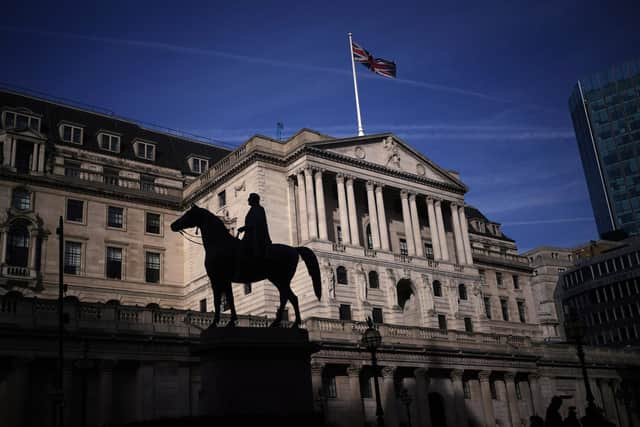
The milestone was struck as the Bank of England said it will implement rules that will make it easier for mid-sized banks to compete in the mortgage market and simplify restrictions for smaller finance firms.
The central bank said it will push ahead with the majority of new capital rules for British banks at the start of 2027 but will delay part of the proposals. The Bank said its Prudential Regulation Authority (PRA) has pushed back the start of a new internal model approach for considering risk in the market by a year to January 1, 2028.
It said the latest proposals will allow time “for greater clarity to emerge in other jurisdictions” amid uncertainty over how President Trump will implement the global Basel rules in the US.
The Basel 3 regime was drawn up in the aftermath of the financial crisis to increase the amount of equity available to absorb stress from banks in an effort to avoid future state bailouts.