
Edinburgh Book Festival round-up: Richard Coles | Jenni Fagan | Robert Macfarlane | Mahmoud Muna + more
Our latest weekend round-up from the Edinburgh Book Festival includes witty repartee from a famous priest, a radical plan to save the world’s rivers, and some starkly powerful testimonies from Gaza.
“Despair is a luxury. Hope is a discipline.”
If this year’s Edinburgh International Book Festival - which has “Repair” as its key theme - wants to take one of its near-700 authors’ quotes as its set text, this one by Robert Macfarlane would do quite nicely.
If you are going to repair things - clean up the rivers, for example - you have to work hard at hope. You have, Macfarlane said, to change the whole way we have thought about the world ever since Aristotle, who placed Man at the top of Creation, way above the Earth and all its rivers, which have shaped all our lives despite only accounting for 0.02 per cent of the planet’s water.
What you can’t do, he said, is despair - even when most of a country’s rivers are polluted and hard to access (like England’s) or when they are imprisoned by dams, like the Three Gorges Dam in China, which traps so much water behind it that it measurably slows down the rotation of the Earth.
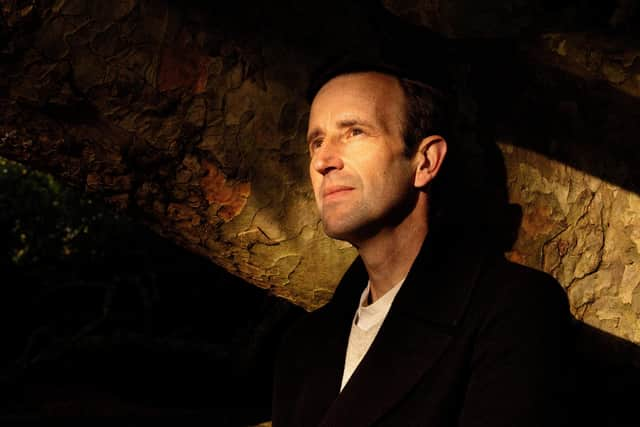

So when Macfarlane spoke at the the festival’s opening gala, it was no surprise that he chose to read a poem in which a dam is destroyed and a river freed, with salmon returning and a riparian forest rapidly restored.
Earlier, at his own event, Macfarlane had fleshed out the kind of activism necessary for hope. Give rivers legal rights, he says, and polluters can be driven away, the way they were in Ecuador when mining companies were compelled to leave within ten days by a 2021 decree. (Though this is now being challenged, just like federal environmental protection measures in the US).
This is all quite radical stuff and Macfarlane admits that his book Is A RIver Alive? is easily his most political, but he argues his case eloquently.
“We are all,” he says, quoting nature writer Barry Lopez, “searching for the boats we have forgotten to build.”
Repairing rivers might be a start.
Words can be repair tools too, said Jenni Fagan. At least they had been for her. Brought up in so-called care, by the time she was 12 she’d had 15 placements, two failed adoptions and four legal names and taken an overdose. Sleeping on the streets followed - but so too did self-education through the local public library.
She has told the story in her inspirational memoir Ootlin (published incidentally after she was awarded a PhD in 2000) and seen it told all over the world – even, she said, Palestine.
Ah, Palestine. Now there’s a place where despair surely isn’t a luxury. Where words can’t repair anything.
In Gaza, said Jerusalem bookseller Mahmoud Muna, - whose shop was raided by Israeli soldiers six months ago, “The UN people have said that when it comes to describing what they are seeing in Gaza, ‘Words are deserting us.’’’
He was speaking at the festival’s opening event, which could almost have been planned to answer the question of why, in a digital age, we still bother with anything so resolutely analogue as book festivals in the first place. It was titled The Case for Books and the casual reader could be forgiven for thinking it would turn out to be just another of those worthy, self-congratulatory events the book world occasionally seems to specialise in.
Not a bit of it. Yiyun Li (imagine a Chinese-American Chekhov and you’re half way there) set the ball rolling. “Don’t bother with adjectives,” she said. “They are useless and judgmental. Take ‘unimaginable’. People say that to me all the time: ‘What you’ve been through is unimaginable’.”
Ah but, what DO you say to someone who has, like her, lost her only two sons through suicide? Beyond saying that she can’t stand the way Americans talk about grief as a process (“Where are you in the process”?) I’m still none the wiser.
Katie Kitamura (the ultra-elegant New Yorker longlisted for this year’s Booker with her tricksy-sounding fifth novel Audition) agreed with LI that if writers resort to predictable adjectives, they’re just not doing their job. A job which, what with President Trump’s attacks on libraries and universities, has already got so much harder.
But Muna wasn’t so much concerned with this as with getting the message out from the deliberately, oppressively silenced Gazans in the first place.
In his book Daybreak in Gaza, which he is also due to talk about on Monday, he tells the story of man whom one of his correspondents met in a market, selling looks in a mirror for a shekel a time. One customer, his face and upper body badly injured, refused to pay when he saw himself. The mirror man understood.
Then there was the story of Gazan novelist, 27-year-old Noor Aldeen Hajjaj.
“I’m not a number and I do not consent to my death being passing news,” he writes. “Say, too, that I love life, happiness, freedom, children’s laughter, the sea, coffee, writing, [Lebanese singer] Fairouz, everything that is joyful... My greatest dream is that my country will have peace; that children will smile more brightly than the sun; that we will plant flowers in every place a bomb once fell; and, that we will trace out our freedom on every wall that has been destroyed. That war will finally leave us alone, so we can for once again live our lives.”
He died on 2 December 2023 when bombs fell on his apartment block in al-Shuja’iyya, southern Gaza. There was a long silence after Muna read that.
Inevitably, not every event matched these. What I had thought would be the highlight of the opening day – the event with Alan Hollinghurst and Tash Aw - turned out not to be. This wasn’t their fault. Both are superlative writers, both talk eloquently and for their readings both chose exquisite passages where their respective teenage protagonists – a half-Burmese public schoolboy boy in the suburbs of a Berkshire market town and a Malayan city boy on an annual trip to a farm –– are tentatively beginning to understand their attraction to other boys.
For all the chair’s attempts to drag the conversation to big-ticket issues of homophobia and politics, the real marvel lay in the delicacy and restraint in their writing about emotion. This was a missed opportunity to find out more.
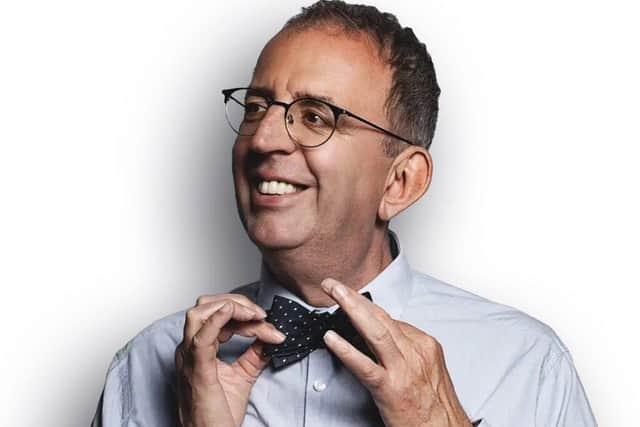
But let’s end on an upbeat note. I’ve always liked Richard Coles, but I now know far more about him, such as that he wants to be buried in a coffin shaped like a Bösendorfer Imperial piano; that he was mildly miffed when Alan Carr (whom he mimics perfectly) beat him to the Celebrity Traitors gig; and that Coleen Rooney texted him on Saturday to say her son had just got into Manchester United’s Under-19 team.
Oh, and that if he ever fancies a turn as a stand-up, the five-minutes he spent talking about his and Stravinsky’s love of stationery will do perfectly.
Ostensibly, he was meant to be talking about his novel, but when you have a guest this witty, this gossipy, this interesting (which other priest do you know who’s been a pop star) - and this well chaired (Dan Richards, standing in at short notice) - who cares? There’s a lot more to book festivals than books, after all.
Make sure you keep up to date with Arts and Culture news from across Scotland by signing up to our free newsletter here.
Comments
Want to join the conversation? Please or to comment on this article.