
Soma Records: The Glaswegian record label that helped put Daft Punk on the map

How a Glasgow dance label unearthed a demo tape and helped change the face of dance music forever
- Established in 1991, Soma Records set out to champion Detroit-style techno with a Scottish flair.
- But among their countless victories, it was one demo tape they took an interest in that changed EDM forever.
- Benjamin Jackson takes a look back at the label, and five essential tracks to check out that aren’t just Daft Punk.
If I were to tell you that Daft Punk got one of their big breaks thanks to Glasgow, would you believe me?
It sounds like an unlikely boast, but that is precisely one of the defining claims that Soma Records can make. The pioneering Scottish electronic music label celebrates over three decades in the industry this year, having launched in 1991. The label is now looking ahead to the rest of the 2020s and beyond, promising many more years of defining the sound of techno.
It’s once again a tale as old as time: a bunch of creatives getting together to champion some of the best of a genre and determining that if no one else would do it, why not do it themselves? Cue releases from some of the UK’s biggest names in techno, before their wide net brought in some of the best from the United States and around the world - and yes, that is a Daft Punk pun.
It's a testament to the founders' vision that they not only championed their own style but managed to build a deep, enduring roster of international talent that would help shape the trajectory of global electronic music.
This is Soma Records
Formation and Defining the Sound (1991–1993)


Soma Records began life back in 1991 as an idea conceived by Scottish DJ and producer duo, Slam (Stuart McMillan and Orde Meikle), along with their business partner Glenn Gibbons. They aimed to provide an outlet for the emerging, raw techno sounds they were championing at their successful club night, Slam, which was gaining traction at The Arches in the city.
Their mission was certainly not limited to local talent; as Orde Meikle explained, they wanted to think globally while acting locally. “We were always looking outwards,” he recalled in previous interviews. “(and) we were in Glasgow, which felt isolated, but we were obsessed with the Detroit scene.”
He continued: “Soma was about creating that bridge—bringing the music we loved from America to Europe, and bringing the music we were making to the world.”
The founders took their name from the book Brave New World, in which the drug, Soma, was used to make the characters feel good (a “quick fix”). McMillan thought the name was “funny” because, in their minds, music was the ultimate drug, especially on the dancefloor.
They had set out to provide ‘that’ Soma for people.
Come 1992, the label released their first track, ‘Eterna’ by Slam, and immediately established the label’s aesthetic: intelligent, deep, and driving techno rooted in the Detroit sound, but married with Scotland’s unique flair.
While it didn't smash into the mainstream Top 40 charts, its success was measured in its profound influence within the burgeoning club and DJ scene: ‘Eterna’ was instantly recognized as a high-quality, deep, and driving piece of techno, validating the label's aesthetic and proving that a Scottish label could produce music on par with the respected Detroit and European scenes.
It received heavy support from influential DJs across the UK and Europe, making it a staple in key club nights and helping Slam solidify their own reputation as producers. But, most importantly, the strong sales and positive reception of ‘Eterna’ provided Soma with the necessary capital and confidence to immediately move forward with their ambitious release schedule.
It allowed them to sign more acts and, crucially, to accept the demo tape that would change music history forever.
Early Success and Global Breakthrough (1994–1996)
Armed with the knowledge that there was an audience for their work, Soma moved quickly, signing international acts such as Scott Grooves in 1993 to solidify their commitment to quality over commercial appeal. This ambition soon paid off spectacularly: a pivotal moment for both the label and for dance music as a whole arrived within the pile of demos they found themselves trawling through.
In 1994, the label was sent an unsolicited demo tape from a teenage duo based in Paris, France, by the names of Thomas Bangalter and Guy-Manuel de Homem-Christo. It was McMillan who first listened to the cassette tape, which contained early versions of tracks — notably, ‘The New Wave’ and a more developed track entitled ‘Da Funk.’
"It came on a cassette tape and sounded terrible,” McMillan has previously revealed, “but the music was phenomenal. It was this funky, filtered, driving sound that was totally fresh. We actually flew over to Paris and met them to sign the deal. We knew they were young, but we didn’t realise just how young. They were still at school.”
The pair would release ‘The New Wave’ as their first single, under the name Daft Punk, but it would be a year later, upon the release of ‘Da Funk’, that things would change for the label and the Parisian duo.
‘Da Funk’ (Soma 25 for those Discogs fans following at home), released in 1995, was a monumental success for both Daft Punk and Soma Records, achieving a level of commercial and critical breakthrough far beyond a typical underground techno release.
It smashed into the UK Singles Chart Top 40, peaking at Number 7. This was an extraordinary feat for a purely instrumental, raw French techno track on a small, independent Scottish label.
The success was immediate across Europe, North America, and Australia, placing Daft Punk firmly on the global music map and demonstrating the commercial viability of their unique sound.
The track's success was the main driver that led Daft Punk to sign with Virgin Records shortly after. With the iconic Spike Jonze-directed music video commissioned by Virgin, the track's momentum was undeniable, propelling it further.
It became the centrepiece of their debut album, Homework—but it was Soma who unearthed the duo.
“Da Funk just went crazy, particularly in the UK,” McMillan has previously revealed. “Suddenly, we were this small Scottish label dealing with a global phenomenon. It was a beautiful, short chapter—we were happy to give them that initial platform.
Despite the major loss of Daft Punk to the majors, Soma used the financial momentum and immense critical attention to immediately solidify their core sound. They quickly expanded their roster with artists who would become central to the Scottish techno identity, including the signing of key local talent like Silicone Soul and Funk D'Void.
This strategic expansion ensured that Soma remained the definitive destination for intelligent, deep techno, proving the label’s vision was sustainable far beyond any single breakout act.
Maintaining Integrity and Evolution (1997–2010s)
Following the departure of Daft Punk, Soma Records proved its long-term vision was sustainable, entering an era defined by versatility and consistent quality rather than seeking another global smash hit. This period saw Soma successfully evolve alongside the electronic music landscape and solidify its reputation as an essential source of uncompromising music.
The label demonstrated its stylistic versatility in 2001 when Silicone Soul's massive house track ‘Right On’ became a global club hit. The success of this vocal track was vital, proving that Soma was not limited purely to techno and could successfully operate within the wider house music scene without sacrificing its high standards.
By 2003, Soma celebrated its 10-Year Anniversary with retrospective compilations that showcased its foundational role in modern electronic music. This commitment to its roots was paired with a constant eye on the future: the Mid-2000s saw the label sign and champion a new wave of Scottish talent, most notably Gary Beck, whose high-energy releases became synonymous with modern, driving techno.
As the industry shifted rapidly in the 2010s, Soma successfully navigated the challenging transition to digital distribution. The label maintained a steady output and high profile, largely fuelled by the sustained success of Slam's relentless DJ career and their commanding festival appearances, ensuring the Soma sound remained a fixture on dancefloors worldwide.
Recent History and Enduring Legacy (2020–Present)
Now well into its fourth decade, Soma Records stands today as one of the world's most enduring and respected independent labels, a remarkable feat in the often volatile electronic music industry. The label has maintained its artistic integrity while continuously celebrating its past and embracing the future.
The strength of the label is intrinsically linked to its founders, Slam. The duo celebrated 30 Years of Slam in 2021, a testament to their unwavering influence on the global techno landscape. This was quickly followed by the label's own monumental achievement: 30 Years of Soma in 2022, marking it as one of the longest-running and most influential independent techno imprints worldwide.
In the present day, Soma remains committed to a carefully curated output. It successfully balances releases from its established artists, such as Slam and Funk D'Void, with the freshest sounds from emerging talent like Frazier and Charles Fenckler.
This continuous output ensures the Soma aesthetic—intelligent, deep, and driving techno—remains a powerful and relevant force in the contemporary club scene, promising many more years of defining the sound of the genre.
Top Five Essential Soma Records Tracks
Soma's legacy is best experienced through the music itself. These five tracks represent the full spectrum of the label’s history and sound—from the founding techno blueprint to its global house smash hits.
Slam – ‘Eterna’ (1992)
The track that launched the label. ‘Eterna’ is a masterpiece of early UK techno: deep, melodic, and driving. It instantly set the high standard for quality that Soma would follow for the next three decades and is essential listening for understanding the label's foundational aesthetic.
Daft Punk – ‘Da Funk’ (1995)
The track that changed everything. While known globally from their debut album, this was the record that broke Daft Punk worldwide and proved Soma’s impeccable ear for talent. It remains a legendary piece of filtered, funky house-techno and a monumental chapter in music history.
Silicone Soul – ‘Right On’ (2001)
A phenomenal house anthem that broadened Soma’s appeal beyond pure techno. With its unforgettable vocal line and infectious groove, ‘Right On’ became a massive global club hit, demonstrating the label's versatility and showing that Soma could deliver deep, emotional music without compromising its underground roots.
Funk D'Void – ‘Diabla’ (2001)
This track is the epitome of the sophisticated, atmospheric techno that Soma championed in the early 2000s. It’s an immersive, driving classic that maintains a hypnotic energy, perfectly encapsulating the functional and enduring side of the Scottish techno sound.
Gary Beck – ‘Say What’ (2010)
Representing the new generation of Scottish talent signed in the 2000s, ‘Say What’ is a relentless, modern banger. It defines peak-time, contemporary driving techno and highlights the label's successful transition into the digital age, proving Soma remains entirely relevant on today's biggest dancefloors.
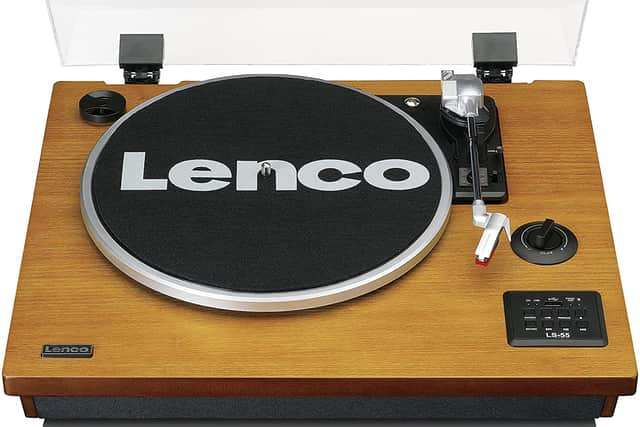
Know someone with a collection of vinyl they love, or hoping to build one up?
The record player works as a stand-alone record player with integrated stereo speakers, so they can enjoy favourite tracks in high quality sound.
Alternatively, he can use the USB port to connect the player to his PC and use it as a USB record player, recording and converting their favourite vinyl to WAV or MP3 format for his modern MP3 player.
If he want to connect it to his home stereo too then that’s no problem, with stereo phono outputs on the rear can simply and quickly be connected.
Featuring two-speed settings of 33 1/3 and 45 RPM.
Comments
Want to join the conversation? Please or to comment on this article.