
'Musical comfort food': How Viennese New Year concerts took over the world
The SCO’s New Year concerts are a tribute to the Vienna original and remind us why this music echoes around the globe, writes Anthony Mudge
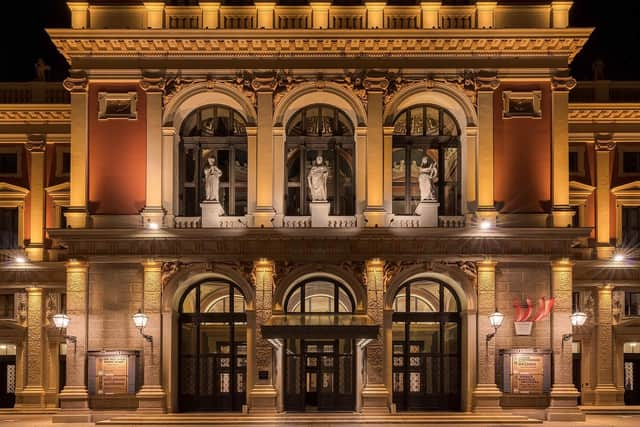
Every New Year’s Day, the sound of the waltz can be heard in concert halls across the world. Spearheaded by the Vienna Philharmonic Orchestra in performances at the Musikverein in the Austrian capital, these are invariably centred around the music of the Strauss family, natives of that same city.


The New Year’s Day Concert has become such a staple of the musical calendar that it may come as a surprise to learn it’s a relatively recent phenomenon, going no further back than 1939. The waltz – which is, after all, at the heart of this event – only dates from the beginning of the previous century, so how did it take so long for the concert itself to take shape?
The waltz evolved from a variety of country dances popular across what is now southern Germany and Austria in the late 18th century, though the most closely-related appears to have been the Ländler. Whatever its true origins, there is no disputing that it gained wider recognition in 1815, when it provided entertainment for European dignitaries busy hammering out a peace deal at the Congress of Vienna.
Not everyone back home shared their enthusiasm: in Britain, for instance, the Times was appalled by this “indecent foreign dance”, noting a “voluptuous intertwining of the limbs” (previously associated only with “prostitutes and adulteresses”) when the dance made its debut at the court of the Prince Regent in 1816.
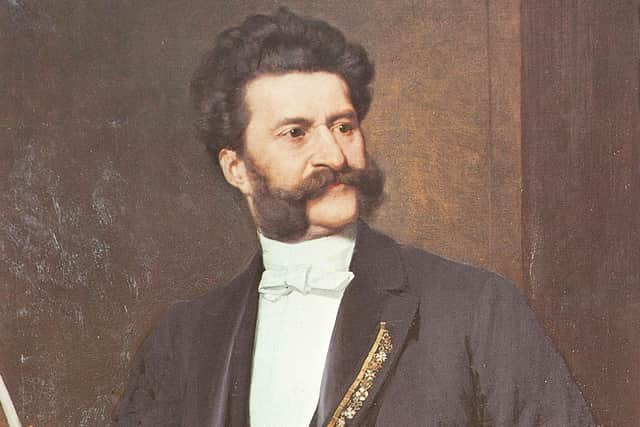
There were no such concerns back in Vienna, where the rivalry between two emerging dance band leaders, Johann Strauss and Josef Lanner, served as a distraction from political unrest. If the relationship between the two men was sometimes fraught it would be nothing compared to that between Strauss and his eldest son (also named Johann), which hit a new low when the latter set up his own competing orchestra in 1844. The two never truly saw eye to eye, and if Johann the Younger’s fame has long since eclipsed his father’s, it is to the elder Strauss that we owe the introduction of the quadrille to the pantheon of Viennese dances, after he heard it on a trip to France. (Another popular dance, the polka, had its origins closer to hand in what is now the Czech Republic, even if its name suggests a connection to Poland.)
On the death of Johann Strauss the Elder, his son merged their two orchestras into one and embarked on more extensive International tours, going as far afield as the United States.
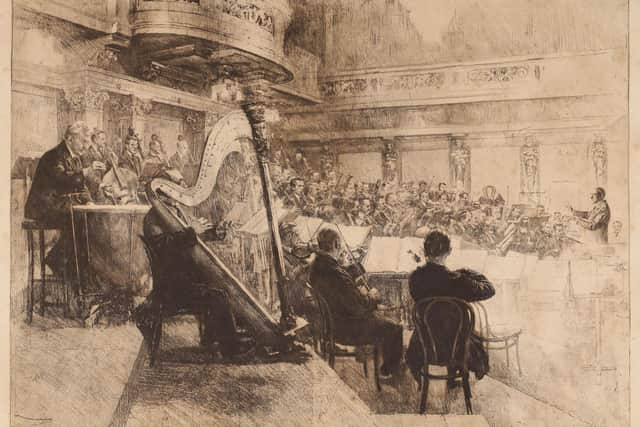
Countless other composers were jumping on the bandwagon by this point. Chopin had been writing waltzes since the 1820s and Tchaikovsky featured them in his last two symphonies, but it was on stage that it really took off.
The waltz became so popular in opera and ballet that the likes of Gounod’s Faust (set in the 16th century) could cheerfully disregard concerns about historical accuracy. As the 19th century gave way to the 20th, signs of diversification started to creep in: Shostakovich and Britten favoured ironic takes on the waltz, while Sibelius explored its melancholic potential. That said, Ravel’s La valse may be held up as its true apotheosis: as if to counter the claim (strenuously denied by the composer), that it depicted the downfall of European civilisation after World War One, some have suggested it describes the lifecycle of the dance itself, culminating in its collapse.
Needless to say, the waltz has proved to be more resilient than this: since the fall of the Austrian Empire, its status there is now akin to musical comfort food. Even the Nazis recognised its importance to the national identity, with a precursor to the New Year’s Day concert (made up entirely of music by Johann Strauss the younger) taking place in Vienna on Hogmanay 1939.
This is all the more remarkable for the fact that Joseph Goebbels, the regime’s minister of propaganda, chose to ignore claims that the Strauss family had Jewish roots, claiming in his diary that it was unproven. Although the Nazis had banned performances of Mendelssohn on the same grounds, it was perhaps easier for them to turn a blind eye to the Strauss heritage than attempt to deny the Austrians such a vital part of their cultural identity.
The cycle of true New Year’s Day concerts by the Vienna Philharmonic started in 1941, and their political origins were forgotten as they grew in popularity after the end of the Second World War. Willi Boskovsky’s 25-year tenure as their conductor made the concert a true institution: it was under his stewardship that the Blue Danube and Radetzky March took their place as standard encores. Since 1987, there has been a different conductor every year, most of whom have returned at least once. A select few have to all intents and purposes become regulars: Riccardo Muti’s performance at the beginning of this year was his seventh since his 1993 debut. Any institution does require an occasional injection of new blood, however, and the 2026 concert is to be Yannick Nézet-Séguin’s first.
International broadcasts (live or deferred) have also helped increase the concert’s global profile. Many orchestras outside Austria now put on their own Viennese-inspired concerts in early January, if not on New Year’s Day itself. As cultural exports go, it’s proven as durable as Mozart chocolates and The Sound of Music.
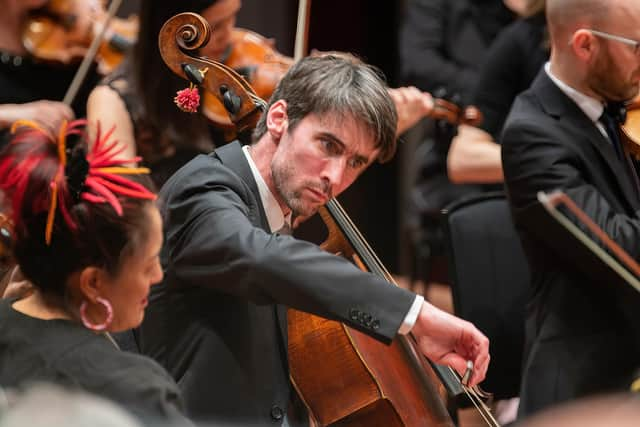
The Scottish Chamber Orchestra is among the many international orchestras to have embraced this tradition, bringing the spirit of Vienna to audiences across Scotland each New Year. A highlight of the festive season, the orchestra’s Viennese concerts offer a sparkling selection of waltzes, polkas and marches that capture the elegance and exuberance of the original. With leading conductors and soloists at the helm, the SCO conjures up the magic of the Musikverein’s Golden Hall, inviting listeners to bask in the timeless melodies of the Strauss family and their contemporaries.
A Viennese-style New Year’s Day concert is more than a musical celebration: it is a cherished social occasion, drawing audiences together to welcome the New Year with joy and optimism. The SCO’s commitment to authenticity and flair ensures that each performance is both true to tradition and uniquely Scottish, blending Viennese glamour with local warmth.
The SCO’s 2026 Viennese New Year concerts are at the Usher Hall, Edinburgh, 1 January; Aberdeen Music Hall, 3 January; Perth Concert Hall, 4 January; and Ayr Town Hall, 5 January. Anthony Mudge is marketing and customer communications officer at the SCO.
As part of our ongoing media partnership with the Scottish Chamber Orchestra, we’re offering 20 per cent off tickets to concerts in the SCO’s 2025/26 season. All you need to do is quote the code TSMSCO20 when booking – for venue contact details visit www.sco.org.uk. Offer subject to availability.
The Scotsman’s arts newsletter is now sent twice a week - subscribe today
Want the latest Scottish headlines sent directly to your phone? Sign up to our new WhatsApp channel here.
Comments
Want to join the conversation? Please or to comment on this article.