
Why Colin Gillies showed golf isn't all about playing at the top level

Golf correspondent Martin Dempster pays tribute to record Tartan Tour money-winner
It takes either a special player or a special person to get Scots around the world to unite in grief and, in the case of Colin Gillies, who passed away this week at the age of 58, that has happened because, to his credit, he ticked both those boxes.
When I first started to cover the Tartan Tour, the circuit run by the PGA in Scotland, in the mid-1980s, the likes of Russell Weir, John Chillas, Craig Maltman, Iain Collins, Kevin Stables and Alastair Webster were some of the leading lights.
It soon became apparent, though, that two young Scottish professionals were going to be challenging the old guard, so to speak, before too long and that did, indeed, prove to be the case.
One was Colin Brooks, who, as a member of Glencorse on the outskirts of Edinburgh, preceded a certain Colin Montgomerie as the Scottish Amateur champion as he beat Ayr Belleisle’s Allan Thomson in the final at Monifieth in 1986.
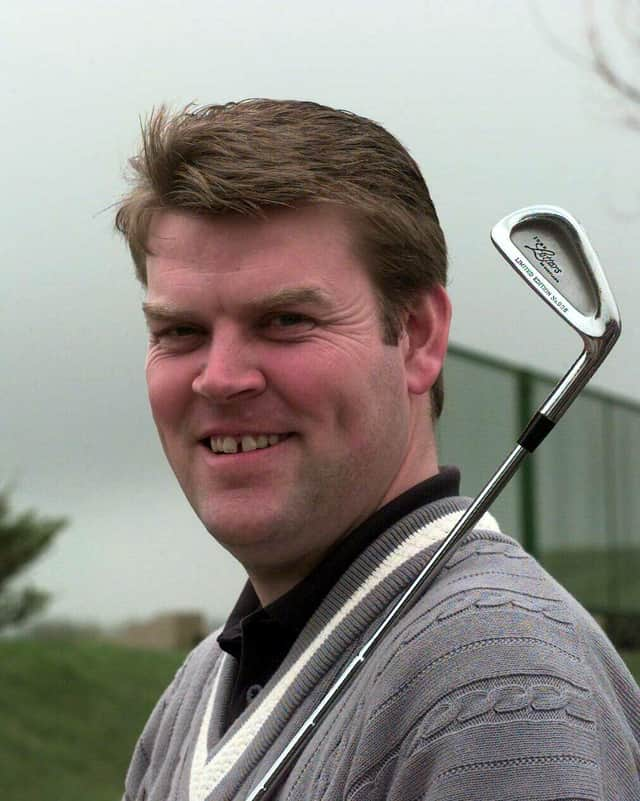

In the paid ranks, the blond-haired Brooks won back-to-back Northern Opens in 1989 and 1990 while he also landed the British Assistants’ Championship in 1989. I remember being at Hillside for that event and, if my memory serves me right, the Scot came out on top in an epic battle with Englishman Paul Eales.
The other one who’d caught my eye as a proper player, of course, was Gillies, who, as a Falkirk member, had won the Scottish Boys’ Championship at Dunbar in 1983, beating West Kilbride’s Calum Innes at the 38th.
Brooks and Gillies were both slightly older than Paul Lawrie, who began to rack up Tartan Tour titles, starting with the Scottish Assistants’ Championship and Scottish Under-25 Championship in 1990, and the rest, of course, as far as the Aberdonian is concerned is history.
In comparison, both Brooks and Gillies had very modest European Tour careers, yet it just goes to show that a line of work doesn't necessarily have to be defined by playing or winning at the highest level.
While Brooks turned to coaching and, in fairness, has thoroughly enjoyed trying to help others improve over the past 20 years, Gillies loved playing more than anything else and especially so in his beloved Scotland.
In the eyes of Alan Tait, he was “arguably the best player to play in the PGA Scottish Region” and, taking out the likes of Lawrie, of course, from the equation, that could indeed be the case.
Read our guide to Scotland's best golf courses
Martin Dempster has covered golf in Scotland for 30 years. Sign up to his new newsletter guide to Scotland’s best courses for top tips on how to play and how to plan the ultimate Scottish golf trip
At a time when the Tartan Tour was a flourishing and lucrative circuit, Gillies was the dominant force. He was the first player to break the £500,000 barrier in career earnings on the tour and remains its all-time leading money winner with £513,747, a record, even allowing for Paul O’Hara’s sparkling golf in recent years, that is unlikely to be beaten.
Almost everyone who has commented on his sad passing has referred to Gillies being a “great”, “fantastic” or “incredible” player and Scottish people in particular don’t say that when it is not merited.
It is also telling how many have mentioned the fact he was a “brilliant” and “good” guy and you can bet your bottom dollar that tears have been shed as those tributes were paid.
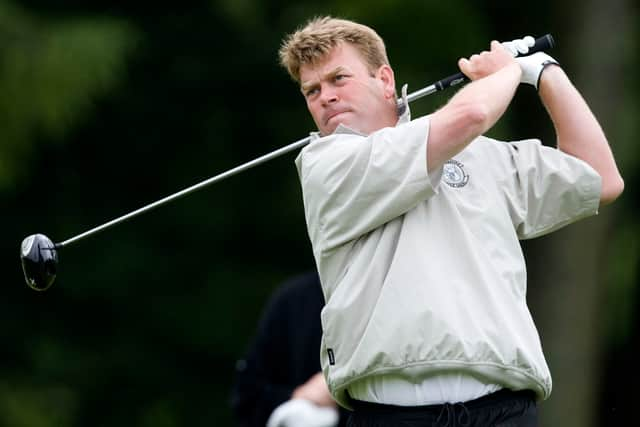
As that was done, my laptop was pinging with notifications every few minutes and it told you everything that Scots both at home and abroad were grieving.
PGA professionals in this country, including lots who have been long retired, posted messages on social media, as did others around the world, including Gary Weir and Tony Marshall in the US, Stephen Dundas in Spain and the aforementioned Innes, who is now based in Germany.
The word ‘legend’ is bandied about way too freely these days, but that status when it comes to the Tartan Tour will belong to one man and one man only. Thanks for the memories, Colin Gillies, and say “hello” up there to the likes of Russell Weir and Jim Farmer.
Comments
Want to join the conversation? Please or to comment on this article.