
Scottish skater on track for second world medal after Olympic disappointment
The World Figure Skating Championships is taking place in Prague
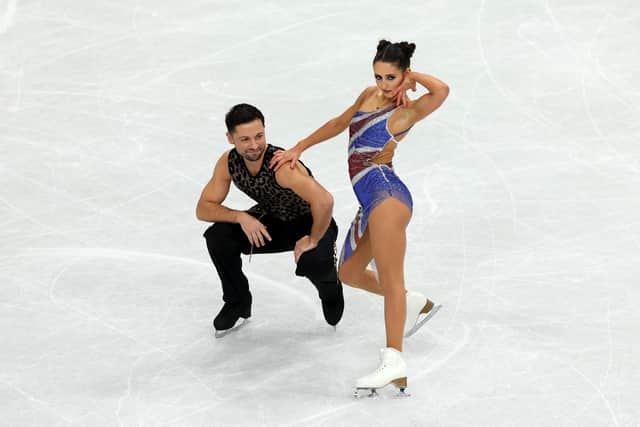
Scottish ice dancer Lewis Gibson is on track for a second history-making world medal after a clean skate saw them take third after the rhythm dance in Prague.
With partner Lilah Fear, Gibson scored 85.09, one point behind second place Piper Gillies and Paul Poirier from Canada at the World Figure Skating Championships.
The pair last year won Great Britain’s first world medal in over 40 years - since Jayne Torvill and Christopher Dean in 1984.
Meanwhile, Dundee pairs skaters Anastasia Vaipan Law and Luke Digby admitted they almost did not make it to the competition due to post-Olympic injuries - as they heralded a “rollercoaster” season.
The duo slipped four places from ninth position in the short programme to 13th after the free skate, where they scored 109.99 points, but said they were “grateful” to be at the competition as Digby recovered from wrist and back injuries.
Gibson, from Prestwick, said the pair, who had a disappointing skate at the Winter Olympic Games last month, had felt “joy” at the end of the programme.
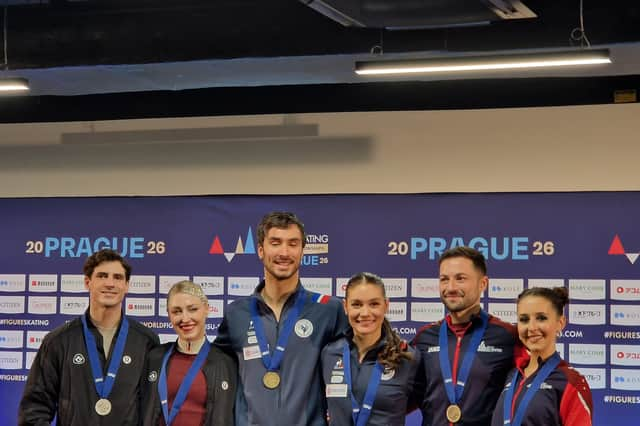

Lying in the gold medal position after the rhythm dance is Laurence Fournier Beaudry and Guillaume Cizeron of France, who scored a season’s best of 92.74 points. Gillies and Poirier scored 86.45.
Bronze medallists at last year’s World Championships, Gibson and Fear finished in seventh place at the Olympics after a significant mistake in the free dance.
He said: “It was the joy we felt at the end, we were just happy and elated with what we did.
“Before tomorrow’s free dance, we will just stay focused on our own performance. We have our own goals for what we want to achieve out there. When we achieve [our goals], that’s the best feeling and it’s what we always strive for.”
Fear admitted she had cried after the Olympics.
“After the Games, I cried a lot,” she said. “It was important for us to process the disappointment and feel it and then move on.”
Fellow Team GB ice dancers Phebe Bekker and James Hernandez ended the rhythm dance in 18th position, with a score of 70.82, qualifying them for the free dance final on Saturday evening.
The ice dance field at this World Championships is reduced, with silver medallists Madison Chock and Evan Bates of the US and Charlene Guignard and Marco Fabbri of Italy opting to finish their season in Milan.
Digby and Vaipan Law, who train at Ice Dundee, are the most successful British pairs skaters for almost 40 years, with only Cheryll McGehee and Andrew Naylor topping their achievement with a ninth place finish at the World Championships in 1987.
The pairs final at the O2 Arena in Prague on Thursday night was won by German couple Minerva Fabienne Hase and Nikita Volodin, with European champions and Winter Olympic silver medallists Anastasiia Metelkina and Luka Berulava from Georgia in second. The bronze medal was won by Lia Pereira and Trentt Michaud from Canada.
Digby said he had suffered from a wrist and back injury after the Winter Olympics, with the pair unable to train together for most of the month since the Games, only getting back on the ice together a week ago. They also admitted it had been “touch and go” whether they would be able to compete in the team event at the Olympics due to injury.
“It was questionable whether we’d make it here, to be honest,” said Digby. “There was a time when it wasn’t going to happen.”
The pair, who achieved an overall score of 176.33 at the championships, hinted that this season could be their last, saying they would take time after the event to “reflect”.
Vaipan Law said: “We qualified for the Olympic Games, we’ve done many great skates that we’re proud of. These are all things we just dreamed of at one time.”

Earlier this year, they placed seventh at the European Figure Skating Championships in Sheffield - with a fifth place in the rhythm dance - and 13th overall at the Winter Olympic Games in Milan.
Digby said: “I’d say this season has been a rollercoaster, emotionally, we’ve had many highs and lows and we’ve memories for life.”
Comments
Want to join the conversation? Please or to comment on this article.