
My 42-hour Greyhound bus from Boston to Miami showed a very different side to the US during the World Cup
Epic 1,500-mile road trip down US east coast as Tartan Army heads south reveals a different side to America


There was method in the madness when I decided to hop on a Greyhound bus from Boston to Miami to document Scotland during the World Cup.
With prices soaring for tickets, travel and accommodation, I suspected a fair number of Scotland fans would take the cheaper option of a 1,500-mile journey down the east coast. I was wrong.
It became apparent soon after touching down in Boston that most of the Tartan Army were flying either directly from there or New York. So for much of the journey, it was just me and the madness.
The first warning of what lay ahead came when my opening Greyhound service from Boston was cancelled, triggering a domino effect on a journey involving four transfers.
The stress, however, was quickly zapped by the humour of Terry the driver. Once everyone was onboard, he held up three rubber ducks.
"I use these to monitor how I drive," he said.
He explained that he lined them up on the dashboard to see if they fell off.
"If they last, it means I did a great job."

Terry then delivered the sort of arrival into New York every visitor deserves. As we rolled into Manhattan, he cranked up the stereo and told passengers: "If you know the words, I need you to sing along."
Frank Sinatra's Theme from New York, New York blasted through the bus. Spotting Scotland fans heading onwards to flights for Miami, he encouraged them to chant "Scotland, Scotland" as we pulled into the terminal.
It all went a bit downhill from there.
After the cancellation and heavy traffic into New York, I missed my connection to Washington. Following some help from volunteers at a station that consisted of little more than tarmac and passengers wilting in 32C heat, I was booked on to another bus.
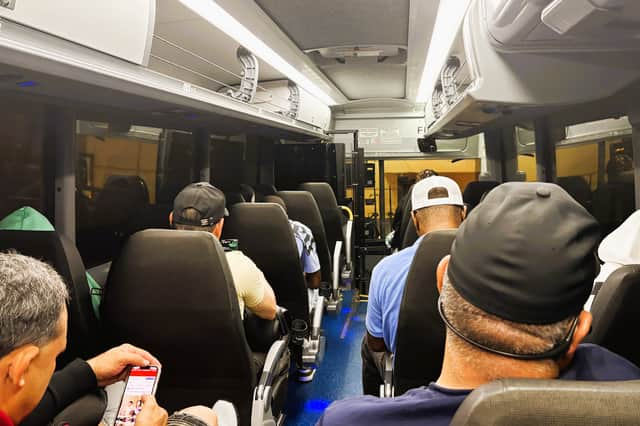
Several hours later, I realised I was on the wrong one.
When my ticket was updated, nobody had noticed my route had changed and I should have been heading to Baltimore, not Washington. After speaking to the driver in Bethesda, some 40 miles from Baltimore, which we had sailed past, he took pity on me and let me off without charge.
That left me stranded at 10.30pm in a place I had never heard of. Unwilling to gamble further on an increasingly unreliable network, I paid £40 for an Uber to Baltimore to make my next connecting bus: a nine-hour overnight ride to Charlotte in North Carolina leaving at 12.10am.
By then, I was beginning to wilt. A friend had questioned why the company was called Greyhound at all, suggesting Basset Hound might be more appropriate.
"You'll probably end up looking like one by the end," he joked.
But when I reached Baltimore, I met a man who was far worse off than I was.
Standing behind him in a queue to speak to Greyhound staff, I overheard communication problems because he spoke no English. Realising he was from Mexico, I stepped in with my broken Spanish.
He had effectively been abandoned for two days after buses failed to show up. Barely able to stand through hunger and dehydration, his hands shaking as he tried to grip a phone with no battery, he listened while a Greyhound employee, showing little sympathy, told me to explain to him that the next available service would not leave until midday the following day.
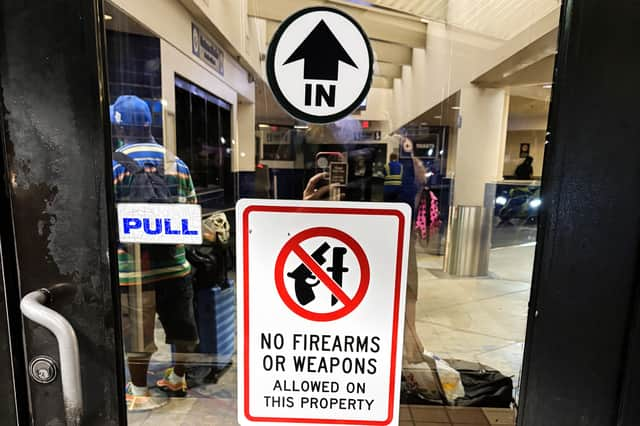
As with many of the terminals I had passed through, Baltimore Downtown Bus Station offered little beyond vending machines and hard floors. It quickly became clear that the Mexican passenger, who looked to be in his 60s or 70s, would be spending the night there.
I handed him my charger and the snacks I had on me: a small bag of almonds, a banana and a spare bottle of water. All I could do then was wish him buena suerte before climbing aboard my bus to Charlotte.
Tears filled my eyes, partly through my own exhaustion, but mostly at the sight of his.
"Gracias," he said in a croaky voice, his eyes watery with fatigue.
The nine-hour journey brought little sleep. A combination of being too cold from high aircon, snorers and little room to move next to people with their bags with valuables clutched to their chests. A young mother tried desperately to settle two crying children while passengers drifted in and out of consciousness. Charlotte offered no respite. The terminal was another cavernous hall populated by weary travellers and vending machines.
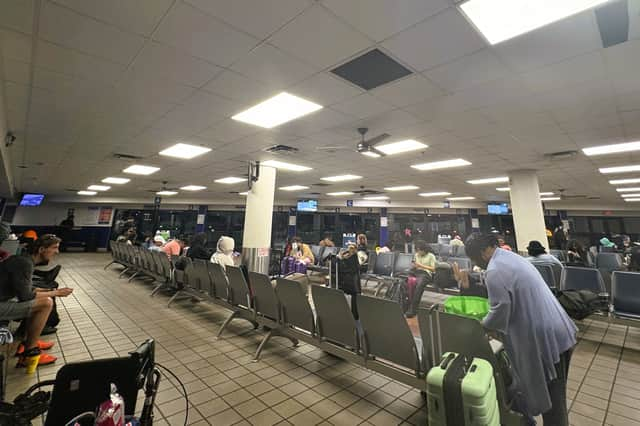
A small act of kindness arrived in the form of taxi driver Anthony Alexander, who agreed a fair price to take me to buy a phone charger and supplies before my next connection.
Then came an even stranger encounter.
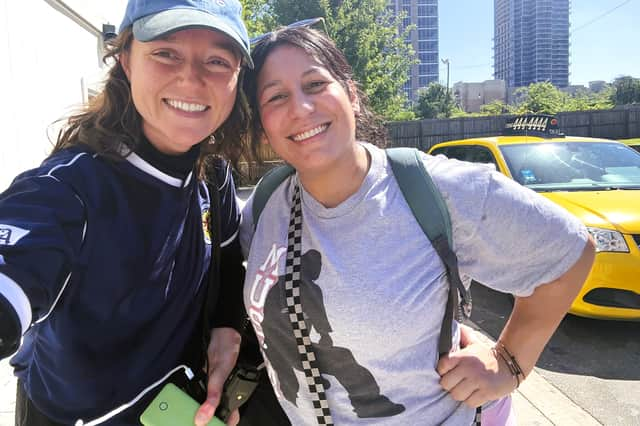
"Are you Katharine?" a voice asked behind me.
Frazzled by the journey so far, I turned around and returned a vacant stare.
Jennifer had been following my trip online and had come to the station carrying water and a battery pack. I was completely overwhelmed by the kindness. After a hug and heartfelt thanks, I boarded the ten-hour journey to Orlando.
The further south we travelled, the more obvious it became how difficult long-distance bus travel can be for those with no alternative. Food options beyond unhealthy snacks were scarce, breaks were brief and many passengers appeared to be travelling because they had little choice.
Mr Alexander had told me he used to drive for Greyhound before giving it up because of the violence he would sometimes encounter.
At one stop, a passenger pleaded with the driver to pull in at McDonald's because they were hungry. While there, a young woman from the same bus whom I had noticed earlier for her pale complexion and unsteady gait approached me.
"Do you have any money to get something to eat?" she asked, looking as if she were about to faint.
Steadying her as we stood in the queue at the fast food chain I could feel her clothes drenched with sweat. From the little conversation she was able to muster, I learned that her partner had recently been arrested for identity fraud.
"I've lost everything," she said, explaining that she was travelling to stay with relatives.
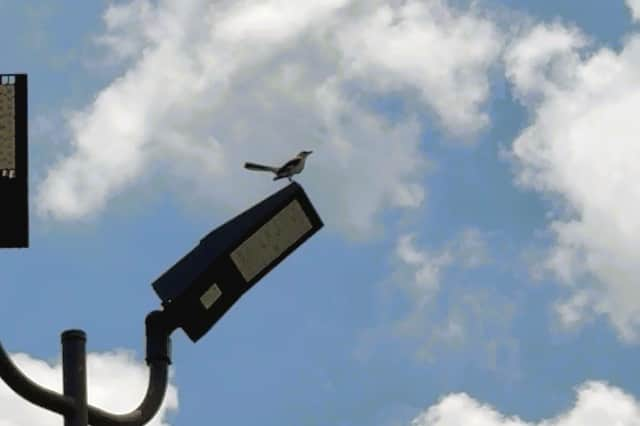
Not long afterwards, I followed an unfamiliar sound coming from just beyond the gas station where we had pulled up. It turned out to be a mockingbird, the first I had ever seen, and an encounter that felt oddly fitting given the stories of hardship and inequality I had witnessed in the US along the bus journey.
Arriving in Miami 42 hours later, the World Cup festivities echoed those in Boston. Yet the journey south, through places well away from the tournament spotlight, revealed a very different side of America — one that is failing many of its people.
Comments
Want to join the conversation? Please or to comment on this article.