
Scottish football has a new ecosystem - it won't threaten Celtic and Rangers but others are in trouble
Hibs’ breaking of their transfer record is further evidence of ‘middle’ three breaking away

Sleepy summer Sundays are not usually when Scottish football clubs break their record transfer fee.
So Hibs’ announcement at 10am on July 13 that they had completed the signing of Thibault Klidje, in the process spending their first-ever seven-figure sum on a footballer, caught pretty much everyone off-guard.
Not one media outlet in Scotland had been on the scent of Klidje, who has spent the past three years playing for Luzern in Switzerland. He’s a 24-year-old forward who is speedy and tricky. He netted 12 times in the Super League last term and posted his best figures in his professional career.
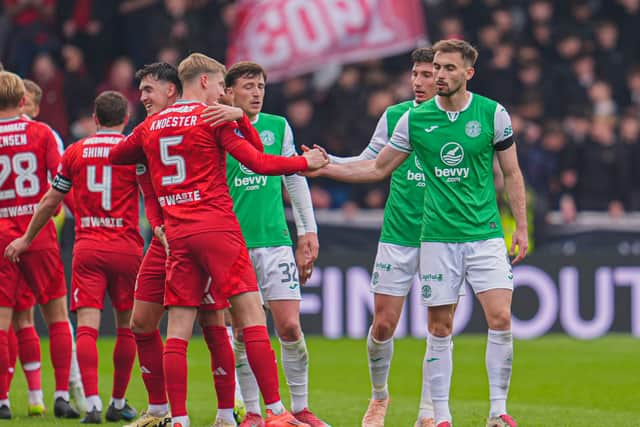

Hibs say they had been monitoring the Togolese internationalist for some time. A new striker was a necessity for the Easter Road side, given they only have Martin Boyle, Kieron Bowie and Elie Youan on their books. Klidje’s arrival boosts Hibs ahead of their Europa League Conference League qualifier against FC Midtjylland next week.
Hibs spent close to £700,000 on Dylan Vente two seasons ago and had the Dutch striker hit his add-on targets, then the total fee to Roda JC would have outstripped the full £700k paid to LCU Quito way back in 2001 for Ecuadorian Ulises de la Cruz. It has taken the capital outfit 24 years to surpass that amount.
Hibs’ financial figures earlier this year made for grim reading, posting a £7.2million loss that has been underwritten by the club’s wealthy American owner Ian Gordon. The next set of accounts won’t likely be a whole lot better, as the work undergone by sporting director Malky Mackay to correct years of erroneous spending and lengthy, costly contracts is still ongoing.
Hibs have to keep pace with their peers
But Hibs cannot stand still. Finishing third in the Premiership last season, when back in December relegation looked entirely possible, has given them a huge shot in the arm. They will be cursing Aberdeen - and probably Celtic too - for how the Dons won the Scottish Cup to pinch guaranteed league-phase European football this term, although they can still reach that promised land should they navigate qualifiers.
Hearts and Aberdeen have now had two bites at the Conference League proper and the relative riches it brings. While Hibs might not get there this season, they are among a trio of clubs that is threatening to create its own ecosystem within the jungle that is Scottish football.
It is becoming increasingly common for Scottish football’s ‘middle three’ to splash the cash - be it on transfer fees or wages. In addition to Klidje, Hibs paid money to Hartberg for Austrian keeper Raphael Sallinger this summer and Josh Mulligan from Dundee may not come cheap depending on the outcome of a development tribunal. Throw in the wage afforded to key defender Rocky Bushiri to keep him in Leith and a pretty penny has already been spent.
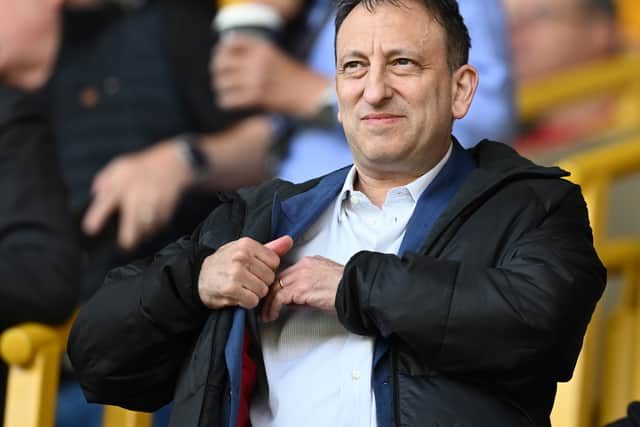
Across the city, Hearts are embarking on their new spending adventure too. With Tony Bloom ploughing in £9.86m last month and becoming a shareholder, there is fresh investment and a new player database in Jamestown Analytics to use. Already forwards Claudio Braga and Elton Kabangu have been bought for not insignificant six-figure fees, while star striker Lawrence Shankland finally penned a new contract. Bluntly, that won’t have come cheap. Hearts still want an array of wingers to help new head coach Derek McInnes hit the ground running. The spending is unlikely to stop there.
Up at Pittodrie, Aberdeen are more than content to keep pace with the Edinburgh duo. Owner Dave Cormack and his associates announced an £8m investment into the Dons last month, part of it to upgrade the training facilities, and manager Jimmy Thelin has also been backed significantly in his first 12 months in charge. This summer, the Dons have paid six-figure sums for winger Nicolas Milanovic and left-back Emmanuel Gyamfi, while last season it is understood more than £2m combined was shelled out on defenders Kristers Tobers and Alexander Jensen, midfielder Sivert Nilsen and winger Topi Keskinen.
Winning the Scottish Cup and the rewards that follow is no doubt vindication of the outlay, even if the Dons ended up finishing fifth in the league.
Is the Premiership’s top-five already set in stone?
What will the Premiership’s top five look like in May next year, though? While the spending of Aberdeen, Hearts and Hibs at this stage seems unlikely to get them a great deal closer to Celtic and Rangers, it is surely creating a larger gap between them and the rest of the league. Dundee United finished fourth last season and under Jim Goodwin, did very well upon their return to the top flight. They’ve spent money on goalkeeper Yevgeniy Kucherenko and defender Iurie Iovu in this window - but not as much as Hibs, Hearts or the Dons. Their top wage will also get nowhere near that trio.
Spending money is no guarantee in Scotland - it has been rare for the top five to follow the natural SPFL foodchain. But it feels like Aberdeen, Hearts and Hibs are fishing not just in a different pond, but an ocean to the seven other sides in the division. In theory, it should allow them to cope better with the juggling act of European and domestic football.
Recently, United, St Mirren and Kilmarnock have capitalised on a poor season from one of the bigger clubs to jump into the top five and grab a slice of the European pie. The chances of such profligacy from them now are slimmer as the financial gulf becomes bigger. Are they, plus Motherwell, Dundee, Livingston and Falkirk mere also-rans in this race, fighting for one final berth in the top six and survival from relegation?
This theory may look a little silly in ten months time if Aberdeen, Hearts or Hibs muck it up. This is Scottish football, after all. Expect the unexpected. But one wonders whether Hibs will drop a £1m bomb again this window, if for example Nectar Triantis at Sunderland becomes available. Aberdeen and Hearts aren’t finished yet and will strengthen further. Could they break their own transfer records, for Paul Bernard (£1m) or Mirsad Beslija (850k) respectively before autumn falls? Another club will do exceptionally well to break into this newly-formed, middle-class clique within Scottish football.
Comments
Want to join the conversation? Please or to comment on this article.