
Sir David Murray sorry for Rangers sale disaster but defiant over EBTs and untainted trophies

Former Ibrox chief speaks out ahead of autobiography release
Sir David Murray, the former owner of Rangers, has apologised to supporters for his part in the financial disaster that befell the club in 2012.
Murray sold Rangers to businessman Craig Whyte for £1 in 2011 but within a year the Ibrox club was placed into liquidation over unpaid tax bills and forced to restart in the fourth tier of Scottish football.
The financial difficulties were exacerbated by a large debt accumulated under Murray's ownership, where £47million in tax-free loans were paid to players in staff in the form of Employee Benefit Trusts (EBTs).


Murray has spoken to the BBC to mark the publication of his autobiography, Mettle, and revealed he regretted his decisions and said sorry to fans and club staff.
"Of course I'd apologise," he said. "I'm not one of these people who run a company and hide. It was a terrible moment, and I apologise to all the staff, good people, and I know many of them to this day. I'd hope in hindsight, they look at the facts and think I was put in a very difficult position."
Murray denied failing to conduct due diligence on Whyte, who had been introduced as a ‘high-net-worth individual’ but was unable to pay the bills to stave off administration and subsequent liquidation after borrowing £26.7 million against future season ticket sales from the firm, Ticketus.
"I went on the facts in front of me," Murray stated.
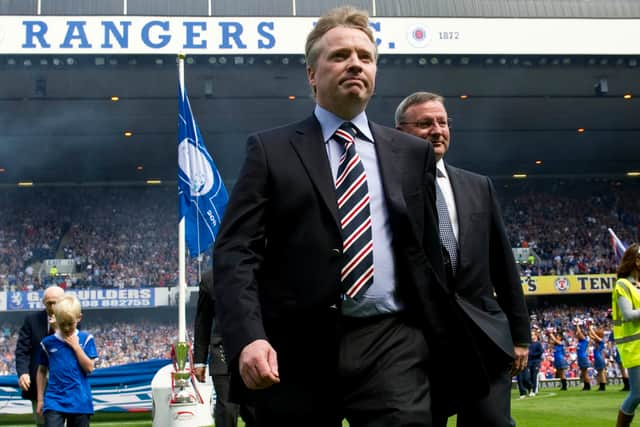
Murray also stressed that "they didn't do anything illegal" when challenged on whether it was morally acceptable to deprive the NHS and other public services of funds so wealthy footballers could pay less tax.
"Footballers are getting paid too much," he added. "Not just at Rangers, everywhere. It's avoidance. People do that."
Murray has accepted that his Ibrox legacy has been tarnished by the events which surrounded his sale of the club, but insists that the trophies won during his period at the helm were not tainted by the use of EBTs, denying that the scheme allowed the club to gain an unfair financial advantage.
"Not at all," he replied, adding: "It was proven in the end it wasn't an illegal tax scheme."
Comments
Want to join the conversation? Please or to comment on this article.