
Sebastien Pocognoli's Scotland report card has stark message as Euro 2028 qualification warning issued

Head coach himself admits that improvement is required in upcoming international window
Just a few days after the last international window concluded with a deeply disappointing 2-1 defeat to Slovenia, Sebastien Pocognoli was back at Hampden.
Nothing too surprising about that, really. After all, he is the Scotland manager. He is, though, based in Belgium and he admitted he needed some time back in his homeland with his family to "refuel" after a challenging and sometimes fraught opening period in charge.
But he was back in Scotland soon enough to attend a review of his first fixtures in charge, which saw his team take just four Nations League points from a possible 12 against Slovenia (twice), North Macedonia and Switzerland. Although it would have been good to be a fly on the wall on Hampden’s sixth floor as Pocognoli endured this assessment exercise, it’s easy to imagine the gist of the early report card: Must do better.
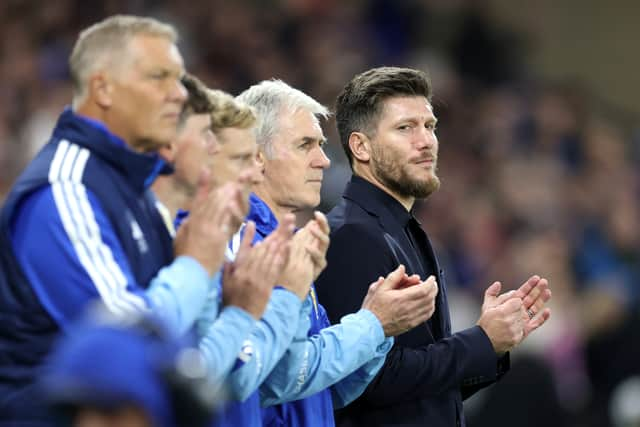

Pocognoli himself recognises this. “We need to improve,” he said on Monday at the national stadium after naming his second squad. “The first camp was to get to know each other.
“I saw things in training and in the games we produced some very good moments. We created a lot of chances, maybe more than in previous years against those types of opponents. But the next step is to score more goals and clean up the mistakes we made because we conceded goals from nothing. We must try to be consistent in the way we want to play.
“We need to improve but then every country who started with a new coach in September would say the same. Many players in the first camp took it as a new experience with a new style of play and system. That needs a little bit of time but it doesn’t mean we can’t now ask for more and reach the level we want.”
Pocognoli will be handed more time whatever happens in the next two games against North Macedonia and Switzerland. Perhaps the most important date left this year is 6 December, when the draw for Euro 2028 takes place in Belfast. Despite a potentially damaging assumption that Scotland have already qualified as one of the hosts, there’s still work to be done. “We are not qualified,” stressed the Belgian. “We need to qualify. The best way is to qualify from our group.”
He mentioned the need to “stimulate” a winning habit as quickly as possible so that when and if qualification is secured, reaching the knockout stage at a major finals – the final frontier as far as Scotland are concerned – is easier to achieve.
This will go down well with the Hampden top brass. While those first four games will have been robustly scrutinised, it’s only fair Pocognoli’s bosses apply some context to their findings beyond the fact that the heavy defeat against Switzerland was defined by an early red card for Jack Hendry. Pocognoli has barely had time to get his loafers under the desk.
He was also badly served by circumstances. On top of the absent Scott McTominay, recovering following a minor heart procedure, Kieran Tierney and Che Adams were unavailable due to injury. Pocognoli has called up all three for the upcoming games, in the process adding 30 goals to a squad that looked severely short in this department last time out.
Then there was the understandable pomp and ceremony involved in Andy Robertson reaching 100 caps. It meant an early invite back for Steve Clarke, who will have found it excruciating to be perceived as peering over Pocognoli’s shoulder as Scotland were outplayed on their own turf by Slovenia. It was an awkward night, off the pitch as well as on it.
Clarke is actually back in Glasgow next week as a guest of honour at the Street Soccer gala dinner. It will be surprising if he decides to attend Scotland’s home match against North Macedonia two days later. He knows Pocognoli needs space and time to continue trying to put his own mark on the role.
“It was a tough camp,” Pocognoli acknowledged, with reference to those first post-Clarke games. “It was an intense camp. I really liked it. But in terms of intensity…..four games, and I needed to get to know everybody – like 50, 60 new faces. Plus all you (journalists) - 70! It was intense.
“I needed to rest a little bit and refuel after the camp. After one week I was already back here for the review of the camp with the staff and the board and now I am here all this week to prepare for the next camp.”
The Belgian needs to familiarise himself with one more new face: on-loan Rangers player James Penrice, who has been recruited to replace the injured Josh Doig. The squad looks infinitely stronger than last time around thanks chiefly to the inclusion of McTominay and also Adams, still reckoned by many observers – this writer included - to be Scotland’s best striker. The Torino forward's presence takes some of the pressure off Oli McBurnie, who is still struggling to score his first Scotland goal but has struck in his last two appearances for Hull City.
Surprisingly, Aaron Hickey has not started for Brentford since before the last international window. On the upside, Ben Gannon-Doak has seen more action than he is used to in a club context - just as Pocognoli predicted when speaking prior to the last Slovenia game.
The manager was addressing the likely negative impact another period of limited playing time for his club would have on the youngster, who started two of Scotland’s four games in the last window. Pocognoli ventured that, because of Bournemouth’s European commitments, Gannon-Doak will be required to play a more meaningful part as the season progresses, and so it has proved.
The 20-year-old winger was even man of the match in the recent 3-0 Europa League win over AC Milan. Many pointed to this result as underlining football’s new world order. Scotland, meanwhile, have dropped one place to 43 in the international rankings since they last played. They need to start going back up the way without delay.
Comments
Want to join the conversation? Please or to comment on this article.