
Scotland struggle in jittery Hampden as Belarus threaten to derail World Cup bid

Victory is all that matters - but it was a hard night for Clarke and fans
Scotland have never lost at home to a team ranked 100 or lower. This wasn’t the time to create such an unwanted first. Even a draw might well have been a fatal blow. Almost unbelievably, or maybe all too believably, Scotland were still flirting with this possibility as the seconds ticked down.
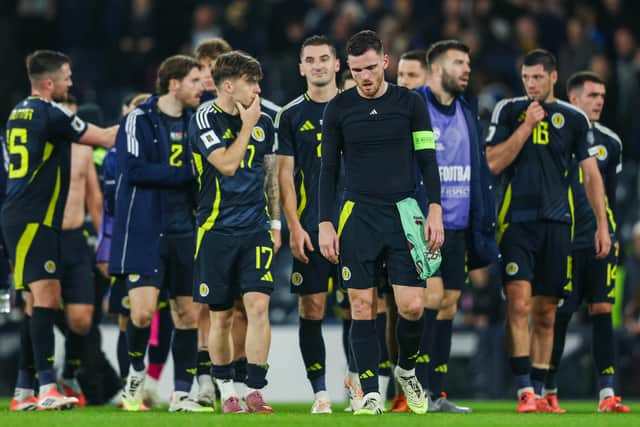
All’s well that ends well for Scotland, who remain on course for a World Cup, but this was far from the avalanche of goals anticipated by some and it could return to haunt the Scots. There was even some jeering at the end.
Belarus started brightly. Their initial eagerness suggested it was going to be one of those nights, or at least early evenings, for Scotland. The visitors' industry towards the end, when they were even more threatening as they sought to feast on Scottish nerves, almost proved ruinous for their hosts.

Not for the first time, the Scots had VAR to thank. Similar to Thursday night, when a defender’s ankle proved key to Scotland’s opener against Greece being allowed to stand, a Belarusian’s red boot was shown to have played Che Adams’ onside. The Scots had lift off. Where might they be headed?
Maybe nowhere very fast had Belarus’ equaliser on 65 minutes been allowed to stand. The cruel might have said that Scott McTominay’s greatest contribution to this World Cup campaign up to that point was being barged off the ball near the halfway line by Evgeni Yablonski.
After Evgeni Malashevich had taken advantage of Andy Robertson’s slackness at the back post to steer in skipper German Barkovski’s cross, the offence on McTominay near the start of the move became of critical importance to Scotland. Romanian referee Marian Barbu was called to the pitchside monitor and made the right decision, but then you can never be sure these days.
McTominay later stuffed the words of his critics down their throats with his first goal from open play since a header against Portugal over a year ago. He controlled Robertson’s cross with his chest and then steered the ball into the corner with six minutes left. His celebration, or lack of it, summed everything up.
McTominay’s goal was so significant
The goal’s significance grew enormously given later events. Hampden was getting nervier and nervier. So, it seemed, were the players. Goalkeeper Angus Gunn had already sliced a clearance straight at Barkovski, who could not capitalise.
In total, Belarus had 22 shots on goal, which does seem unforgivable. One of these efforts finally counted. Three minutes into eight minutes of time added on, substitute Gleb Kuchko wheeled away from Robertson like he wasn’t there with a fine first touch before slotting past Gunn. No one could say it wasn’t deserved. The final moments felt as long as a Rangers managerial search.
Had a penalty been awarded after Adams was hauled down by Yegor Parkhomenko just before the hour mark, it might have been a little less anxious. However, another VAR check, news of which was greeted with cheers by the fans, did not end with the expected Scotland penalty. Adams was adjudged to have handled.
Nevertheless, despite concerns over both recent performances, Scotland still have the six points targeted by Steve Clarke on the eve of the doubleheader. It’s one of those rare occasions when the return of domestic football feels like a bit of a bind. All roads lead to Piraeus for another crunch clash with Greece next month. All minds are on this opening game of a defining double header that could deliver Scotland to a World Cup. But Clarke knows, and everyone else know, that they will need to be a lot better than they have been in both outings this month.

The stakes are getting higher. They were already pretty high here. As was the blood pressure, when Belarus began knocking on Scotland’s door from soon after kick off. But after Adams broke the deadlock after 15 minutes, going in just 1-0 in front felt a little unsatisfactory.
This wasn’t through a lack of trying, principally on the part of Ben Gannon-Doak, who was identified as the best player on the park by Belarusian manager Carlos Alos following the first game between the sides last month. The Bournemouth winger was a standout here again and while he can frustrate as much as he can thrill, he’s worth his weight in gold for his ability to get Scotland up the pitch. One run deserved to end with a goal but Fedor Lapoukhov saved at his near post.
Now in his final weeks as a teenager, Gannon-Doak started for the third game in a row, but on the right this time. His best work was on the left in the 2-0 win over the same opponents in Hungary while he also started on this flank against Greece, when he endured a more frustrating evening leading to his withdrawal before the hour mark.
Here he was charged with giving Belarusian left back Pavel Zabelin a torrid time of it. The Belarusian defender had come close to distinguishing himself in a more positive sense after ten minutes when his towering header from a corner just cleared Gunn’s bar. It was a good chance.
The pre-game apprehension felt well-founded both here and then towards the end, when Belarus began to sense they might secure something tangible. Beset by visa problems, dejected following a heavy ‘home’ defeat against Denmark, were they about to administer the sickener of all sickeners on Scotland? The hosts gradually began to assert themselves but it was never completely relaxing for the home supporters, who urged players to shoot as soon as got within sight of the goal.
Only 15 minutes had elapsed when Jack Hendry, making his first competitive start since last summer’s Euros, got this advice. He elected, probably wisely, to play the ball into Adams’ feet rather than take aim. The Torino striker took a couple of touches to get the ball under control and drilled a powerful shot into the corner from 16 yards. A VAR check established he was onside due to Vadim Pigas’ trailing leg. But as fans might have suspected, a long night still lay ahead.
Comments
Want to join the conversation? Please or to comment on this article.