
Hampden to host six matches at Euro 2028 with major Scotland caveat as schedule confirmed

Glasgow dates revealed as Scotland prepare to co-host tournament
Hampden Park will host six matches at Euro 2028 including Scotland games - but only if they qualify directly.
The national stadium in Glasgow is one of nine venues that will stage a total of 51 fixtures involving 24 teams across 31 days at the tournament jointly hosted by Scotland, England, Ireland and Wales.
Four group matches will take place Hampden on the dates of Saturday, June 10; Tuesday, June 13; Saturday, June 17; and Wednesday, June 21.


A last 16 clash will also be hosted on Saturday, June 26 before a quarter-final tie on Saturday, July 1 completes the schedule at Mount Florida. Matches will kick off at 2pm, 5pm and 8pm with full matchday details to be announced after the final tournament draw in 2027.
Scotland will hope to play in front of their own fans at Hampden by qualifying for the tournament directly. The four co-hosts have not received automatic entry to Euro 2028 and must qualify by either winning their group or finishing as one of the eight best runners-up. Two spots are reserved for any host nation that fails to qualify, however, taking this backdoor route into the tournament would mean that Scotland would not be guaranteed to play their matches at their home stadium.
The tournament begins with the opening match and ceremony at the Principality Stadium in Cardiff on Friday, June 9 and ends with the final at Wembley Stadium on Sunday, July 9. The final has been confirmed as a 5pm kick-off – three hours earlier than the Euro 2020 final at Wembley where chaotic scenes ensued outside the stadium as ticketless supporters tried to force entry.
The other host stadia include the Aviva Stadium in Dublin, Newcastle's St James' Park, Manchester City’s Etihad Stadium, Everton’s Hill Dickinson Stadium, Villa Park in Birmingham and the Tottenham Hotspur Stadium.
Northern Ireland is set to play a role, with Belfast hosting the tournament qualifying draw on December 6 next year. A redeveloped Casement Park in Belfast had been due to be the 10th venue in what started off as a five-nation bid, but had to withdraw in September 2024 after the UK Government said it would not provide funding towards the building work.
The tournament was officially launched at an event in central London on Wednesday, which included the unveiling of the match schedule. A small but noisy pro-Palestine protest took place directly outside the event, with presentations struggling to be heard over chants against Israel’s continued membership of UEFA.
Glasgow also unveiled its host city logo featuring the iconic Armadillo, with a lighting display on the exterior of the Glasgow Royal Concert Hall.
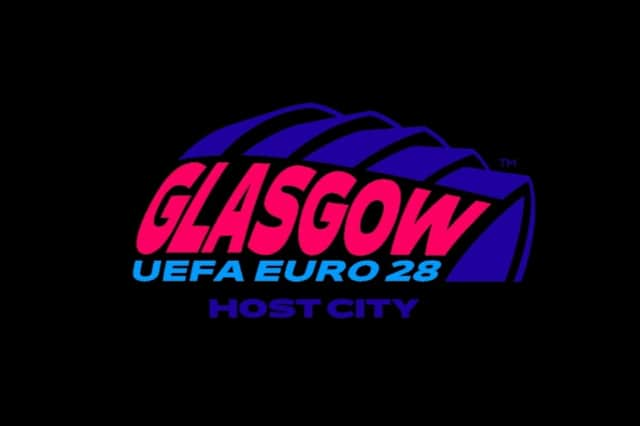
Councillor Susan Aitken, Glasgow City Council leader, said: “The unveiling of Glasgow’s match schedule and our host city logo are two exciting milestones on the road to Hampden, the real home of football.
“With a potential global TV audience of more than two billion, this is another incredible opportunity to showcase Glasgow, while those visiting from across Europe will experience our city’s world-class hospitality and the warmth of our people.
“Of course, we’ll be helping make sure ordinary Glaswegians are part of this festival of football and look forward working with the Scottish Football Association on the largest-ever Community Programme for the tournament.”
Ian Maxwell, Chief Executive Officer, Scottish Football Association added: “Today is another exciting landmark moment, and another step towards us proudly co-hosting UEFA Euro 2028.
“It’s great for Glasgow and Scotland that we’ll host six games at Hampden Park - including a quarter-final tie.
“The history of our world-renowned National Stadium is peppered with iconic moments, and this represents a fantastic opportunity to add a few more unforgettable memories."
Organisers confirmed the UK Government, the Scottish Government, the Welsh Government and the Government of Ireland will collectively invest up to £740million towards security and other costs, and includes a contribution alongside other football partners to a £45m social impact fund. It is anticipated the Euro 2028 will generate £3.6 billion boost to the UK and Ireland economy between 2028 and 2031.
Comments
Want to join the conversation? Please or to comment on this article.