
I delved into Aston Villa-Celtic history and unearthed legend's season from hell

The tale of a Celtic hero and his travails down south
The first British hands to lift the European Cup and the last but one club to win the same tournament. If not made in heaven, it seemed like a marriage alive with possibilities.
Aston Villa and Celtic both boast proud histories but meeting in Europe’s elite tournament, as they are preparing to do this evening at Villa Park, was not on the agenda in early Autumn 1986. The English club were sliding fast just four years on from lifting the European Cup, not that Europe was even a consideration post Heysel.
Celtic, meanwhile, were still processing the Graeme Souness revolution and what it might mean for them. Uefa Cup football was the answer in the first instance. A Rangers side augmented by the likes of Chris Woods and Terry Butcher, as well as Souness himself, finished six points clear of the Parkhead side in second place.


None of this was Billy McNeill’s concern – not yet at least. He was in Manchester in tremulous times in the city. Not only were City once again in danger of relegation, so too were Manchester United. “Manchester is a wasteland of football,” wrote John Wragg in the Daily Express. “If government redevelopment grants were available, they would get one.”
No wonder McNeill was tempted by a surprise approach from Villa, fighting alongside City near the bottom of the table, even if it meant putting his lot in with Doug Ellis, a chairman who’d already earned the nickname ‘Deadly’ for his penchant for summarily sacking managers.
“Sir Matt Busby said I should be very wary and Tommy Docherty, who had first-hand experience of Ellis from his time as manager at Villa Park, was even blunter,” wrote McNeill in Hail Cesar, his excellent autobiography. “‘You would need to aff yer heid,’ declared the Doc. “On reflection, maybe I was.”
It was and still is easy to understand the lure. Villa still held significant cachet from their English Division One championship and European Cup winning days. Players like goalkeeper Nigel Spink, who so memorably came on in the victory over Bayern Munich in the final, Scottish defender Allan Evans and former young European of the year Gary Shaw were still at the club, although the last-named golden boy was struggling with knee problems.
There was also Simon Strainrod, who had been linked with a move to Barcelona of all teams the previous season, and Mark Walters and Paul Elliott. Andy Gray had also returned from Everton. It was a team that really did seem too good to go down.
"I might just want to talk to Villa,” said McNeill coyly, after the Midlands club made their approach in September. “The job at Maine Road has obvious frustrations and when a job like this emerges you have to consider it seriously.”
After four days of what were described as “delicate” negotiations, he agreed to jump ship. Villa initially revelled in the new manager bounce, losing just one of McNeill’s first ten games. City, meanwhile, won only one of their next nine games. It was only a matter of time until McNeill was due back at Maine Road.
The teams clashed in November. “I’m not trying to detract from Manchester City, because they’ve had enough hammerings,” opined McNeill on the eve of the match. “But since I’ve come down to Aston Villa I’ve seen nothing I tell me I am wrong.” Ouch.
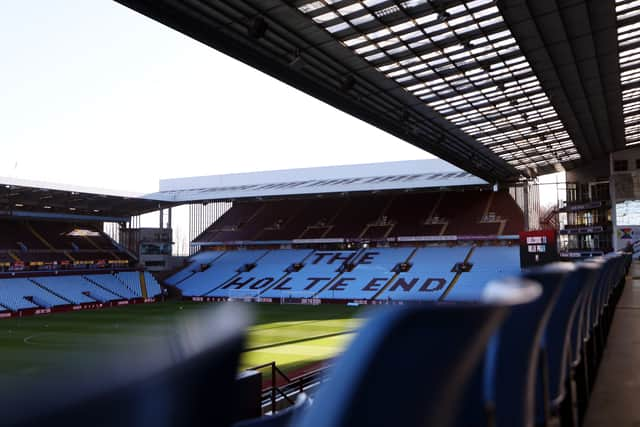
“Traitor!” one woman is reported as screaming at McNeill as he stepped off the bus. “Get back to Birmingham!” shouted someone else.
The irony was that he was still living in Manchester and had been dropped off at the Villa team hotel by his wife, Liz. The brickbats were easily put into perspective after a crash just a mile from the ground involving the Villa team bus, which was being given a police escort, claimed the life of an elderly woman. The understandably distracted visitors went on to lose 3-1.
“There was so much against my players, probably due to my presence,” said McNeill, who had been the focus of deep hostility. He was nevertheless magnanimous. “I hope City use the win to spring up the table.”
City didn't spring up the table. They did, however, finish one place ahead of bottom side Villa, who endured a nightmare run post-Christmas.
Although City remain ahead of Villa in the current league standings, a lot of water has since flowed under the bridge for the clubs and their players. Stainrod will become a pensioner this Saturday, when he turns 66.
“When I was a kid growing up, Jimmy Johnstone was one of my favourite players,” he reflects. “And if you like Jinky, you have to like Billy McNeill.”
Stainrod ended up living close to McNeill in Glasgow: “I used to bump into him in the supermarket. I always knew it was him because he had the neatest trolley ever!”
McNeill had high standards. “You could see he still wanted to be a player,” adds Stainrod, from his base in Cannes. “Training was often built around the end of training, when we had a five-aside and he would pick a team with him on the left wing!”
“He is such a nice fella but it was such a tough time,” he continues. “And you had some tough people in that dressing room.” The self-assured Stainrod scored an overhead kick in a 2-0 win over Leicester City in one of McNeill’s first games but handed in a transfer request shortly afterwards when he found himself out of the team.
"The club wasn't functioning as Villa should have been functioning at the time," says Stainrod, who points out it was the only relegation of his career. "Well, except for Ayr United," he adds.

It was even more of a shock to the system for McNeill, whose run of glory, which included skippering Celtic to the European Cup, came to a crashing halt during a season in hell when he was implicated, however unfairly, in the relegation from the same league of two of England’s major clubs.
He did receive some relief. ‘Deadly’ ditched him before the final game of the season at Manchester United, whose manager was the man who had replaced McNeill at Aberdeen in 1978 – Alex Ferguson. “Losing 3-1 there with Fergie in charge would not have been a pleasant experience,” noted McNeill.
Indeed, he revealed in his autobiography that he was offered the chance to return to Pittodrie after Ferguson’s departure south. A journalist phoned to inform him that “the job was mine if I wanted it”. He’d only been at Villa for a couple of months and his hesitation saw the job go to Ian Porterfield.
In the end, things worked out well. Jack McGinn, the grandfather of current Villa skipper John, got in touch to offer him the chance to steer the club through their centenary season and beyond. Souness’ shadow loomed large but McNeill, whose moves included signing Joe Miller and Frank McAvennie and banning players wearing jeans, inspired Celtic’s last championship win before Rangers embarked on nine-in-a row.
He also won the Scottish Cup for good measure in a season still spoken about with awe by Celtic fans but which might never have turned out the way it did without McNeill's Villa Park misstep.
Comments
Want to join the conversation? Please or to comment on this article.