
Being in work is no longer a buffer against debt

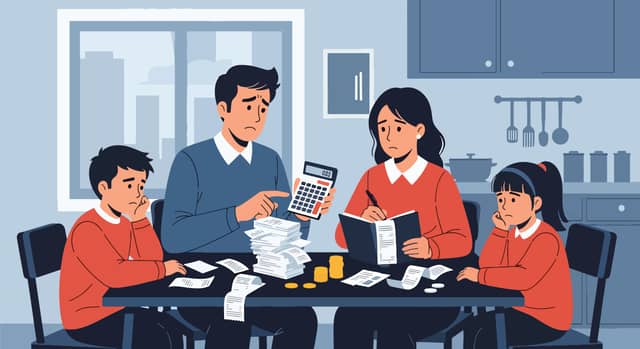

Being in work is no longer a buffer against financial hardship, with many people in full-time employment still falling behind when it comes to paying essential bills, a charitable organisation has warned.
Debt charity StepChange Scotland has published its annual flagship report, Scotland in the Red, which reveals a number of worrying statistics and trends.
It found that average debt among people seeking help from the charity reached more than £20,000. The increase represents a 10 per cent rise year-on-year, and the highest level recorded in more than a decade.
The report was published by the organisation which also held a reception at Edinburgh City Chambers to mark 30 years since it first opened its doors in Scotland to provide free, expert debt advice.
Other findings from Scotland in the Red include:
◆ Two in three clients were in arrears on their household bills owing an average £5,470 each – this has increased by 85 per cent since 2021.
◆ Almost two in five clients were in energy arrears, at an average of £2,600 per client – substantially more than an average year’s usage.
◆ The proportion of clients with credit card debt has risen by three percentage points to 68 per cent, while average credit card debt per client has risen 11 per cent year-on-year to £8,564.
StepChange Scotland says it has seen a worrying trend of employment being no guarantee of protection from problem debt. Three in five Scottish clients were in work, including more than two in five working full time, yet over half of full-time workers were already behind on essential bills.
It explained that people tend to have much higher arrears on household bills than ever before, while consumer credit debt has simultaneously increased.
The report also stated that StepChange Scotland clients are getting younger with the average age falling below 40 – to 39 – for the first time. It explained that this “reflects a long-term trend towards younger people seeking help with problem debt”.
And some 55 per cent of StepChange Scotland clients had an additional vulnerability.
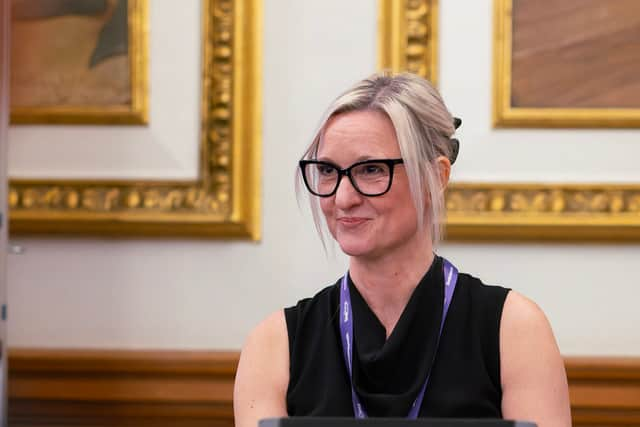
Speaking to The Scotsman, Vikki Brownridge, chief executive of StepChange Scotland, explained the work of her charity. As well as giving initial debt advice, it provides a welfare benefits checking service for clients across the country. And it also offers a range of solutions, including debt management plans, as well as statutory solutions, such as a Debt Payment Programme.
The charity works closely with the Scottish Government and a range of partners, including financial institutions, alongside campaigning to influence policy around debt.
On debt in Scotland, Vikki says: “We’ve seen a change in the landscape. Consumer credit is still the main problem for the majority of people, but that now sits alongside council tax and utilities arrears.
“Since the pandemic and the cost-of-living crisis, we’re seeing more complexity in people’s situations. They are struggling to keep up with their day-to-day living costs, potentially using credit. Energy costs are becoming a bigger problem as well.”
In Scotland, where there are a large number of rural communities, people can face specific financial challenges. Vikki explains: “There are costs that are significantly higher for people living in rural communities, such as transport, which can have a real impact.”
Expanding on the findings of Scotland in the Red, Vikki says: “What we’re seeing now is one in five clients saying finances were out of control, as opposed to saying cost of living is their number-one concern.”
The report found that while incomes are up by some 7 per cent, growth is slowing and the increase is outstripped by rising debt and arrears. And Vikki points to the fact that unsecured debt in Scotland is now higher than the rest of the UK.
In terms of who is impacted by debt across the UK, it hits people from Gen Z to the elderly, but those with children – and especially single-parent families – are disproportionately affected.“
Over 40 per cent of people seeking debt advice are Gen Z, and that’s a really worrying trend,” Vikki says.
Push for change
StepChange Scotland has also published its manifesto for the 2026 Holyrood elections on tackling problem debt.
Its five calls to action are:
◆ Ensuring room to repay council tax.
◆ Tackling the energy debt crisis.
◆ Rebuilding financial resilience.
◆ Addressing coerced debt.
◆ Dealing with problem debt.
Coerced debt is a form of economic abuse where the perpetrator presses someone into debt, for example by making them take out credit against their will. It has been experienced by 1.6 million adults across the UK, according to research by StepChange.
Vikki explains that coerced debt can happen in different forms of relationships, including romantic or family situations, saying: “It’s an issue that’s quite widely misunderstood, and there are varying and inconsistent levels of support available.
“What we’re calling for are steps to deliver economic justice for victim survivors of coerced debt. Survivors of coerced debt carry that debt on their credit file. If they’re not in a position to repay it, if they’re in difficulty themselves or what have you, it can have a really long lasting impact. They might be unable to get a mortgage, a rental agreement, or a mobile phone because of the impact of that debt.
“One of our big calls is for these people to have their credit power restored to what it was prior to the coerced debt.”
Helping people who are in debt
Michelle Lindsay, debt advisor at StepChange Scotland, has worked with the charity for 24 years. She is an advisor within the Debt Arrangement Scheme (DAS) post-approval team, assisting clients who are already on a Debt Payment Programme with reviews of their budget, issues with ability to pay and other help they may need.
Michelle says: “Life happens even when you’re on a plan, so we support people through any material changes they may face, such as loss of job and relationship breakdowns.”
In terms of tips to help people avoid or manage debt, she comments: “Keep a note of everything you spend, work out a budget, and stick to it. If you can set aside a small emergency fund, do that even if it’s only a few pounds a month.
“If you do find yourself in financial difficulties don’t wait, get in touch with us and we can provide free practical and impartial advice.”
Michelle concludes: “The scariest part for most people is admitting that they need help – there is always a solution and a way out of debt.”
CASE STUDY Alannah-Jayne Simpson and her StepChange Scotland debt journey

Alannah-Jayne Simpson, who lives in the north-east with her partner and two young children, is happy to discuss her debt journey and the support she received from StepChange Scotland.
She lives with a range of long-term health conditions, and for a while she was reliant on Personal Independence Payment (PIP) and Employment and Support Allowance (ESA).Alannah-Jayne’s partner also has a chronic illness, so he could find himself off work at times for treatment.
They decided to move in together a few years ago. Before doing so Alannah-Jayne sought advice about how this would impact her allowances, but said she was given inaccurate information. Once the couple were living together she found she was going to receive just £27 a week and would have to apply for Universal Credit.
For a period in late 2019 and early 2020, the only income the couple had to survive on was a combination of sick pay and disability benefit.
Alannah-Jayne recalls: “That’s how we got into debt, because we weren’t able to pay bills, or even able to get shopping or anything like that. We were constantly borrowing money off people and all the bills built up into debt, and it just got worse.”
They started receiving Universal Credit, but for various reasons they had to move accommodation a few times and the debt accumulated further.
Alannah-Jayne then became pregnant with her first son and the couple had to move again. This is when she sought help from StepChange Scotland.She says: “I was placed on a payment plan which meant I had one monthly payment rather than having lots of different debts and accounts. That really helped me.”
Her guidance to others facing debt is “don’t ignore it”. She adds: “It might feel better to bury your head in the sand, but essentially what you’re going to do is accumulate more debt.”
Find out more here
Comments
Want to join the conversation? Please or to comment on this article.