
7 lost mail-order catalogues you'll remember poring over if you grew up in the 70s, 80s, 90s or noughties

They were the ultimate in escapism before online shopping
- The hefty tomes were the size and weight of a small dog
- But shopping catalogues were a source of great excitement for anyone growing up in the 70s, 80s, 90s and noughties
- What child of that era doesn’t remember spending hours poring over the glossy pages, circling their dream gifts?

They were the glossy gateways to your dreams, filled with aspirational items that allowed you to live out your fantasies from the comfort of your home.
Anyone who grew up in the 70s, 80s, 90s or noughties will remember the thrill of opening the latest hefty tome from one of the catalogue giants that ruled the retail world back then.
Who didn’t spend hours thumbing through a new catalogue, poring over the plethora of goods and circling the ones they dreamed of getting for their birthday or Christmas, even if you knew there was no chance of that actually happening?
Shopping catalogues were the size of phone directories - when they were still a thing - with hundreds of pages featuring everything from microwaves to Micro Machines.
It wasn’t just the rise of online shopping that consigned them to history, but growing awareness of just how many forests were being destroyed to make them.
Argos and IKEA produced two of the most famous catalogues, but the former published its last edition in 2020, while the latter stopped printing catalogues the following year.
Below are some of the catalogue giants you’ll remember from the 70s, 80s, 90s and noughties.
Some are dead in the water, while others are still thriving but no longer publish a printed catalogue.
Freemans
Freemans described itself in the 80s as ‘first for fashion, first for the home, first for value’.
The firm was founded in London in 1905, and its first catalogue had 200 pages featuring black-and-white illustrations of its many goods, including a ‘celebrated’ made-to-measure suit for less than 30/- (£1.10 in today's money).
By the 1930s, it had grown to become the UK’s largest mail-order company, with more than 30,000 agents.
Freemans initially focused on fashion, but soon diversified to sell a range of household goods, including vacuum cleaners and washing machines.
In the noughties, it was crowned the ‘most aspirational mail order catalogue’, by More magazine.
The famous faces to have graced the Freemans catalogue’s pages over the years range from pop star Lulu in the 70s to Match of the Day presenter Des Lynam in the 90s.
Freemans announced in 2023 that it would no longer print a catalogue, with online sales booming.
It said at the time that the printed catalogue could only showcase a fraction of the 55,000 products available on its website.
Great Universal
Great Universal Stores, a retail giant known popularly as the ‘Glorious Gussies’, began life in Manchester in 1900 as a mail-order firm simply called Universal Stores.
The Great Universal catalogue was promoted in the 90s as ‘making your life easier’.
Littlewoods
Littlewoods began life in 1923 and published its first catalogue in 1932, featuring hand-drawn illustrations of the many goods for sale.
Some of the biggest celebrities of their day, from Twiggy to George Best, modelled for the catalogue over the years.
At its peak, an astonishing 25 million Littlewoods catalogues were reportedly printed each year.
But that number dropped rapidly during the noughties, and in 2015, the last ever Littlewoods catalogue was published, with sales moving online only.
Littlewoods also had a number of high street stores, but the last of those closed in 2005.
Grattan
The Grattan catalogue claimed to be the ‘best for quality and choice’, tempting readers with a huge range of the latest fashions.
The firm began life in Bradford, West Yorkshire, in 1912 and still has a number of high street stores as well as selling online.
Burlington
The Burlington catalogue was another popular mail-order catalogue, known for selling clothes and homewares, among other goods.
During the 90s, Burlington described its catalogue as ‘a world of ideas in fashion and the home’.
Kays
Kays was a mail-order catalogue firm founded in Worcester in 1889, which flourished during the second half of the 20th century, when it had warehouses across the UK.
It merged in 2011 with Empire Stores and Great Universal Stores to form K&Co, before becoming part of Littlewoods in July 2015.
Having initially specialised in functional workwear and homewares, it expanded over the years to sell a wide range of fashion, jewellery and household goods.
Index
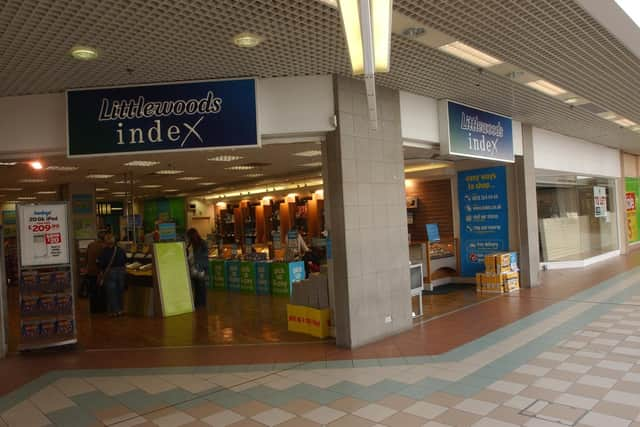
Index was launched in 1985 by Littlewoods and proved a major rival to Argos.
It initially thrived, before sales declined in the noughties, and it closed in 2005.
For many shoppers, it was a poor man’s Argos, with one person recalling: “It mainly sold the same items slightly cheaper, but never had what you wanted in stock.”
Did you have a favourite mail-order catalogue and what items do you remember circling as a child?
For more retail nostalgia, you might like our look back through the history of 12 famous UK high street chains that were once huge but are now struggling or defunct.
Comments
Want to join the conversation? Please or to comment on this article.