
The Baby Reindeer effect and why comedy at the Fringe has never been more important

Edinburgh Comedy Awards director Nica Burns spoke as more comics than ever are vying for attention at this year’s festival
It is the event which has propelled the comedy careers of Billy Connolly, Rowan Atkinson, John Cleese, Steve Coogan, Emma Thompson, Jo Brand, Mike Myers and Robin Williams.
Now the driving force behind one of the Edinburgh Festival Fringe’s most coveted awards has declared that the event has never been more important for the industry.
More comics than ever before will be vying for attention at this year’s festival, despite fears about the rising cost of staying in the city in August putting performers off.
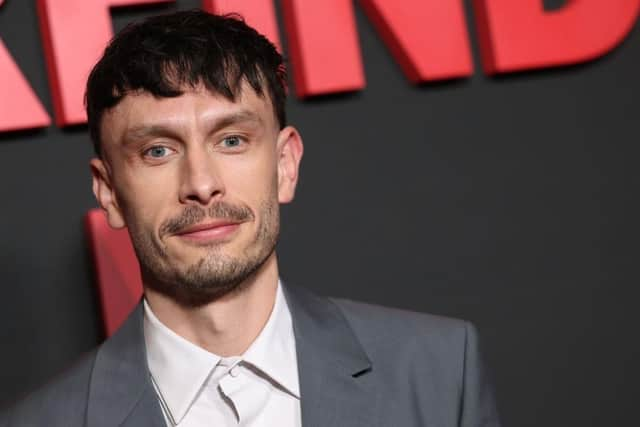

The combined impact of the success of recent TV spin-off series like Fleabag, Starstruck and Baby Reindeer, a vast influx of talent scouts descending on Edinburgh, the likelihood of being reviewed in the city and the ability to perform the same show every night for three weeks is said to have fuelled the unprecedented demand from performers.
Nearly 1600 comedy shows are currently on sale on the official Fringe website, compared to around 1100 in last year’s programme, and 1400 in 2019, when the festival attracted its biggest audience to date.
Comedy, which overtook theatre as the biggest section in the Fringe programme in 2007, now makes up a record 39 per cent of the festival.
Comics are also staging the vast majority of the 354 free and 577 pay what you want shows in the line-up, up from 308 and 463 respectively last year.

Nica Burns said although the cost of staying in Edinburgh for the Fringe had gone “through the roof” comics were determined to put on shows in the city because of the potentially life-changing prospects on offer at the event.
Ms Burns said: “The demand to perform comedy at the Fringe is as strong as ever. That’s why there are so many comedians in Edinburgh this year.
"The ‘Free Fringe’ model has made a huge difference in transforming the festival’s affordability.
"There is no doubt accommodation is by far the most expensive outgoing for comedians now.
"They can bunk up together and are not exactly living the life of Riley at the Fringe, but coming to Edinburgh is an absolute investment in their careers.
“It’s very difficult to break into the comedy industry away from Edinburgh. Awards can really help with that.
“It’s also really hard to get serious criticism of your material anywhere else.
"Being able to get a national newspaper review can make a huge difference to a comic. They still have a real weight to them in terms of helping to sell tickets.”
Ms Burns, who took over the running of the Fringe’s then Perrier Award in its fourth year, in 1984, has seen some of Britain best-known comedy talents emerge from its shortlists, including Steve Coogan, Frank Skinner, Sean Hughes, Eddie Izzard, Lee Evans and Russell Kane.
"Comics genuinely get better by performing every day at the Fringe, which you just can’t actually do anywhere else in the UK.
“Comics have a real chance of being seen professionally in Edinburgh, not just by critics but by talent scouts looking for new talent.
“If you have a good Fringe you will get more live comedy comedy gigs elsewhere in the UK, and might also get TV and radio work.”
Recent winners have went on to huge enjoy screen success including Hannah Gadsby, whose winning show Nanette was filmed for a Netflix special, Rose Matafeo, who secured a BBC commission for her sitcom series Starstruck and Richard Gadd, whose Fringe show Baby Reindeer was turned into a Netflix series earlier this year.
Phoebe Waller-Bridge, who won a Scotsman Fringe First award with the original stage incarnation of Fleabag in 2013, went on to enjoy Golden Globe, Emmy and BAFTA success with the hit BBC comedy-drama.
Ms Burns also highlighted the success of the TV panel show Taskmaster, which started life at the Fringe in 2010, when it was launched by comedian Alex Horne.
Ms Burns said: “In the old days, a comedian bringing a show to the Fringe would hope to get a one-off TV special.
“But what Fleabag and Baby Reindeer have shown is that one-person shows can be turned into full series now.
“And Starstruck was only commissioned after Rose Matafeo won the Edinburgh Comedy Award.
really given people aspirations. Comedians are looking to develop their work as far as possible.
"Richard Gadd wasn’t an overnight success in Edinburgh. He worked the Fringe the hard way and would also have a mix of genres in his live shows. We would sometimes have arguments over whether his shows were theatre or comedy.
“If one of our scouts or judges is not sure which category a good should be in we will always go along and see it so we don’t miss anything.”
Ms Burns said the growing popularity of podcasts was helping to boost the careers of comics by allowing them to build an audience at low cost.
She said: “Podcasts have been a great new outlet for comedians. Some of them have been a massive success and it’s possible to make money out of them.
"Comics are turning over a lot of material for podcasts and there’s a chance of graduating to a full TV series from a podcast.”
The main Edinburgh Comedy Award for best show comes with a £10,000 cash prize, while the winner of the best newcomer honour gets £5000.
Ms Burns said the comedy industry had become much more diverse in recent years, with the changes being reflected in the nominees for the two awards.
She added: “We had endless years when we had male-only shortlists, which I found very frustrating. They were also mostly white men. But that era has very much gone.”
Comments
Want to join the conversation? Please or to comment on this article.