
Pluscarden Abbey: I spent 24 hours living alongside monks at Britain's only functioning medieval monastery

My day at Pluscarden Abbey - Britain’s only medieval monastery still being used for its original purpose.
I was pegging damp clothes onto a washing line beside a 76-year-old monk, joking about sci-fi movies, when it struck me that almost everything I thought I knew about monastic life was wrong.
Perhaps I was being narrow-minded, but I had expected my stay at Pluscarden Abbey to be defined by silence, solemnity and even austerity. Instead, I was greeted by warmth, humour and curiosity.
One monk happily chatted about conkers, artificial intelligence and ferries while he asked if I was “making a vlog” when I had my phone out to film. There was even a lively discussion after I discovered Top Gun: Maverick was once the choice for their annual New Year’s film night.
Pluscarden Abbey has always intrigued me. Just 15 minutes from my home in Elgin, it is Britain’s only medieval monastery still being used for its original purpose. For years I had lived nearby, but never visited the remote abbey.
When I discovered the monastery welcomes guests of all faiths for retreats of “prayer, reading and work”, I couldn’t resist. I arranged a 24-hour stay with Prior Administrator Fr Simon Piątkowski and, only days later, I found myself heading towards the abbey’s ancient stone walls, wondering nervously how one greets a Benedictine monk.
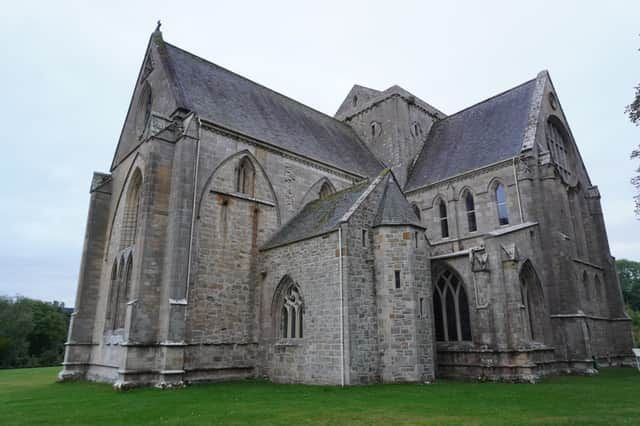

I arrived on a Monday evening and the abbey at sunset was breath-taking, its great walls glowing orange in the fading light. Two monks, Fr Giles Conacher and Prior Fr Simon Piątkowski, were waiting outside, and instantly welcomed me with smiling faces to the monastery.
“You’re very punctual, 7pm right on the dot,” Fr Giles said, glancing down at his watch.
With a rucksack of clothes and my notepad stuffed in a tote bag, I followed Fr Giles to where I would be staying for the night.
The 76-year-old monk led me through a bright, modern foyer at St Joseph’s Guest House, where a statue of the saint stood at the centre, before showing me to my room. The building only opened in March after more than a decade of planning. The women’s accommodation was incredibly spacious, with my en-suite bedroom window overlooking the gardens. I learned male guests in another nearby building dined with the monks while women, whose building had about nine bedrooms, were on a self-catered basis.
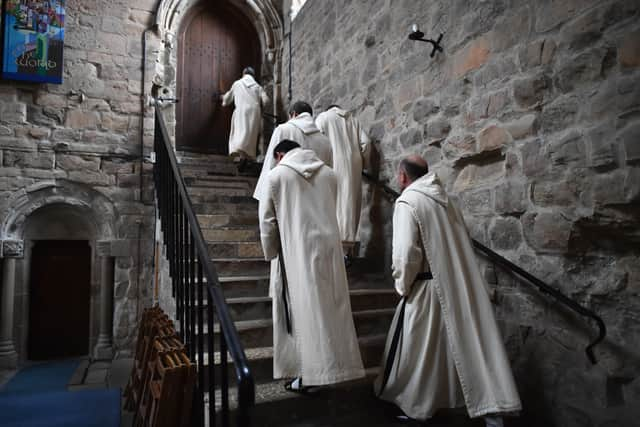
Moments later, the church bells rang and it was time for Compline, the final office of the day. I hurried into the chapel where the quiet, contemplative service unfolded in the dimmed candlelight.
The Gregorian chanting, which the monks sing entirely in Latin, unsettled me at first. It was solemn, almost eerie as I was only one of three people sat watching in the dark. But before long I felt wrapped inside it, the voices of the 16 monks blended together and it was beautiful to listen to.
“After my first trip to Pluscarden, I felt like a square peg in a square hole,” one woman, the only other resident at the accommodation during my stay, tells me as we sit down for a cup of tea in the evening.
“I’ve been coming since 2008. I come for the beauty of the services, the peace, quietness, calmness and kindness of the monks. I feel at home.”
Her words made sense. In the guesthouse common room, I was told women gathered to share life stories, laughter and even tears with each other. For many, the abbey is a refuge from modern life.
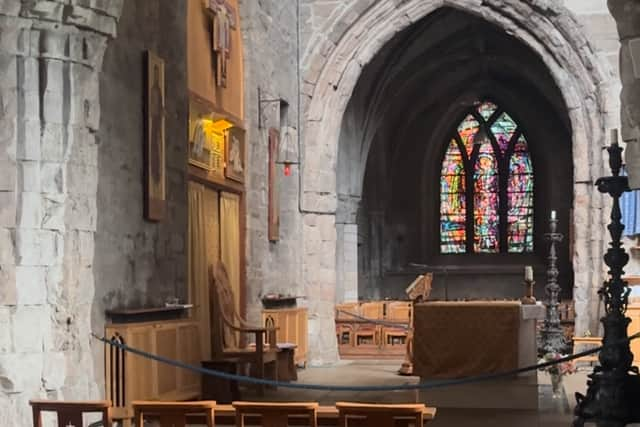
The next day, my alarm clock woke me up for 5.30am, and I then prepared to join the monks for the second office of the day called Lauds. The abbey follows the rules of St Benedict and, as part of the Divine Office, they come together seven times a day and once at night to sing the offices.
Benedictines spend five hours each day in church, three-and-a-half hours engaged in “spiritual reading”, and four hours on chores and manual labour
The abbey was cool, the sky outside still dark. Gregorian chants echoed off the stone walls as I sat in the front row trying to peer over and catch a glimpse of the monks in their white clothes.
After Lauds, back at St Joseph’s, I ate my simple breakfast - a banana and croissant brought from home - and read quietly before Mass.
Mass is the centrepiece of the day and sung almost entirely in Latin, apart from the readings. It was one of the moments that interested me most, having never been to Mass before, and watching all eight people seated nearby step forward to receive communion while I, not being Catholic, simply remained in my place, observing the whole process.
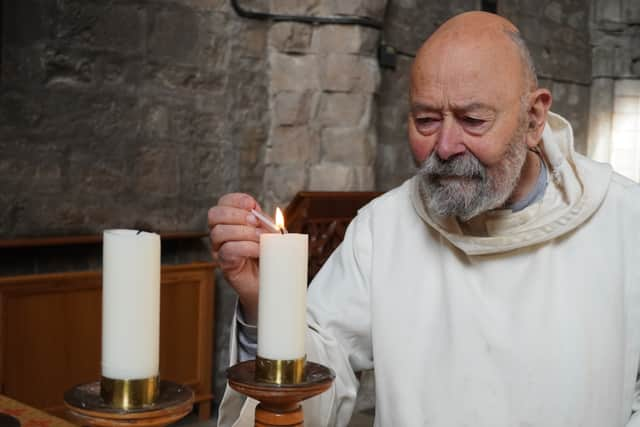
After Mass, the monks changed from their habits into denim work clothes. Fr Giles explained that everyone has assigned duties. Some would be in the gardens, some in the orchards, some in the kitchens or library.
“Ora et labora. Prayer and work,” is what Benedictine life is traditionally summarised as and it couldn’t be more true.
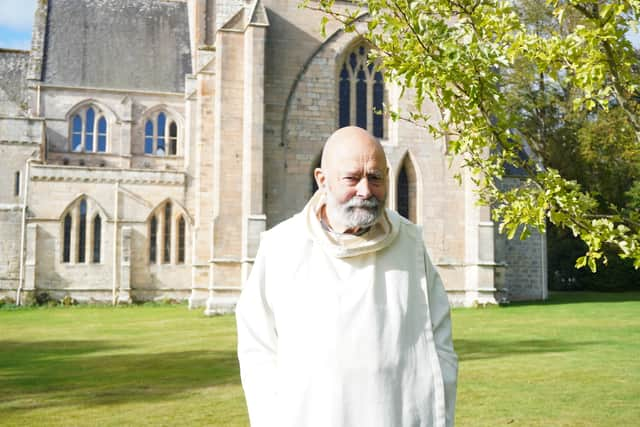
“It’s a quiet life in some ways - there’s a lot going on, but it’s not noisy or obvious,” Fr Giles, who is the current longest serving monk at the abbey and arrived at Pluscarden when he was 23-years-old, tells me.
“If it’s what you are called to, then it’s a great life. But if it’s not what you’re called to, it’s impossible. Various people come and say they want to be a monk and we give them a chance.
“The record of the shortest stay is 20 minutes. A guy came and after 20 minutes he desperately needed a cigarette. That was him.”
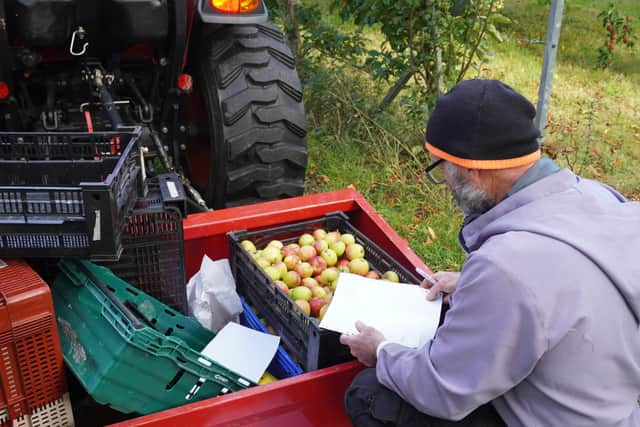
After our chat, I joined a monk in the apple orchards to help with picking the fruit, where over 120 varieties of trees were lined up. The morning light shone through the branches as we filled three baskets together and we had a brief chat where he was particularly interested to know about my career as a journalist.
We then rushed back for the next office, Sext, while my stomach rumbled and I was thankful lunch was next. Fr Giles pulled me to the side and said he’d bring a tray of food from the abbey kitchen to St Joseph’s for me - in his words, “so I could say I was ‘fed by monks’.”
After thinking back to the sorry-looking Pot Noodle from home that awaited me back at St Joseph’s, I was beyond thankful when I returned back to the kitchen and saw the tray containing a bowl of vegetable soup, a plate of eggs, potatoes and green beans - all cooked by Fr Simon.

“The cooking is all done by monks and some of the monks have unconventional ideas,” he later tells me.
“We had monks coming from Vietnam for some years to learn English. Once we put in an order to the Bishop for 24 pigs ears for Sunday lunch.”
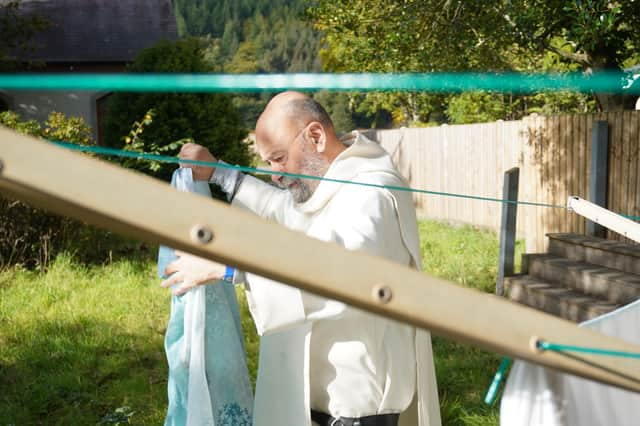
At 2.30pm came the Office of None, which was also quite short. Fr Giles then led me to the former women’s retreat accommodation St Scholastica’s and soon we were hanging linens side by side, the wind lifting the fabric as we talked about everything from the threat of AI to journalism, as well as our favourite movies.
I told him my grandparents, Bosnian refugees, had once helped paint a building adjacent to the abbey in the 1990s. To my amazement, Fr Giles was there and remembered them.
Our walk enabled us to have a chat about some lesser-known facts about the Pluscarden monks. Once a year, he said, the monks head to the nearby Hopeman beach for a day at a beach hut.
“We do monk-y things there,” he said. At New Year, they choose one film to watch together - past choices have ranged from The Martian, Finding Nemo and Top Gun: Maverick. On their 25 year and 50-year anniversaries, they also have the choice to either plan a day out for all the monks or to host a “party” of sorts at the abbey where a movie can be watched.
At 5.30pm came Vespers, one of the two “hinges” of the monastic day, marked by the chanting of the Magnificat.
Then 7pm marked the end of my time at the abbey, before Compline. I left not before saying goodbye to Fr Simon and he welcomed me back anytime to Pluscarden in the future. As I walked away towards the car park, one man I recognised who was on his own retreat, shouted over and caught up to me.
“Sorry, I thought you had accidentally missed Compline and I came to let you know about it,” he said. “It’s a beautiful service.”
That small gesture of kindness felt like the perfect reflection of the spirit at Pluscarden.