
SNP using women as pawns with Orwellian trans prison rules, court told

Aidan O'Neill KC, acting for the campaign group For Women Scotland, said women’s rights are being treated with contempt
Vulnerable women in prisons are being used as political “pawns” by the Scottish government as it seeks to defend rules allowing biological males who identify as transgender to be held in female jails, a court has been told.
Aidan O'Neill KC, representing the campaign group For Women Scotland (FWS), called the existing policy “Orwellian” and said it showed contempt for women’s rights.
Current rules allow trans people to be placed in a prison matching their gender identity if it is considered safe to do so. This does not include those with a history of violence against women and girls, and who are judged to present a risk.
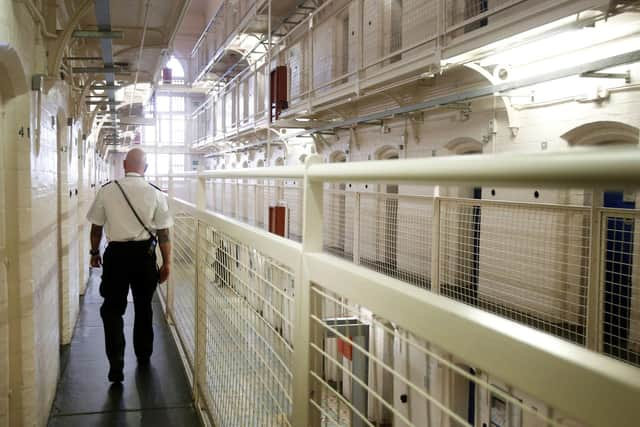

FWS has launched a legal challenge at the Court of Session in Edinburgh seeking to overturn this guidance.
It previously won a landmark Supreme Court fight against the Scottish government over the legal definition of a woman under equality law, which judges ruled is based on biological sex.
Mr O’Neill said the prisons policy is unlawful, and warned “seriously dangerous, violent men” with a history of violence against other men are currently being held in the female estate.
He cited one such inmate serving time in a woman’s prison in Scotland who he said was convicted of the torture, sexual assault and murder of a man in 2013. Another was convicted of stabbing a male neighbour to death in 2014, inflicting 29 injuries, he said.
The issue of trans women in female prisons previously hit the headlines following the case of Isla Bryson, a double rapist formerly known as Adam Graham who was initially remanded to a women's jail in 2023, before being moved to a male facility.
The Scottish government argues banning biological males who identify as trans from being placed in female prisons would violate their human rights.
However, Mr O’Neill told the court there was no relevant Strasbourg case law, adding: “So why are they fighting this? Who can say. If they don’t have a legal case, then presumably it’s a political calculation.
“But if that were the case, and frankly I can see no other explanation in the absence of the Strasbourg case law to support their claims, then what is happening here is that women in prison are being treated and used by the Scottish government in this case to be traded as pawns for political gain.
“Who knows what backroom deals have been made between the Scottish government and other parties, perhaps, that insist that this case be defended and fought before the court? Because the law isn’t in their favour.”
He added: “It’s a policy that is based on, I submit, institutional neglect of and contempt for women’s rights.”
Mr O’Neill continued: “You could almost use Orwellian terms for it, Animal Farm-like. I don’t know. Women good, but men identifying as women better. All women are equal, but men identifying as women are more equal as others.”

The lawyer said there seemed to be “an incredible sensitivity to what is said to be the rights of people claiming gender reassignment”, but the rights of vulnerable women in jails are “just not factored in”.
He said the human rights of women “can only in fact be protected and preserved by a bright line rule of no men in women’s prisons”, adding: “Where you put the men is up to the SPS [Scottish Prison Service], as long as it’s not a women’s prison.
“They can keep them in the men’s estate, they can set up their own trans estate, they can set up a small unit and all the rest of it. In a sense, I don’t care.
“It’s no men in women’s prisons - deal with that, deal with those men, trans identifying or not, but don’t make women pay the cost. Because that’s in breach of their Convention rights.”
Mr O’Neill said women in prisons are being subjected to an “enforced gaslighting culture”.
He quoted SPS statistics showing 73 trans people have been imprisoned in Scotland “at the time of or after” a 2014 change to its records system, about 20 per cent of whom have been housed on “an estate that does not match their biological sex”.
He said 51 of those prisoners were trans women, and that 14 were housed on the women’s prison estate.
Mr O’Neill said three quarters of women and girls in prison have been abused by men in the past, either physically, sexually or both.
The hearing, before Lady Ross, continues on Wednesday.
The Scottish government previously published its written note of argument ahead of the case. It says banning trans women from female prisons would violate the European Convention on Human Rights (ECHR) in respect of Article 8, which covers respect for private life, and Article 14, which covers discrimination.
“A blanket rule of the kind advanced by the petitioner [FWS] that a transgender prisoner can only be placed in the prison according to their biological sex would violate the rights of some prisoners under at least Articles 8 and 14,” the legal document says.
It argues ministers “have no power to act incompatibly with Convention rights” and a balance needs to be struck. “The whole purpose of the prison guidance is to inform the conduct of that balancing exercise,” it says.
The note of argument says the position on prisons put forward by FWS contains “fundamental errors” and the Equality Act 2010 “does not mandate sex segregation”.
It says there have been instances of trans people being held in prisons for those of the opposite sex since at least 2006.
“The number of prisoners so detained has been low,” it says. “The placement of those prisoners has not given rise to any significant operational issue in the prisons in which they have been detained.”
It also says the existing guidance “is informed by evidence...that there is an increased risk of suicide during the first three months in custody and a known increased risk of suicide for transgender individuals”.
Comments
Want to join the conversation? Please or to comment on this article.