
Scots businesses plead with Chancellor: Give us a break from constant volatility
Business leaders said it was a “relief” that the Chancellor is not expected to announce any major policy decisions when she updates the public on her plans for the UK economy.
Scottish businesses have pleaded with Rachel Reeves to give them “a break from constant volatility” in her Spring Statement this week after instability caused by previous measures introduced by the Chancellor.
Ms Reeves will deliver what many in the business community hope will be a “non-event” on Tuesday, with the Chancellor not expected to announce major policy decisions as she updates the public on her plans for the UK economy.
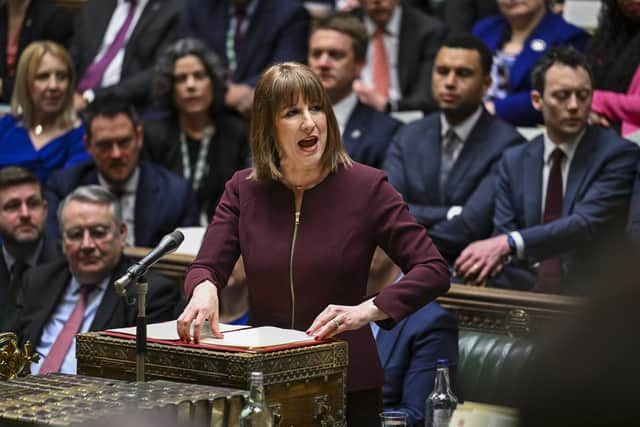

She is unlikely to make any tax or spending changes when she makes her statement and has said she only wants to make major announcements once a year, which she did in the Autumn Budget.
The Chancellor will outline the latest economic forecasts from the Office of Budget Responsibility (OBR).
Read more: 'Nonsense' to claim independence would reduce energy bills by a third, says Labour minister
Previous announcements by Ms Reeves on increases to employers’ National Insurance contributions and a significant rise in the minimum wage have been blamed for driving some businesses to the wall, while others have been forced to make savings.
The Scottish Chambers of Commerce (SCC) said that “predictability” from the Chancellor on Tuesday would be “a form of economic stimulus.”
Charandeep Singh BEM, Chief Executive of Scottish Chambers of Commerce, said: “We don’t expect any new announcements on tax cuts or funding allocations in next week’s statement. The Treasury has been clear that it intends to deliver one major fiscal event per year.
“Even in the absence of major policy changes, the statement still matters: it will shape market confidence and set the tone for the months ahead.
“For businesses, a non-event would be a relief. Over the past year, economic uncertainty and intense cost pressures have put key decisions on hiring, investment, and expansion, on hold, leaving us with sluggish growth and weak business confidence. In this environment, predictability itself helps unlock those decisions, becoming a form of economic stimulus.
“The Chancellor knows this: it’s now up to Treasury to deliver the ‘stability dividend’ which will reassure businesses and unlock capital which would otherwise remain latent.
“If next week gives businesses a break from constant volatility, then the business community will be able to plan ahead more confidently, hoping for some positive and substantial investment pledges at the Spending Review in June.”
The Scottish Retail Consortium (SRC) said “all eyes will be on the outlook for economic growth and consumer spending.”
David Lonsdale, Director of the SRC, said: “The Treasury has been keen to stress the Spring Statement won’t involve major policy announcements. This will come as a relief to retailers after a series of UK Budgets which have tightened the fiscal screws on the industry and led to higher prices at the tills.
“However, it will be interesting to see if that holds given the meagre recent figures for GDP growth and the upcoming elections in Scotland, Wales, and England.
“As such all eyes will be on the outlook for economic growth and consumer spending. Some 460,000 Scots are directly employed in consumer-facing sectors such as retail, tourism, hospitality, and leisure and there are few routes to economic growth which don’t involve improved levels of consumer spending.”
The Federation of Small Businesses (FSB) Scotland said firms need “urgent measures” to ease “unprecedented cost pressures and get the country back on the path to sustainable growth.”
FSB Scotland Chair Guy Hinks said: “Running a small business in Scotland is about to get even more expensive as a result of a raft of measures introduced by the governments at both Westminster and Holyrood. That has a real-world impact, as firms shelve hiring and investment plans, and some hit breaking point.
“On top of rising business rates bills, April will see the cost of energy standing charges, hiring staff and Statutory Sick Pay increase at a record rate. Small firms are resilient but they are not invincible.
“One in three in Scotland already expect to shrink or close in the coming year and the majority are seeing their revenue fall. They need to see urgent measures to ease these unprecedented cost pressures and get the country back on the path to sustainable growth.”
But the SNP called for the UK Government to use the statement to cut energy bills for Scots
SNP Economy spokesperson Dave Doogan MP said: "Come April, energy bills will be £73 higher since the Labour Party came to office - and people remember that the very same Labour Party promised to cut their energy bills by £300 when they were looking for votes at the last general election
"Keir Starmer's Labour Government has been defined by broken promises - so if the Chancellor wants to finally change course and actually keep a promise she should start by cutting energy bills by £373.
"Our people know that Scotland is energy rich, it is a disgrace that we are being forced to pay some of the highest electricity bills in Europe.
"Ahead of this Spring Statement - we have heard Labour boasts that the Treasury's finances have supposedly turned a corner. This sounds like wishful thinking to families upon whom Labour's cost of living crisis is biting down hard and for those whose jobs have vanished as unemployment soars.”
Andrew Prosser, head of investments at InvestEngine, said: “The Spring Statement would be a good opportunity for the Chancellor to look to ease some of the financial pressures like national insurance on businesses and offer clarity and reassurance about future outlooks.
“While some expect this year’s statement to offer little financial change, we hope to see the government provide clarity on its policies in order to build up confidence, encourage behavioural change, and improve financial outcomes for the public.”
Comments
Want to join the conversation? Please or to comment on this article.