
Passions: Why I can’t get enough of Romania

Tourists are beginning to discover Europe’s best-kept secret of Romania – but hopefully not too many of them
When I’m feeling a bit homesick, I like to make soup. Vegetable broth with carrots and peppers, all chopped up into tiny pieces and cooked up in stock. Before I serve it, I add a handful of dill and pop in a dollop of sour cream. Perfection. Ciorba.
What I’m feeling homesick for isn’t my actual hometown – I’m close enough to Teesside to pop down for a chicken parmo whenever I like – but my adopted country of Romania. I haven’t been back in five years, mainly due to the pandemic, which has got me out of the habit of my usual annual visit.
There is nothing like Romania, a country which relatively few have visited, in my opinion, than for no other reason than that it is not on most people’s radar – although tourist numbers are starting to creep up.

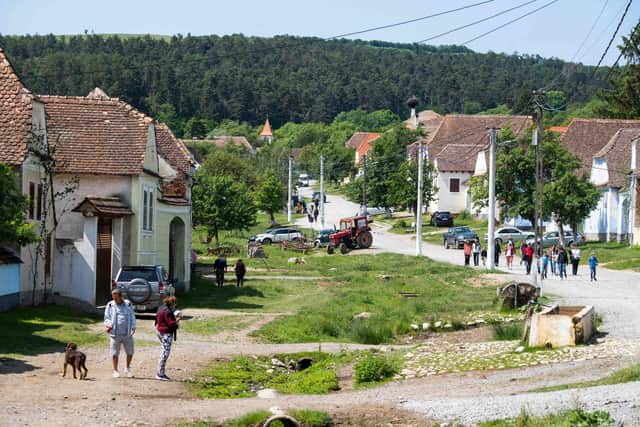
I first went there in 2000 on a now-defunct English teaching scheme for Scottish students. I had no expectations or to be honest, any real interest: my friends were going and I’d recently been dumped by a boyfriend. Spending the summer in Romania seemed like as good a thing to do as any. But as quickly as the boyfriend had fallen out of love with me, I fell in love with Romania – and the relationship has lasted far longer.
Something about its sweeping mountains, its strangely constructed haystacks; its cultural quirks and entirely illogical essence of being got into my blood. A country newly-born in its post-Communist life was exciting. Anything was possible, yet in some ways, nothing was, in a nation still partly confined by 15 years under the rule of dictator Nicolae Ceausescu, which had come to an end just a decade earlier.
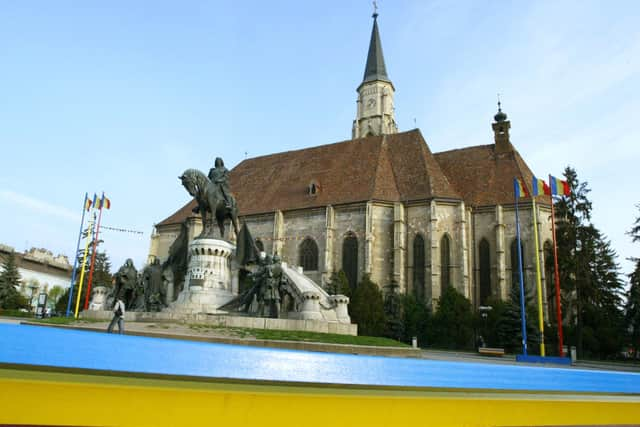
Two years later, after I graduated, I looked for a job there and found one, not in the small rural town I’d previously visited, but in a larger university city in Transylvania, called Cluj. I knew all of the ex-pats in the city, there were only about ten of us.
I spent a blissful year teaching English: spending my time eating covrigi and sarmale and drinking Ursus beer in pavement cafes with shiny new Coca Cola umbrellas, before real life beckoned and I came home to take a journalism post grad degree and embark on the career that is now allowing me to tell you about this.
Until the pandemic, I tried to visit every year, catching up with old friends, still snacking on covrigi and sitting in – more hipster now - pavement cafes drinking Ursus beer before heading off to somebody’s mum’s house for a special meal of sarmale.
Romania is my happy place, somewhere I can remember both what it was like to be 22 with no responsibilities of adult life – and also relive a period of history which few bother to remember now. Cluj, now, is a Western, cultural city, with plenty of disposable income thanks to a thriving IT industry, international restaurants and flat whites.
It is very different to 25 years ago, but I still love it.
Until I make it back, hopefully early next year, I’ll just have to keep making soup.
Jane Bradley is World Editor at The Scotsman
Comments
Want to join the conversation? Please or to comment on this article.