
Myanmar earthquake: Remembering 100 days on from a catastrophic disaster
The response to the emergency appeal for Myanmar has been inspiring, with £2.3 million raised in Scotland and £26m UK wide, but more is needed as country tries to recover and build for the future, writes Madara Hettiarachchi.
With so many devastating humanitarian crises happening all over the world, it can be difficult to keep up with what has happened in the past few days, let alone the past 100. But that is now the time that has passed since millions of peoples’ lives where shattered by the powerful earthquake in Myanmar.
I have worked on many earthquake responses over the years and yet it is still shocking to see how so much destruction can happen so quickly and leave a legacy for years to come. In seconds, the ground was torn apart, buildings collapsed with countless people left buried in the rubble – thousands died, and so many more have suffered life-changing injuries.
Even before this catastrophic disaster, 19 million people were already in need of humanitarian aid after years of instability in the country. With 17 million people estimated to have been affected in some way by the earthquake and the repeated aftershocks, this is a compound disaster, a crisis upon a crisis.
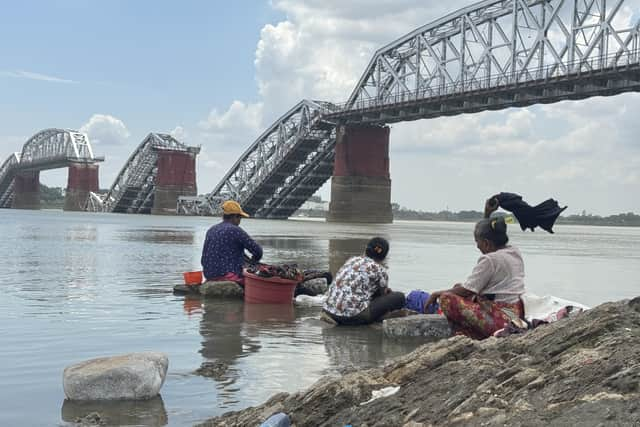

You may remember that the first images of the destruction came not from the epicentre near the historic city of Mandalay but from the Thai capital, Bangkok, more than 1,000 kilometres (600 miles away). The huge area affected was not only down to the strength of the quake, 7.7 on the new Moment Magnitude Scale (Mw -a newer more accurate version of the better-known Richter scale) but because scientists believe it was what is called a “supershear” earthquake – the underground equivalent of an aircraft’s sonic boom.
Far from the media’s gaze, early estimates from regional relief agencies reported that 700 hospitals across Myanmar, 2,600 schools, 400 roads, 95 bridges and 52,000 houses were damaged or destroyed, causing around £1.75 billion worth of losses.
Emergencies on this vast scale need both an immediate life-saving response but also longer-term support for those whose lives have been turned upside down by the earthquake on top of existing hardship and the increasing effects of extreme weather driven by the climate crisis.
The Disasters Emergency Committee, comprising 15 UK member charities and crucially their expert local partners – eyes, ears, hands and hearts – is uniquely placed to help in such circumstances.
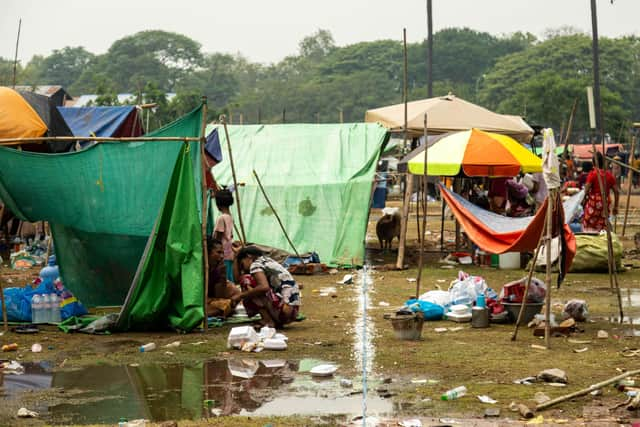
In the early days, the key challenge was just reaching all the people affected, especially in more remote rural areas, largely cut off by unpassable roads and bridges. This was then compounded by stifling heat followed by monsoon rains and flash flooding.
Despite these extreme challenges, the determination and skill of local aid workers – many directly affected themselves along with their families – have helped save many lives and are now protecting many others against the continuing threats.
From early hours life-saving medical care and first aid, donations to the Appeal here in Scotland and beyond have since allowed the delivery of shelter in the form of tarpaulins and bamboo shelter kits, water purification tablets, mobile health clinics and emergency cash assistance – increasingly used as a simple and effective way of helping families buy what they need from local markets with a degree of choice and dignity.
Pregnant women and new mothers are always a priority in humanitarian emergencies, along with elderly people and those with disabilities. Nutritious food for mums and newborns has been a key part of the response so far.
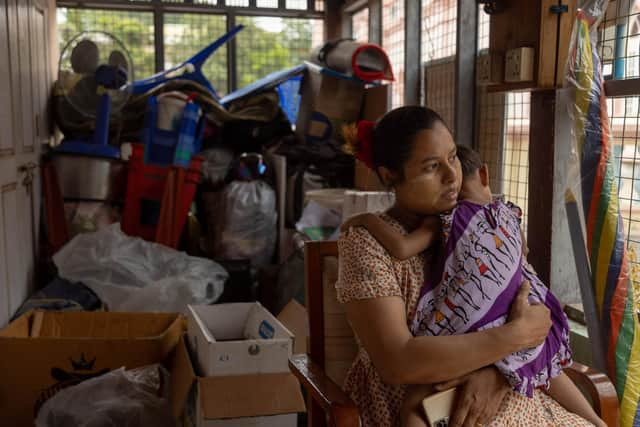
As time passes, the less obvious impacts of the earthquake come to bear. There is understandably enormous trauma throughout the population, particularly for young children trying to make sense of what has happened to them, their families and friends since the earthquake.
The fear was made worse by the frequent and disturbing aftershocks in the early days after the main quake. Children of all ages have to be protected from physical threats in this dangerous environment but also need to be given space to feel safe and perhaps start to talk, to come to terms with what has happened to them.
Many DEC members have expertise in creating child-friendly spaces, a haven amidst the chaos and devastation, where, alongside food and drink, there are games, creative and other education activities that can give children and their parents some respite and vital support to help them get through. This support was up and running very soon after the initial rescue and recovery efforts.
Water is life, literally, in many parts of Myanmar. With taps, sinks, pipes and toilets destroyed, clean, safe water, is always the central need in a disaster like this.
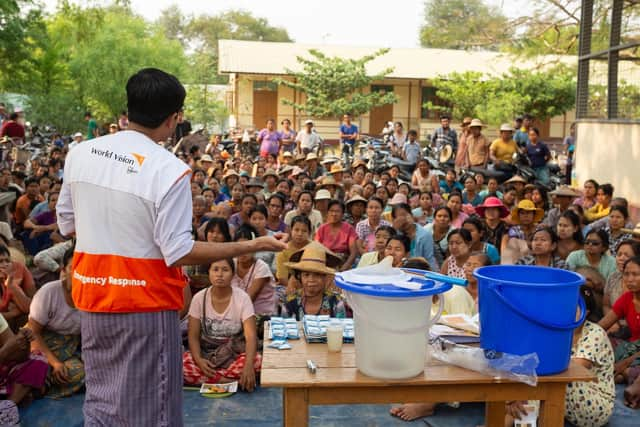
In the initial part of the response, the priority was to provide bottled water and/or the supply of water purification tablets and other systems and supplies to maintain hygiene. In the months to come, member charities will again use their expertise to advise and work alongside local authorities to rebuild water supplies, wells, pipes and taps, and toilets in the places where they’re needed the most.
Set against all the current domestic and other challenges, the response to this Appeal has once again been inspiring. We would like to thank everyone who has donated so far, bringing the total raised across Scotland so far to £2.3 million and beyond £26m UK-wide.
With aid being cut back, these figures make the DEC the currently third largest global funder of this ongoing humanitarian effort.
All donations are a simple, yet powerful act of global citizenship, allowing our members and their partners to respond flexibly for many months to come as families and communities start to recover and think towards the future.
With that in mind, if you haven’t already supported our work, I really hope this explanation of what we do and how we work, particularly in support of these communities in crisis might help persuade you to donate now.
You can donate at dec.org.uk, by phone on 0330 123 0555 or by texting the word HOPE to 70727 to give £10.
- Madara Hettiarachchi is director of programmes at the Disasters Emergency Committee (DEC) in Scotland.
Comments
Want to join the conversation? Please or to comment on this article.