
Ebola: ‘Global risk’ is low but local worries grow


The new outbreak of a rare Ebola type in the Democratic Republic of the Congo and Uganda poses low global risk, the World Health Organisation has said, but responders on the ground described being underprotected and undertrained for a rapidly spreading virus with no approved medicine or vaccine.
The risk assessment came as the leader of the WHO team in DR of Congo said yesterday that the outbreak, which has led to 134 suspected deaths, could last at least another two months as aid efforts intensified in bid to stem the spread.
The WHO has declared the Ebola outbreak a public health emergency of international concern, requiring a co-ordinated response.
On Tuesday it expressed concern over the “scale and speed” of the outbreak.
Worried residents have reported rising prices for face masks and disinfectants following the outbreak of the rare strain, known as the Bundibugyo virus, which spread undetected for weeks following the first known death as authorities tested for a more common type of Ebola which came up negative, health experts and aid workers said.
There are no approved medicines or vaccines for the Bundibugyo virus.
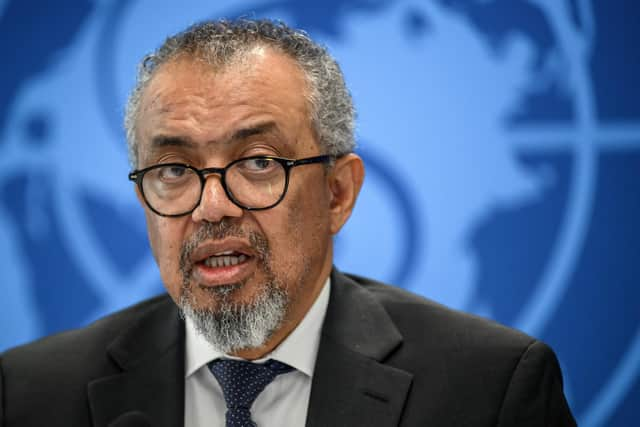
So far 51 cases have been confirmed in DR of Congo’s northern provinces of Ituri and North Kivu, as well as two in Uganda, WHO director-general Tedros Adhanom Ghebreyesus said yesterday.
Beyond that, there are almost 600 suspected cases and suspected deaths, he said.
“We know that the scale of the epidemic is much larger,” he said. “We expect those numbers to keep increasing.”
DR of Congo was expecting shipments from the US and UK of an experimental vaccine for different types of Ebola, developed by researchers at Oxford, Jean-Jacques Muyembe, a virus expert at the country’s National Institute of Biomedical Research, told reporters on Tuesday.
“We will administer the vaccine and see who develops the disease,” he said.
Health experts said that the delayed detection of the virus, large movements of population in the affected areas, as well as the pre-existing humanitarian crisis, complicated the response.
Parts of DR of Congo are in the hands of armed rebels, hampering the delivery of aid.
DR of Congo said the first person died from the virus on April 24 in Bunia, but the confirmation did not come for weeks.
The body was repatriated to Mongbwalu, a mining area with a large population.
“That caused the Ebola outbreak to escalate,” said DR of Congo’s health minister Samuel Roger Kamba.
Dr Anne Ancia, the head of the WHO team in DR of Congo, said authorities still have not identified “patient zero”.
There was a long road ahead, she said, adding that cuts in funding had “a marked detrimental effect on humanitarian actors”.
In Bunia, the site of the first known death, schools remained open and some residents were wearing masks in the street.
Residents said that masks have become harder to find and that some disinfectants previously sold for 2,500 Congolese francs now cost up to 10,000 francs (£3.25).