
Why Johnny Cash loved Scotland - his son John Carter Cash talks Fife roots ahead of the family musical
Johnny Cash and June Carter’s life and music is brough to life in a hit-filled show created from the words of their son John Carter Cash, who talks about their love for each other, Scotland and home cooking


John Carter Cash, the singer/songwriter/music and film producer, author and only child of country music legends Johnny Cash and June Carter is showing me his tattoo, copied from a drawing done by the Man in Black himself, showing the family’s links to Scotland.
“My father was very proud of his Scottish roots and when I wanted to get a tattoo he drew the Cash coat of arms from the 1200s and I took it to the tattoo artist. I still have the paper he drew it on,” he says, pulling up his sleeve and revealing his inked arm.
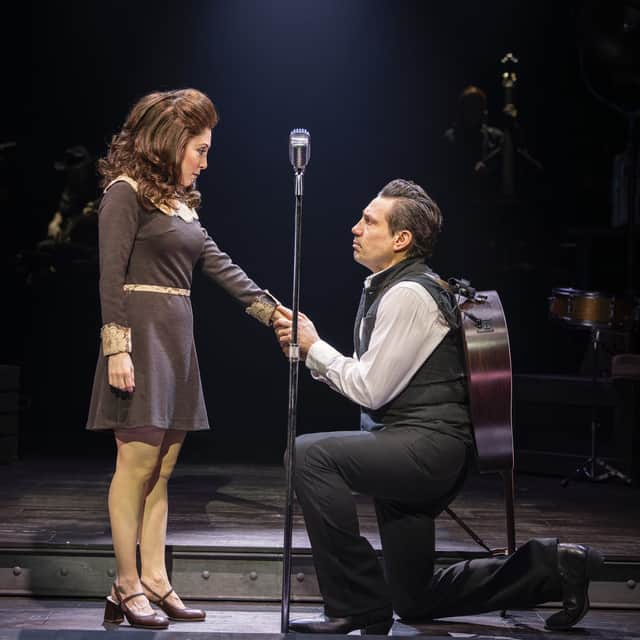
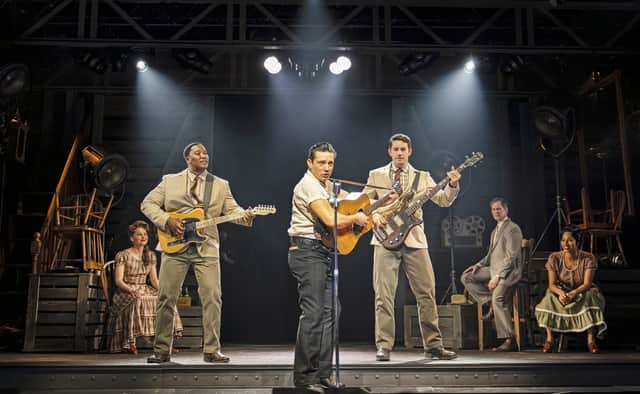
I’m speaking to Carter Cash ahead of the new UK tour of The Ballad of Johnny and June, a musical version of his parents life and love which arrives in Edinburgh at the Festival Theatre this month and Glasgow Pavilion in August as part of a UK and Ireland tour.
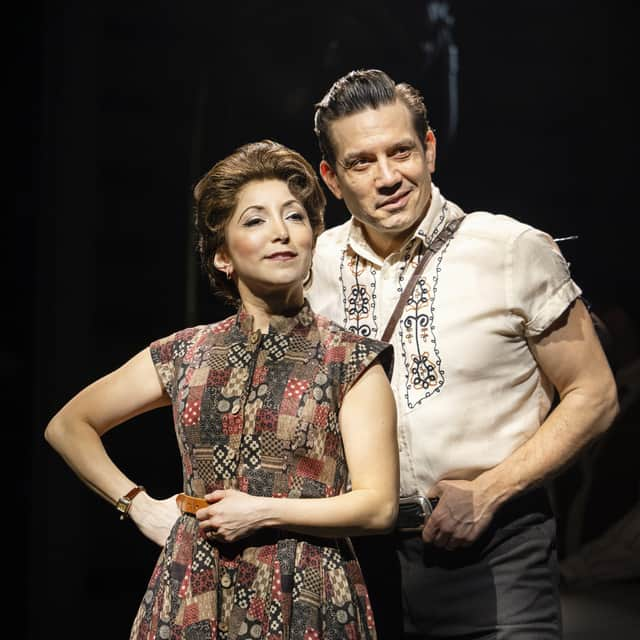
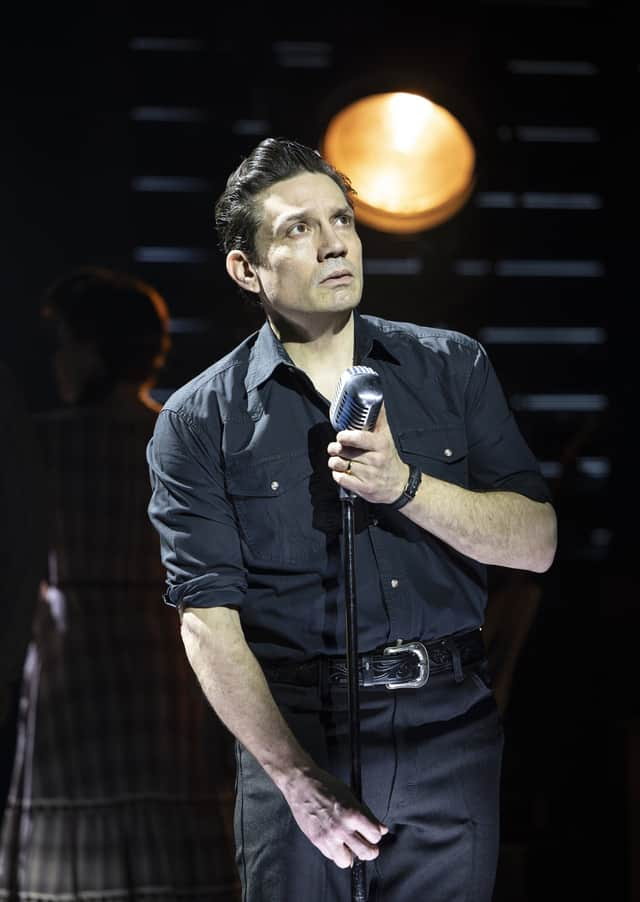
Carter Cash, 56, is central to the show, starring Christopher Ryan Grant as Johnny Cash and Christina Bianco as June Carter, as it’s based on his memories and recollections of his parents, narrated by a character based on him played by Ryan O’Donnell and featuring a soundtrack of hits, including I Walk The Line, Ring of Fire, Jackson, Hey Porter, I’ve Been Everywhere and Wildwood Flower.

As we talk over zoom Carter Cash tells me how his father, who died in 2003 at 71, traced his ancestors back to Fife in the 17th century. Discovering he was descended from a William Cash who lived in Strathmiglo and that the surname is linked to the MacTavish clan, the singer believed his family to be descended from Ada, sister of King Malcolm IV (1153-1165). The revelation led him and June to visit Scotland many times, and his son continues to do so to this day.
“I have a MacTavish tartan kilt, yeah,” says Carter Cash. “Although I haven't worn it in a while. It’s time I got it out again.”
Fascinated by his Scottish links, Cash filmed a TV special in Falkland in October 1981 in which the 11-year-old John Carter Cash sang Wee Cooper of Fife, and also performed in Edinburgh. Falling in love with Scotland, the family returned to explore several times in the 1980s and 1990s, with Cash even checking into hospital under the name of ‘Malcolm’ in later years.
“Yep. Malcolm after the king. Actually I was just in Strathmiglo and Falkland not too long ago, love that area,” says Carter Cash. Back in 1980 I think it was we flew into Edinburgh and drove to Fife, then spent the week going across the Cairngorms, up to Inverness, then back down past Loch Lomond to Glasgow. We loved it.”
Does he think the Scottish link influenced his father’s music at all?
“The folk songs definitely did,” he says. “He knew those. When dad heard a song he never forgot it and he was greatly influenced by Celtic music, from the Carter family songs and other songs in America that directly came from that.”
Born in 1970, Carter Cash followed his parents into music and is a Grammy-winning producer, whose credits include albums by his parents as well as Sheryl Crow, Loretta Lynn, Willie Nelson, Elvis Costello, Kris Kristofferson, Emmylou Harris and Vince Gill. He also executive produced the Johnny Cash film biopic, Walk The Line. A father of five, he is married to the singer Ana Cristina Cash and author of eight books, including two about his parents, a Cash and Carter family cookbook of favourite recipes, a novel and four children’s books.
Music was the lifeblood of Johnny and June’s lives and the couple, who were married for 35 years until June’s death in 2003 (Johnny died four months later), won 18 Grammys between them, with Cash selling more than 90 million records worldwide.
“Johnny and June’s music was inseparable from their lives, and this musical captures that truth through powerful story telling by a brilliant company, set to their genre-defining music,” says their son.
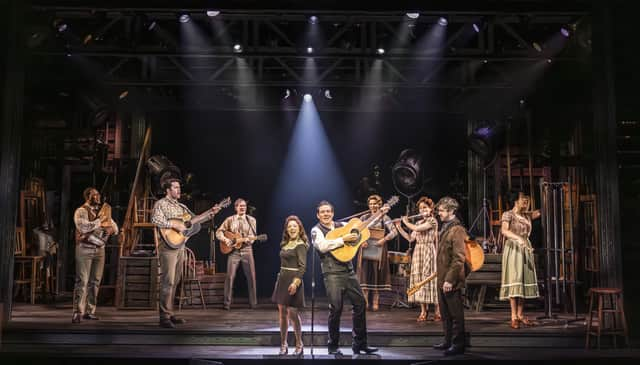
Carter Cash was drawn to the show because it was directed by Des McAnuff, who also directed the musical Big River:The Adventures of Huckleberry Finn, which features country and bluegrass music.
“That was my father's favorite so it seemed serendipitous and meaningful. We started with the songs then I did interviews with the writers and they suggested my character break the fourth wall and guide everybody through and sing the theme song. It's definitely interesting to see myself portrayed on stage, sort of fun,” he laughs.
Johnny and June had always liked the idea of a musical about their lives.
“It was a passion of theirs and I love stage, and try to keep an eye on what's happening with their legacy, so this had been on the list of things I would like to see happen for a long time.”
“It's the full story. I don't think a lot of people know the story after Walk The Line, after they married. They don't know the hardships they went through and how they made it through the years, how they forgave and the strength they gained, the love they continued to share. There's a lot I think people will connect with. It's really the only place you can see the whole story and it does it in a beautiful way.”
How did they get through the hardship and make their marriage work for 35 years?
“I think they were stubborn, and very forgiving by nature. They were very loving and good-hearted people. When the harder years passed, they put them behind them and moved forward. ‘Press on’ was my mother’s life's motto.”
Given that music was central to their existence, does he think this helped how they approached life?
“Oh yeah, music is magical. Music is healing. For my father, all through his life, music was important, and at the end his only real form of self-expression. He lost his eyesight but could still sing the songs he knew growing up. He could still get into the studio and make music. It was his way of continuing after my mother passed away. Music was his life blood, my parents' life blood. It was everything.”
Carter Cash has grown up in the public eye, but even so, was it hard to put some of the struggles and hardships into the musical.
“I don't think you really appreciate the light and beauty, unless you really look at the darkness, the struggles. Seeing that, we notice the beauty and that's what it's about.”
Was anything off limits?
“Yeah, there's certain things you just don't go there. But it was not off limits to go to the darkness if there was a point to be made that was beautiful. If there was something that might help people or show how my parents healed through struggle, that was very important.”
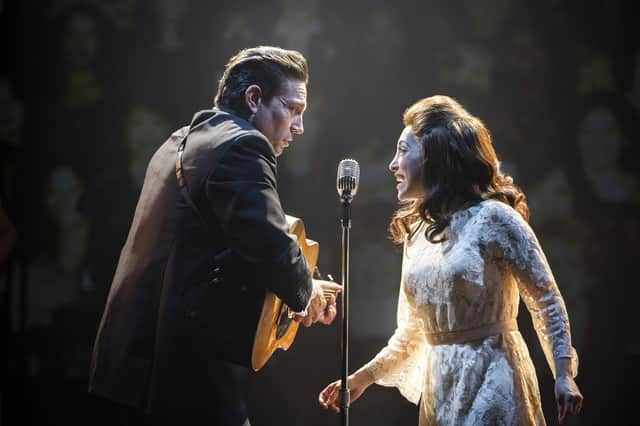
With two lifetime’s worth of songs to choose from, Carter Cash had a big job, but was always aware that fan favourites had to be included.
“Most of the ones I chose wound up in there because they tell the story of my parents' life, and the hits had to be there too. The portrayals are wonderful, the dialogue’s great - and a lot of what is said came directly out of my mouth. Their humour is in there too.”
The song that resonates most with Carter Cash is The Singer of Songs.
“It’s on the Unearthed box set and really shows my father's character, the truth of his life. It's a beautiful song and not as many people know it. It works wonderfully in the play. There’s also a duet my parents recorded that wasn't a big hit called Baby Ride Easy, which is very powerful.”
Despite being music royalty, with awards and fans galore, Carter Cash says his parents never forgot their roots.
“It showed in the way they treated people, the way they forgave and how they treated their loved ones. They would treat the president the same as the person at the grocery store. They were just good people and it came from the way they were raised. They were loving, gentle people. If you knew them, you knew you were loved by them. They brought you into their heart. And they were fearless.”
How does Carter Cash think they would like to be remembered by people, aside from through their music?
“Well, the same that I would like to be remembered. My father said it, as being a good, loving father. And that's the most important thing, that my children remember me that way too. To be remembered for the good things I did in life and the way I’d helped people on personal levels, that's important. And that the music carries on.”
In Walk the Line Johnny Cash’s relationship with his own father is portrayed as being uneasy in his younger years, but Carter Cash says Johnny never raised his voice to him when he was a child.
“Yeah. And I never saw him have any problem with my grandfather either. I never heard my grandfather raise his voice. My dad was with him every day when we came home from the road and we'd sit with him for hours, so their relationship had healed a whole lot by the time I came around. That's not something you'll see if you watch Walk The Line. It doesn’t show the healing at the end.”
Carter Cash has always had to share his parents with the public. Was he ever jealous?
“I've been told that's the way I felt, but I don't think I was ever jealous. My father would perform and I would be amazed by him when I was little. I remember feeling ‘oh, I love my dad’ and tried to imitate him and be like him. I was a little red-haired kid but wished I had my dad's black hair.
“Later in life I got to where I knew who I was and made my own imprint. And I have a creativity that is far beyond just things to do with Johnny Cash and June Carter. I am a visual artist - I paint, and want to be respected in that field - and have my own music that I love and make with the people I like to make music with. Those two things are what I want to do with the remainder of my professional life. And spend time with my children.”
His solo album Pineapple John was released in October last year, and he describes it as ‘Jimmy Buffett meets Pink Floyd’.
“I don't know how else to put it. It's folk songs, but it's also got a country feel in places. It's a story album about a character, Pineapple John, a washed-up singer songwriter and there’s tragedy, but also joy and happiness. People used to call me Colonel Pineapple when I was younger and somehow I transferred that to this character. It is the anti 2026 album, like an old album from the 1970s, a concept album. Check it out.”
Did his parents encourage him to become a musician when he was growing up?
“They were so loving and supportive of whatever I wanted to do with my life and stood behind it, but they were also passive to a certain extent. They weren't the kind of parents that would say, ‘you have to do your studies’ or ‘you have to go play your instrument’. Maybe they should have been a little tougher.”
Surrounded by music, it was perhaps inevitable that Carter Cash would grow up to learn to play guitar.
“My dad did write out three chords on the guitar, and the first riff to I Walk The Line. He drew the neck of the guitar and where you put your fingers to play chords and gave that to me when I was 10 years old. Other than that, he didn't really teach me much guitar. I learned on my own when I wanted to play rock and roll. It took me falling in love with heavy metal, Motorhead and ACDC, before I learned. I was into hard rock. That was my deal when I was young and really why I learned guitar.”
Looking back, Carter Cash’s favourite memories of his parents include their trips to Scotland.
“It’s the good times, that vacation in Scotland when I was 10 years old, the fishing trips I went on with him to Canada when I was young. The time we all fished a river in Alaska when I was 13 and fell in the river with waders on. I could have died, but a guide got me out. It was time alone with them, times we spent together doing fun things.“
Carter Cash is disappointed not to be joining the show when it visits Scotland, which he regards as ‘my second home’.
“I love Scotland. I go every other year to friends near Glenfinnan and hunt stags. I grew up hunting. My father taught me. Small game when I was younger, then deer in my twenties. To eat it, it’s best soaked overnight in salt and buttermilk then cooked like beef.”
The family were big on cooking, which is why he recorded their favourites in The Cash and Carter Family Cookbook: Recipes and Recollections from Johnny and June’s Table.
“The tomato gravy is really good, a southern-style recipe my grandmother created. There’s a barbecue sauce that turns out really good and the way we cook chicken is a family recipe. I like some of the Cuban things my wife helps me cook, vaca frita [crispy shredded beef], and I like a little spice - my father made delicious Tex-Mex style chili and taught me how to make it.”
Cash called this his ‘old iron pot chili’, while his mother has a recipe called ‘stuff’.
“Yeah, ‘stuff’, vegetables fried with hot pepper cheese. I love it. And Scotch eggs are in there also.”
It’s not just recipes that were handed down, with Johnny and June rarely throwing anything away. As well as all of their recordings, clothing and household items kept too and right now Carter Cash is sitting at his father’s old desk.
“He sat at this for many years. It's oak, mid-1800s and people weren't as tall so you can see it’s not huge.”
What about guitars, he must have inherited a few?
“I have a few, but a number are in museums. My favorite guitar I have is probably the Rosanne Cash series one my sister created with Martin. I play that more than anything.”
Finally, what would he hope people take away from the show?
“A feeling of hope. And that it works to stay together, that love has power and heals. That it's better to forgive and to hope, to choose love rather than hate. It tells the truth, and still honors them. I think they would like that.”
If he could see his parents again, what would he like to do?
“It would be a joy to share their grandchildren with them, just spend time, fish with my dad and sit in the kitchen with my mother, hear her talk. Just listen to them laugh, love life. It was such a good time. “
The Ballad of Johnny and June, Edinburgh, Festival Theatre, 28 April-2 May, and Glasgow Pavilion, 13-22 August.
Comments
Want to join the conversation? Please or to comment on this article.