
Victims' groups hail 'momentous' end to not proven verdict amid warnings of miscarriages of justice
Legal expert sounds caution that historic change is not a ‘magic bullet’
Victims groups and survivors of sexual violence have welcomed a landmark vote to abolish the centuries old not proven verdict, describing the decision to scrap the unique legal ruling as a “momentous” occasion.
The decision by MSPs to approve major reforms via the Victims, Witnesses and Justice Reform (Scotland) Bill heralds the end of the contentious verdict, which can be traced back to the 17th century. The passing of the bill also introduces a two-thirds majority for a guilty verdict. At present, a simple majority of eight jurors out of 15 is sufficient.
One rape survivor who has campaigned for years to scrap the verdict said it would result in a “fairer and clearer” legal system. However, critics of the move said it did away with an “important safeguard” and questioned whether there would be “unforeseen consequences” as a result of the legislative change.
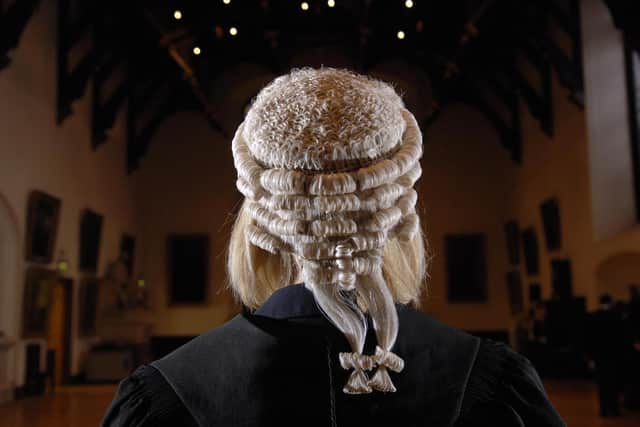

Miss M, the woman who launched the End Not Proven campaign with Rape Crisis Scotland in 2018, said the removal of the verdict would give survivors and their families “back their voice.”
She said: “Throughout the campaign, people were shocked to hear I’d have preferred a not guilty verdict over a not proven verdict, but I’ve always said there is no difference between not proven and not guilty. At least with a not guilty verdict, the jury make a decision.
“We have all spoken up about how damaging this verdict is. Today we have been listened to and the improvements to the legal system are going to make it fairer and clearer going forward.
Miss M, who successfully sued her rapist, Stephen Coxen, in the civil courts, following a not proven verdict in a criminal trial, added: “To know that another rape victim isn’t going to experience what I had to go through after my criminal trial ended is the very reason I’ve invested so much time and energy into this campaign.”
MSPs voted 71 to 46 in support of the SNP government’s wide-ranging legislation, with justice secretary, Angela Constance, stating that the bill will chart “radical improvements to how sexual offences are dealt with,” with victims and witnesses put at the heart of a modern and fair justice system.

The bill also includes the establishment of a sexual offences court, an independent victims and witnesses commissioner for Scotland, with victims of sexual offences and other specified crimes - including human trafficking and modern slavery - receiving an automatic lifelong right to anonymity.
Scottish Labour’s justice spokeswoman, Pauline McNeill, said that “the real test will be the transformative change for victims that the government promises,” while her Scottish Conservative counterpart, Liam Kerr, warned the bill “misses so many chances to do much more, as his party refused to back the legislation, despite supporting the abolition of the not proven verdict.
Rape Crisis Scotland said the not proven verdict was used “disproportionately” in cases of rape and other sexual offences. In 2022/23, 48 per cent of rape and attempted rape cases resulted in convictions, the lowest rate for any type of crime. Over the same period, not proven verdicts made up 61 per cent of rape and attempted rape acquittals, compared to an overall rate of 22 per cent for all criminal offences.
The organisation’s chief executive, Sandy Brindley, said: “Miss M and countless other survivors have campaigned tirelessly to remove the not proven verdict. Their experiences represent the many people across Scotland who have been let down by not proven - a verdict that was impossible to define, confused jurors and the wider public, prevented closure for victims, and was ultimately no different than a verdict of not guilty.”

Kate Wallace, chief executive of Victim Support Scotland, said the passing of the act was a “momentous occasion” for Scotland’s criminal justice system, and marked a significant step toward creating a system that “considers and prioritises the needs of people impacted by crime.”
Another longstanding opponent of the not proven verdict, Scottish Women’s Aid, said the decision was “long overdue” and said juries and victims did not understand the verdict, which has no official legal definition.
A spokeswoman for the charity said: “In domestic abuse and sexual assault cases, survivors have courageously and consistently called for abolishing not proven, a verdict that offers no justice and destroys survivors’ confidence in our justice system. We applaud the survivors, Rape Crisis Scotland and all those who have campaigned so vigorously for abolition.”
But the Law Society of Scotland raised concerns that the passing of the bill could lead to the increased potential for miscarriages of justice as a result of changes not backed by research.
Stuart Munro, convenor of the society’s criminal law committee, said: “The fundamental purpose of any criminal justice system is to convict the guilty and acquit the innocent. We’re moving from a system with a proven track record of achieving that outcome to one which is entirely untested and does not exist in any equivalent legal system anywhere in the world.

“The fact that no other jurisdiction operates a three-verdict model is commonly given as a reason for proposing its abolition, but we have significant concerns about following other systems in one respect but not in terms of the jury majority required for a conviction.”
Simon Brown, president of the Scottish Solicitors Bar Association, also raised doubts, arguing that the vote would do away with a “safety valve” for jurors.
“There is little or no evidence to suggest that the not proven verdict has led to any incorrect verdicts or miscarriages of justice, and its use to allow juries to express a view of the quality of evidence in a case was, in our view, an important safeguard,” he said.
“The only difference between not guilty and not proven verdicts is one of emphasis, and it follows that not proven allows juries a 'safety valve' where they can express some misgiving or doubt while falling short of convicting someone of a crime where they were not in fact satisfied of their guilt.”
Mr Brown added that there may be “unforeseen consequences” in removing not proven at the same time as the courts have “significantly rolled back the need for corroboration”.
James Chalmers, regius professor of law at the University of Glasgow, said the verdict was “never one that was easy to defend,” but stressed that its abolition would not solve the “many problems” with delivering justice in sexual offence cases in Scotland.
“We know from experimental research that its existence makes jurors slightly more likely to favour acquittal, but the changes the new law makes to the majority required for conviction may pull in the opposite direction,” he said.
“The best argument for abolishing not proven has always been that the verdict makes little sense, running against the presumption of innocence by introducing some sort of third choice between conviction and the acquittal verdict of not guilty.
“Sexual offence complainers have made it clear in recent years how distressing they find the not proven verdict but that does not mean that its abolition will somehow solve the many problems with achieving justice in sexual offence cases - removing the verdict is only one of a range of measures in the bill which will hopefully all improve the system slightly, but none of which is a magic bullet.”
Tony Lenehan KC, vice dean of the Faculty of Advocates, said: “With the passing of this bill, the Faculty of Advocates will work with the courts service and Scottish Government to help translate and implement the changes the bill represents, into the new justice system envisioned by parliament. We hope that the measures deliver as they were designed. We would call to parliament's mind that investment is crucial to the success of the changes, and that the parlous condition of Scottish legal aid solicitors will undermine the ambitions of the bill, if not recognised urgently.”
Comments
Want to join the conversation? Please or to comment on this article.