
'Vicious cycle' warning as hundreds of teachers lost from STEM subjects in Scottish schools
Government urged to increase incentives to attract new teachers

Ministers have been urged to address a teaching crisis across Scotland’s schools, where there has been a sharp decline in the number of maths, physics, computing and technical education teachers since the SNP came to power.
The Scottish Liberal Democrats warned the falling numbers of science, technology, engineering and maths [STEM] teachers would have a direct impact on the Scottish economy and hamper efforts to bolster key industries.
The party’s analysis of official teacher data published by the Scottish Government also stressed the shortfall in secondary STEM teachers was having a negative impact on pupils aspiring to high-skilled, high-paid employment.


The data shows while there were 2,787 teachers who taught maths as their main subject in 2008, the number fell to 2,424 in 2024 - a decline of 363 - with 32 maths teachers lost in the 12 months to 2024 alone.
The number of physics teachers has also shrunk over the same time period, down from 887 in 2008 to 796 in 2024. Computing studies teachers have also been on the wane, with 216 fewer staff in 2024 compared to 2008. There were also 180 fewer technical education teachers.
The analysis of the data comes on the back of statistics released last week that showed the number of post-induction scheme teachers finding full-time permanent contracts had fallen by more than half in the past seven years.
Willie Rennie, the Lib Dem education spokesman, said: “The teaching of science, technology, engineering and maths in our schools is integral to Scotland’s economic future. To construction, defence, AI, renewables, you name it.
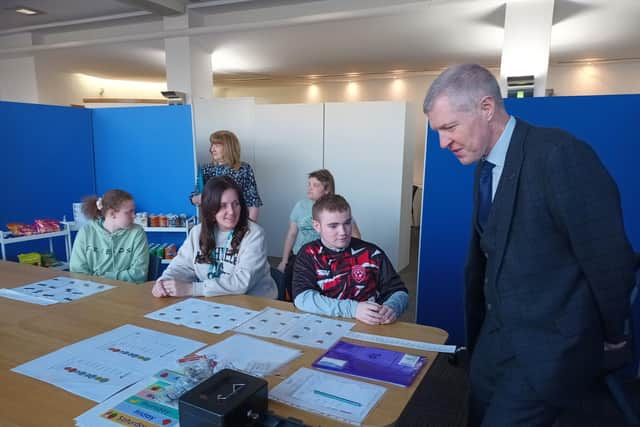
“Now, pupils are going to miss out on hundreds of teachers, desperately needed to inspire them, lift attainment and propel them on towards high-skill, high-pay jobs. This means there is a vicious cycle that diminishes the skills of future generations and undermines teacher recruitment for years to come.
Mr Rennie added: “Salaries outside teaching, including in industry, are much higher and without the stress of managing classes. We need to introduce more incentives to attract suitable people, including those who are later on in their careers and want to contribute to the next generation. It requires a concerted effort from government and councils to make this happen.”
Mike Corbett, the Scotland national official at the NASUWT teachers’ union, said amidst a failure to provide competitive salaries, tackle excessive workloads, and address violent and abusive behaviour among pupils, there were extra issues impacting STEM areas.
“The pressure is particularly acute in subjects such as STEM where graduates can often secure much higher salaries with other employers and employment opportunities are more numerous.” he said.
“The increasing use of temporary contracts for post-probationary teachers is further pushing teachers out of the profession, exacerbated by pressures on school budgets.”
A Scottish Government spokesman said: “Local authorities are responsible for the recruitment and deployment of teaching staff. The Government will continue to support them to maximise the number of jobs available in certain subjects, including STEM. Since 2008, there have been increases in the number of teachers in biology and chemistry.
“Our teaching bursary scheme provides a £20,000 payment to career changers who are looking to undertake graduate teacher training in hard-to-fill subjects, including physics, maths, technical education and computing science.”
Comments
Want to join the conversation? Please or to comment on this article.