
Suspect drones and 'reconnaissance' ships target North Sea energy infrastructure
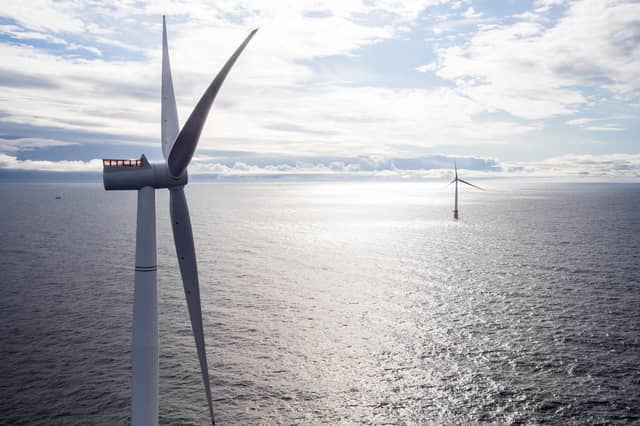

Reports have been passed to the security services following suspicious activity in the North Sea
Unexplained drones and suspected ‘reconnaissance’ ships have been reported around North Sea installations as calls are made for greater focus on the national security risk posed by the offshore sector.
Security in the North Sea has come under increasing scrutiny with offshore wind farms thought to be particularly vulnerable to drone surveillance, cable sabotage and cyber attacks.
Last night, Offshore Energies UK, which represents the offshore energy industry in the UK, said it was aware of sightings of drones close to North Sea energy structures and confirmed incidents have been reported to relevant security services.
It comes after Dan Marks, research fellow in energy security at Royal United Services Institute, addressed a roundtable in London about the risks to the sector.
He said: “There have been reports from industry associations and companies of nuisance things, unexplained drones, where we don’t know where they’ve come from, they’re flying around, causing disruption, and ships loitering.
“At the moment it’s concerns more about reconnaissance-shaping activities, ships that are – fairly clearly or otherwise – mapping out critical infrastructure, subsea infrastructure and may pose a risk.
“You don’t know what they’ve been doing, you don’t know what they’ve put out into the water.”
The war in Ukraine has highlighted the vulnerability of energy infrastructure, while drones are now being manufactured at a “massive scale”, making them relatively cheap and opening up the possibility of attacks by non-state actors, and an increasing range of targets, Mr Marks said.
He also said the offshore oil and gas industry was having to grapple with security issues, and faced a “real risk to life” with thousands of people working offshore on platforms.
The comments came following a roundtable event convened by the Royal United Services Institute (RUSI) and the European Initiative for Energy Security (EIES), attended by Ministry of Defence and Energy Department officials, energy company executives and security providers.
Mr Marks suggested there should be a Government authority responsible for monitoring, gathering reports on what was going on and escalating the situation where needed, while performance standards could require companies to be able to make repairs within a set timeframe.
He also said much more could be done on spotting drones, and using that information, and checking subsea infrastructure and other assets.
“We’re not actually at the point where we’re really having that discussion,” he warned.
Michael Collins, director of low-carbon energy research at analysts Energy Intelligence, said: “We are really only in the foothills of starting to think about exactly what the national security risks look like around the offshore wind sector, and indeed the low carbon economy more broadly.”
Those risks include threats to the operations of sites, as well as economic and geopolitical issues, he said.
And without a holistic view of where national security risks lie, there is a danger “we walk from one set of dependencies around fossil fuel imports into another set of dependencies around reliance on Chinese, in particular, low carbon technology”, he warned.
The discussion comes two months after the UK Government blocked plans by Chinese firm Ming Yang to build a wind turbine factory at Ardersier Point to “protect our national security”.
Graham Skinner health and safety manager for offshore operations at Offshore Energies UK, said:
“OEUK is aware of sightings of drones in proximity to offshore energy structures and can confirm that these have been reported to relevant security services.
“ The incidents, whilst concerning, did not threaten the safety of the offshore installations and we monitored.
“OEUK welcomes the proposal for a reporting portal for suspicious activity but acknowledge that it can take time to develop.”
The organisation recently held its own conference on the issue and an exercise to test resiliences of the sector.
It came after the UK and allied tracked Russian submarines loitering near critical undersea infrastructure in the High North.
Meanwhile, OEUK had developed security guidance with Police Scotland and the Department for Energy Security and Net Zero for offshore installations.
It includes details on what to look out for, what information to gather and who to report it to.
Mr Skinner added: “This significantly improves offshore reporting. Fortunately, these events remain very rare; however we remain vigilant and prepared to respond to any eventuality."
Comments
Want to join the conversation? Please or to comment on this article.