
German submarine-hunter aircraft to be based in Scotland as part of pact in face of Russia threat

UK-Germany Trinity House Agreement to forge close relations with European allies on defence and security
German planes will operate from a base in Scotland under a defence pact with Berlin being signed on Wednesday.
The submarine-hunting planes will fly from RAF Lossiemouth in Moray, patrolling the North Atlantic as the allies respond to the growing threat from Russia.
And German arms giant Rheinmetall is set to open a factory producing artillery gun barrels using British steel.


The UK-Germany Trinity House Agreement is a sign of the government’s attempts to forge close relations with European allies, particularly on defence and security measures.
Prime Minister Sir Keir Starmer wants to “reset” relations with the European Union’s key players and the defence deal is the first pillar in a planned wider UK-Germany treaty.
The agreement will see the Nato allies working together on developing long-range strike weapons that can travel further than the UK’s existing Storm Shadow missiles.
And the UK and Germany will also collaborate on developing new land-based and aerial drones.
Defence Secretary John Healey said: “The Trinity House Agreement is a milestone moment in our relationship with Germany, and a major strengthening of Europe’s security.
“It secures unprecedented levels of new co-operation with the German armed forces and industry, bringing benefits to our shared security and prosperity, protecting our shared values and boosting our defence industrial bases.
“This landmark agreement delivers on the Government’s manifesto commitment to strike a new defence relationship with Germany – less than four months since winning the election in July – and we will build on this new co-operation in the months and years ahead.
“I pay tribute to our negotiating teams who have worked hard at pace to deliver this.”
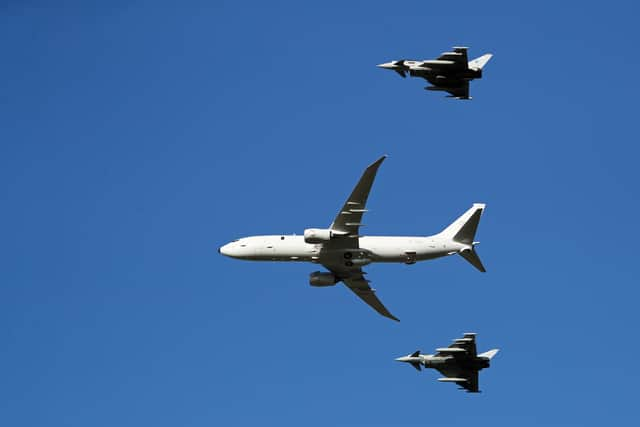
Under the agreement, the Ministry of Defence said German P-8 Poseidon maritime patrol aircraft will “periodically” operate out of RAF Lossiemouth, potentially armed with UK-supplied torpedoes, helping to secure the North Atlantic.
In response to the potential threat from Russian activity at sea, the allies will also work together to protect underwater cables.
In addition, the agreement will pave the way for the new Rheinmetall plant, which will see the UK make artillery gun barrels for the first time in a decade using steel made by Sheffield Forgemasters and supporting 400 jobs.
The first artillery gun barrels are expected to be produced in 2027.
Other measures will see co-operation to strengthen Nato’s eastern flank and extra support for Ukraine, including work on equipping German Sea King helicopters with modern missile systems for use by Kyiv’s forces.
German defence minister Boris Pistorius said: “We must not take security in Europe for granted. Russia is waging war against Ukraine, it is increasing its weapons production immensely and has repeatedly launched hybrid attacks on our partners in eastern Europe.
“With the Trinity House Agreement, we are showing that the Nato allies have recognised what these times require and are determined to improve their deterrence and defence capabilities.
“As it lays the foundation for future projects, the Trinity House Agreement is an important contribution to this.
“It is particularly important to me that we co-operate even more closely to strengthen Nato’s eastern flank and to close critical capability gaps, for instance in the field of long-range strike weapons.”
Lossiemouth houses a fleet of British Poseidon aircraft, which replaced the Nimrod reconnaissance planes that were based at nearby RAF Kinloss and had been in service for around 40 years before they were retired from service in 2010. Kinloss is now an Army barracks.
The RAF’s ninth and final US-built Poseidon maritime patrol aircraft arrived at Lossiemouth in January 2022.
The runways at RAF Lossiemouth underwent a £75 million revamp in 2020, having been constructed for use by fast jets such as Tornadoes and Typhoons.
They were stripped and resurfaced to handle the take-off and landings of the larger, multi-engine reconnaissance aircraft.
Last month, Armed Forced Minister Luke Pollard warned that Scotland’s shores are now a new battlefield the West and Russia.
Mr Pollard said Russian president Vladimir Putin is likely to be deploying unmanned submarine fleets intended to disrupt sub-sea internet cables, potentially paralysing the UK.
Military intelligence experts believe the Kremlin was probably responsible for the cutting of communication lines off Shetland two years ago, and Russia has also faced accusations of conducting “spy ships” operations in the North Sea.
Mr Pollard told the Sunday Mail: “It is certainly true that there are threats to our subsea cable networks including in the North Atlantic. If you are in a conflict with an aggressor who can attack those cables, you could sustain quite significant economic damage.”
He added: “That's the changing face of warfare that we need to think about underwater warfare with autonomous systems in particular.”
Comments
Want to join the conversation? Please or to comment on this article.