
Exclusive:Veteran CalMac ferry's final voyage delayed by post-Brexit hazardous waste regulations
Hebridean Isles still to leave Glasgow for Denmark, seven months after ending passenger service

A veteran CalMac ferry has had a stay of execution from a Danish scrapyard because of post-Brexit regulations over importing hazardous material into the EU, The Scotsman has learned.
Hebridean Isles, which was retired in November after nearly 39 years service, is still docked in Glasgow pending its final voyage to the breaker’s yard to be recycled.


The 85m-long ferry was due to have been towed to Esbjerg in Denmark in April after equipment was stripped from the vessel for spare parts and preservation as memorial artefacts.
However, it remains at King George V Dock near the Braehead shopping centre, pending the ship being permitted to enter the EU because it contains hazardous material.
This is understood to relate to insulation in freezer compartments aboard.
The 3,040 tonne ferry’s decommissioning is being handled by Scottish Government-owned Caledonian Maritime Assets Limited (Cmal), which owns CalMac’s fleet.
A Cmal spokesperson said: “Decommissioning a ferry is a complex task, which requires input from a range of specialists.

“From salvaging engine parts to removing hazardous material, the project has been closely managed to ensure compliance with all partners, such as the Scottish Environment Protection Agency and the Danish equivalent.
‘The rules have changed since Brexit’
“We are in the final stages of completing the required paperwork and hope to see her start the journey to Denmark as soon as all necessary permissions are granted.
“The rules have changed since Brexit and it takes more time to obtain approvals on paperwork. When paired with the complexity of decommissioning work to retain important parts of the vessel, the project has taken slightly longer than originally planned.”
Cmal said in February in relation to Hebridean Isles’ scheduled departure from Scotland: “We are targeting April subject to regulatory approval.”
However, in May, it said: “The plan is for the vessel to start the journey next month.” The voyage is expected to take six to seven days.
‘No loss or profit’
The company said the ferry, which latterly served the main Islay route, was being recycled in Denmark rather than in Scotland or elsewhere in the UK because it was “the most commercially viable option”, but Cmal would not make or lose money from the deal.
Its spokesperson said: “The expectation is that there will be no loss or profit. However, valuable assets were recovered during the decommissioning of the vessel, which will be used to support the existing fleet.”
These include the ferry’s engine, pumps, alternators and gearbox, which have been saved as spare parts for other CalMac vessels of a similar vintage.
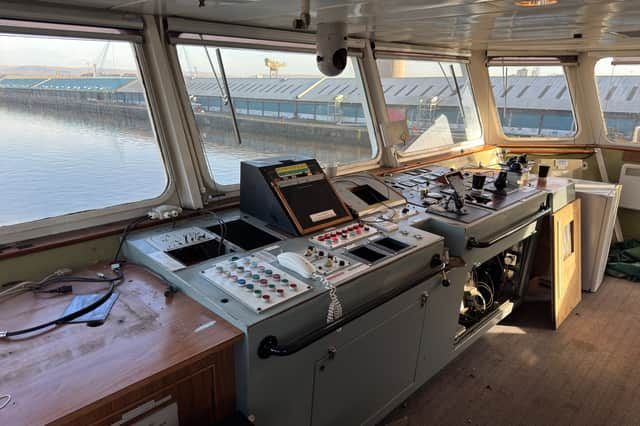
Other items will go on display, such as seating and lifebuoys at public gardens in Islay, the ship’s bell at a museum on the island, and a builder’s plaque at Selby in North Yorkshire where the ship was built.
First CalMac ferry to be recycled for 14 years
CalMac is short of vessels, but the decision to scrap Hebridean Isles was made because of the major cost of work likely to have been needed for continued passenger carrying after the vessel’s safety certification expired in November.
It is the first time a CalMac ferry has been recycled since the smaller sister ferries Juno and Jupiter went through the process in 2011 after nearly four decades on the Gourock-Dunoon route.
Comments
Want to join the conversation? Please or to comment on this article.