
The small Scottish family firm that's become the world leader in stopping aircraft skidding off runways

Midlothian company makes test equipment used by hundreds of airports worldwide
It’s a small, family-owned company based in a former Midlothian primary school that has become the world leader in vital safety equipment that protects aircraft from skidding off runways.
Testing devices made by Findlay Irvine in Penicuik are in use at more than 500 airports in 100 countries across the world, from Edinburgh and Glasgow to Dubai and Sydney.


They check for potential problems such as rubber debris shed from aircraft tyres.
That can reduce a runway’s skid resistance by smoothing out its surface so aircraft brakes do not work effectively, which can lead to “wet skidding”.
In one of the worst incidents where this was a factor, a Boeing 737 carrying 103 people slid off a runway in heavy snow at Chicago Midway Airport in 2005, crashing through a fence and killing a six-year-old boy in a car.

The monitoring equipment is towed by a vehicle up and down the runway, parallel to the centre line, at 40mph and 60mph to take continuous measurements of the surface conditions to highlight areas needing maintenance.
The rubber debris is then removed using ultra high pressure water sprays or chemicals.
However, this is a very expensive process, so testing helps identify which areas of the runway need such work, such as where aircraft touch down.
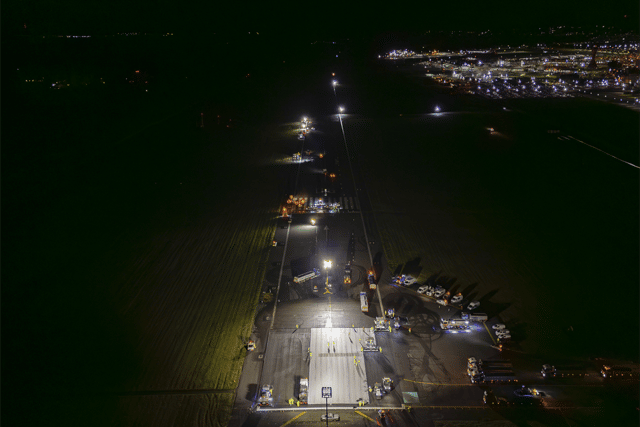
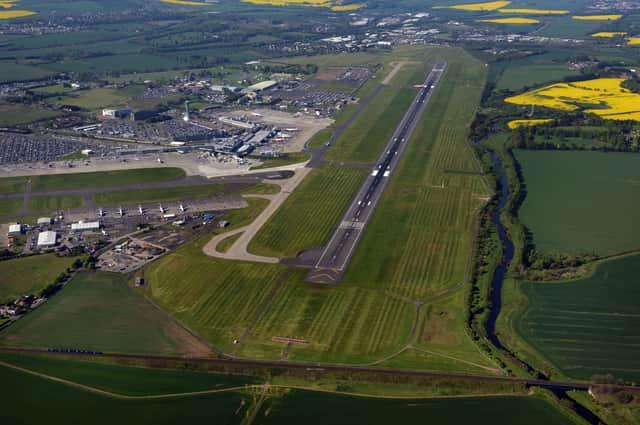
Findlay Irvine’s GripTester machines are also being used during the £20 million resurfacing of Edinburgh Airport’s runway, which is due to be completed by the end of March.
They check each section completed during the overnight work which started in November, to ensure it is safe for aircraft taking off and landing.
The company, which employs 50 people, was founded by James Findlay and John Irvine in 1960.
Mr Irvine, 94, is still on its board and his son Colin is now managing director, with two of Colin’s sons also working there.
It has manufactured nearly 800 of the skid resistance machines over the last 40 years.
David Leask, the firm’s sales and operations director, put its market-leading success down to its easy-to-use and portable equipment, and competitive pricing.
He said: “Rubber is the big maintenance requirement for airports. Every aircraft that lands will leave a little bit of rubber. That eventually builds up to an extent that they need to remove it.
“It’s a very expensive and intrusive process so you don’t want to do it when you don’t need to.”
Mr Leask said if a build-up of rubber was not removed, “in the worst case, there would be no friction and there could be an ‘overrun accident’ where an aircraft runs off the end of the runway”.
He said there was an expanding market for the device in the Middle and Far East due to the “huge growth” in airports such as in China, India and Vietnam.
Findlay Irvine equipment is also used to test helidecks, such as on North Sea platforms, roads, and also monitor lineside conditions on the rail network.
These include hillside “tilt sensors” which warn of landslides which could engulf tracks.
An Edinburgh Airport spokesperson said: “Our runway is a vital asset for the airport and we’re delighted to use local expertise to help maintain and refurbish it.
“Supporting local and Scottish businesses is a core part of our Greater Good strategy, and we’re proud to invest in our local community.”
Comments
Want to join the conversation? Please or to comment on this article.