
Scottish Budget: Private jet tax introduced and peak ferry fares axed

New rail station at Winchburgh to be “delivered”
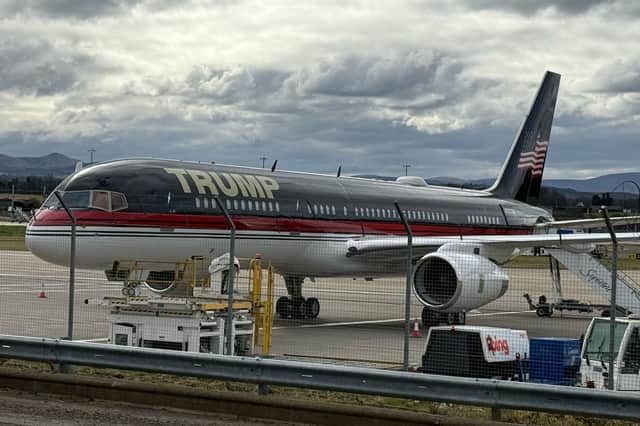
Private jets are to be taxed from 2028 as part of a shake-up of how air passengers are charged in Scotland, Finance Secretary Shona Robison announced in the Scottish Budget.
She also revealed on Tuesday that peak summer fares will be scrapped on NorthLink ferries to Orkney and Shetland at a cost of £1.8 million.

Long-awaited plans to open a new station at fast-growing Winchburgh in West Lothian on the main Edinburgh-Glasgow rail line will also be “delivered”, she said.
Budget documents show a new Air Departure Tax (ADT) would be introduced in April 2027, which would be at same level for the first year as the existing Air Passenger Duty (APD), set by the UK Government, which it will replace.
It would be followed by a “supplement” for private jets the following year so passengers “pay a fair share for that privilege”, Ms Robison said.
Details are due in the 2027-28 Scottish Budget.
APD includes £7 per economy class passenger on UK flights and £13 on international flights up to 2,000 miles, rising to £90 for flights up to 5,500 miles.
Private jet passengers pay £84 APD in the first two categories, which will increase to £142 from April, and £647 in the third category, increasing to £1,097.
The Scottish Budget document stated: “Private jets...produce significantly more emissions per head than commercial flights.
“In line with the principle that higher rates of tax should be paid by those who choose to travel on private jets, which produce significantly more emissions per head than commercial flights, we will bring forward a Private Jet Supplement within ADT in 2028-29, and engage with the UK Government to seek further devolution to allow private jet ‘ghost flights’ to be addressed.”
Ministers first proposed an ADT in 2017 but it stalled because of the need to continue the Highlands and Islands exemption from APD while continuing to comply with competition laws.
Ms Robison said a consultation on new exemption proposals would be launched by the end of the month.
Oxfam Scotland, which campaigned for the move, said there were more than 1,000 private jet flights in Scotland a month.
Jamie Livingstone, its head, said: “This commitment to a private jet tax sends a clear message - the super-rich will no longer get a free pass to pollute Scottish skies.
“It should be set sky high so it punitively punishes the pockets of private jet passengers, with the extra money raised spent on green projects that benefit us all.”
Sustainable transport campaigners Transform Scotland spokesperson Laura Hyde-White called for “fairer pricing” for frequent flyers using the most polluting mode of transport and a reduction in UK flights.
Ms Robison said ministers remained committed to completing dualling of the A9 between Perth and Inverness by 2025 - ten years later than originally pledged - and said £200 million would be spent on the £3.7 billion project in 2026-27.
However, she made no mention of how the remainder of the scheme would be funded, with an announcement by ministers scheduled for Wednesday.
The Scotsman revealed last month that planned private funding planned for much of the rest of the project scheme will be rejected.
However, Scottish Chambers of Commerce chief executive Dr Liz Cameron said the project must be accelerated “with clear routes for private capital to support”.
A novel funding method being considered for 51 miles of the 70 miles still to be upgraded is believed to have been deemed as not being value for money.
Rejection of the “mutual investment model” could mean the entire cost being borne by the public purse at a time when the Scottish Government’s finances are significantly stretched. Some £520 million has been spent so far.
Ms Robison repeated ministers commitment to complete dualling of the A96 between Inverness and Aberdeen, although no date has been set after the 2030 target was scrapped.
She said the Budget included funding for advance work on the Nairn bypass section.
However, Aberdeenshire West Conservative MSP Alexander Burnett said her failure to provide funding for the full A96 project as “economic vandalism”.
Ms Robison also said work would continue on possible “fixed links” - tunnels or bridges to islands.
Electric vehicle charge points will be exempt from non-domestic rates following a similar move for England in the UK Budget in November.
Comments
Want to join the conversation? Please or to comment on this article.