
Meet Scotland's youngest lighthouse keeper Jeri Cormack: 'They have inherent mystery'
“For this to be my office, that's quite amazing”

Jeri Cormack has, she admits, a “very cool job” - looking after Scotland’s historic lighthouses.
“They are in some of the most remote places and experience the harshest conditions - and you can witness everything from the top of the tower,” she said.
Ms Cormack is speaking from the top of the 60ft tower at Noss Head , which is dramatically perched on 170ft high cliffs near Wick in Caithness.


The 28-year-old is the Northern Lighthouse Board’s (NLB) newest and youngest retained lighthouse keeper, part of an exclusive band who spend a day a month maintaining the vital maritime landmarks. She is also believed to be the youngest in Britain.
Ms Cormack is one of only two women among the 19 people in the NLB role, several of whom are retired keepers whose jobs ended when lighthouse automation was completed in 1998.
She told The Scotsman: “I saw the job on Facebook, which was one of the NLB’s most interacted-with posts ever, so there were a lot of folk attracted to the position.
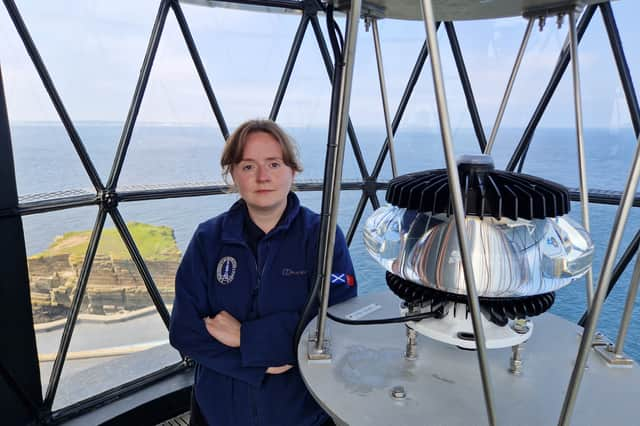
“It's fantastic. It's opened a whole new world. Lighthouses are something that most people don't ever get to see inside, so there is an inherent mystery.”
Ms Cormack is responsible for Noss Head along with Caithness’ two other lighthouses, Duncansby Head, on the north east tip of the mainland, and Dunnet Head, at the most northerly point.
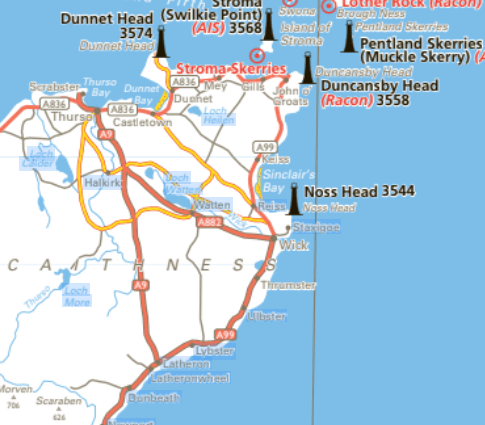
She is also an "observer" for Stroma in the Pentland Firth - checking on the light from the mainland if required.
Noss Head was built 177 years ago to warn shipping against mistaking the headland for the entrance to the Pentland Firth, guiding vessels to continue north rather than turning west and risking being wrecked in Sinclair’s Bay.
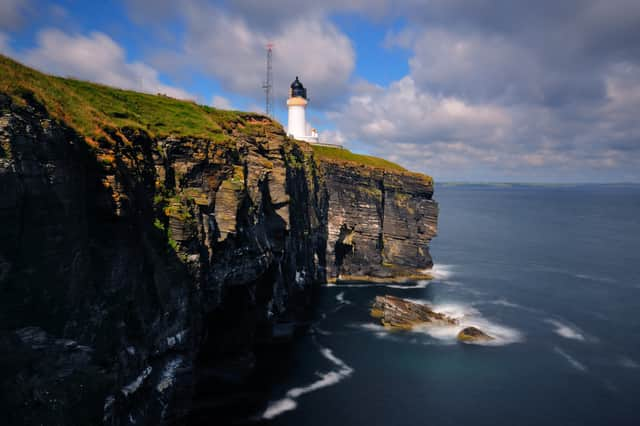
Ms Cormack described the job as similar to that of a janitor and groundskeeper - but in a dramatic setting.
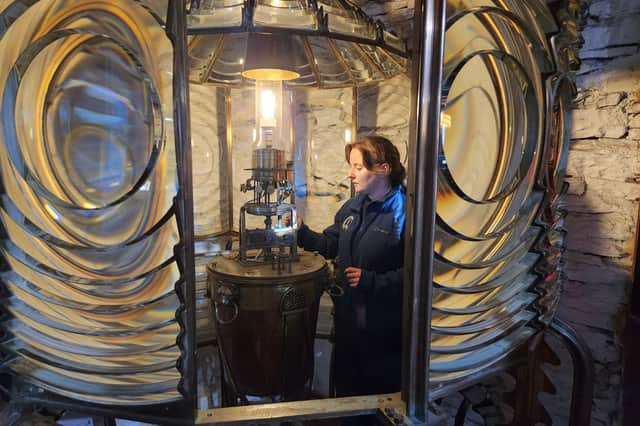
Speaking from the top of the 60ft tower at Noss Head, she said: “The weather can get quite fierce, especially in this lighthouse. It's quite an echoey building. You've got the spiral stairs and the huge lightroom, so noises are amplified.
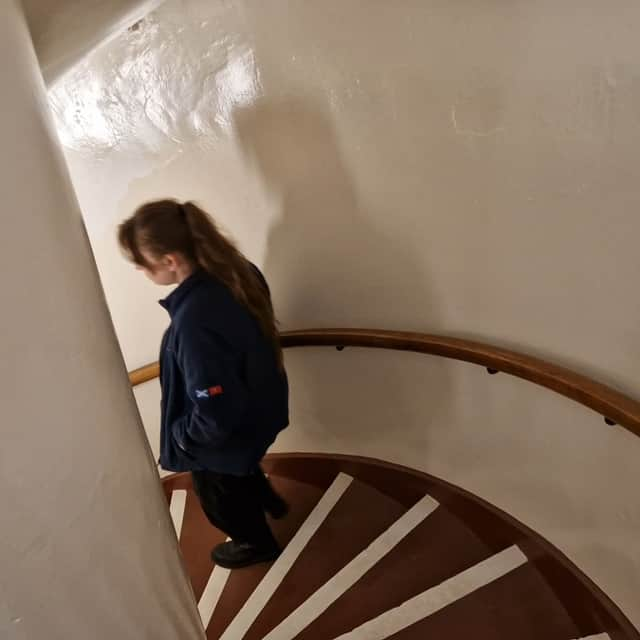
“Whenever there's wind, it whistles through the building. It sounds like screeching. It's quite amazing.
“We had hail last month and I couldn't believe how loud it was - like thunder.”
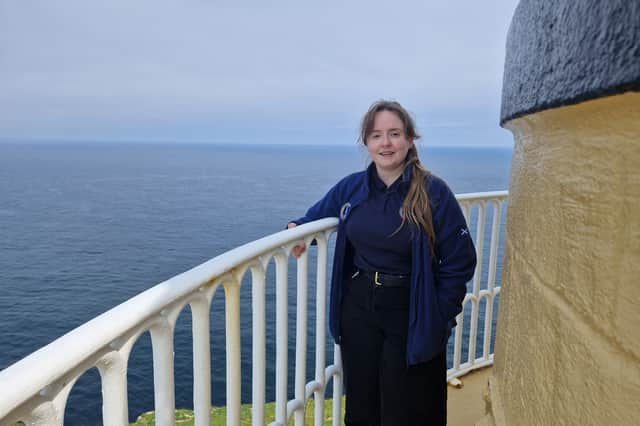
Ms Cormack, who started the job in January, had long been fascinated by lighthouses.
Born in John O’Groats, while volunteering at Wick Heritage Centre as a teenager, she wound up the clockwork mechanism of Noss Head’s original light, which had been replaced before the lighthouse was automated in 1987.
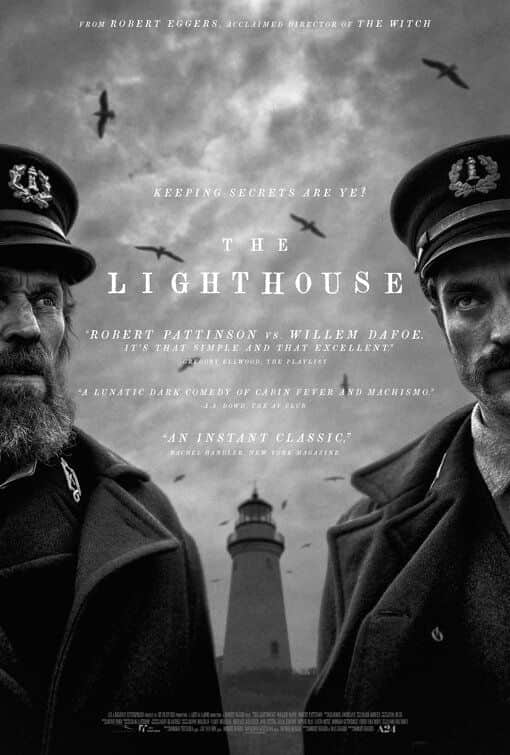
She is a fan of Robert Eggers’ 2019 psychological horror film The Lighthouse, for its “strange atmosphere”.
Ms Cormack’s family also has a close association with lighthouses. Her great grandfather helped built Duncansby Head in the 1920s and his son installed equipment for the NLB 40 years later, while a great uncle was a lighthouse keeper in Shetland.
Ms Cormack said: “The family connection was a big draw, continuing this legacy.”
She returned from Aberdeen last year after being unable to win funding for Jacobite research to become general manager of the restored John O’Groats Mill, which re-opened as a heritage attraction.
She said: “I've always been interested in historical buildings and also thought it would be fun to train as both a miller and a lighthouse keeper.
“Lighthouses are by nature designed to be seen from afar and they're positioned in the most dramatic, stormy areas - places you usually want to avoid.
”You certainly wouldn't want to be building a tall house there, so to put a light there is inherently quite sublime, it's mental.
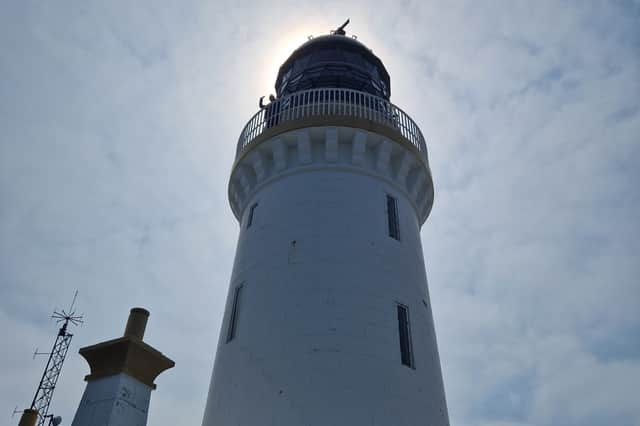
“They can be seen from miles away and they're something that brings people peace of mind. They save lives at sea as well as just being a landmark.
“These days, the lighthouses are empty most of the year apart from when folk like myself come in.
“Back in the days of full-time lighthouse keepers, there were just two or three people there, so they are quite mysterious places.
“So to get to come here and and for this to be my office, that's quite amazing.”

Ms Cormack’s role, for which she is paid nearly £4,000 a year for eight-hour visits once a month to each lighthouse, is primarily for cleaning and routine inspections, such as for storm damage.
That includes cleaning the window panes in the lightroom and vacuuming the 76 steps of the spiral staircase - and on occasion herding sheep if a gate has been forced open.

Ms Cormack has to carry a gas monitor in case of hazardous fumes from the batteries, which provide back-up power to the light. Any technical problems, such as with the light, are reported to engineers.
She is the latest of four new retained lighthouse keepers to be appointed by the NLB since 2022 for posts that previously only came up only occasionally, when one retired or died.
One looks after Cape Wrath and Stoer Head lighthouses in north west Sutherland, while the second new lighthouse keeper maintains Kinnaird Head in Fraserburgh, Buchan Ness in Boddam and Girdle Ness, which guards Aberdeen Harbour.
The third one looks after Neist Point in Skye, Ornsay, off Skye, and Rubha Reidh, near Gairloch.
Another retained lighthouse keeper is about to be appointed by the NLB for Orkney.
Also living the dream are the owners of one of the adjacent lighthouse keeper’s cottages.
Ben (Benedicta) Makin, who used to work in IT, moved there in 2019 with her hospital consultant husband Stephen, who describes himself as the “most northerly UK mainland geriatrician”.

She said: “You should always be really careful what stories you read your children, because my parents-in-law read my husband The Lighthouse Keeper's Lunch when he was a tiny child, and he always wanted to live in a lighthouse.
“We saw these cottages come up for sale and here we are.
“In the winter, it’s very dark, very windy and frequently very stormy, so, it's quite a dramatic place to live.
“Then you have glorious summer days when it's just an absolute treat, but it's always a very special place to live.”
Ms Makin said the site’s architecture was a further attraction.
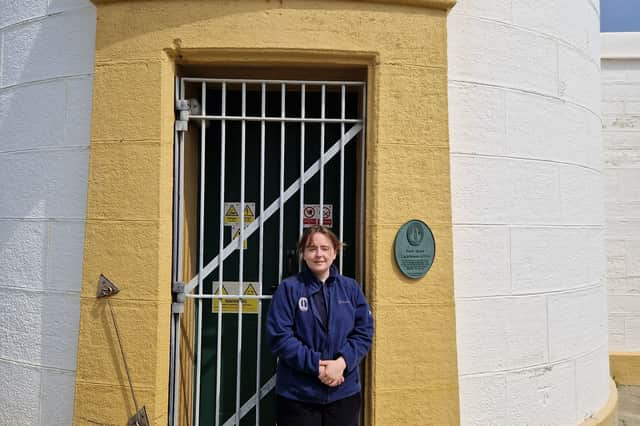
She said: “It was designed by Alan Stevenson, the second generation of the lighthouse family, who was fascinated by Greek and Roman architecture.
“You can see the Greek pediment above the door, the curves on the the chimneys and the brass heads - a very Greek image.
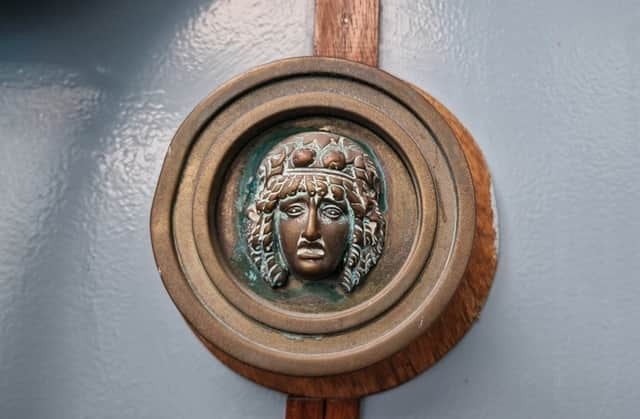
”The slightly strange buttresses are Egyptian-style architecture. This is one of about four or five lighthouses in Scotland which have this design and it's very valued as a piece of architecture in its own right.”
Comments
Want to join the conversation? Please or to comment on this article.