
Aircraft fire caused by engine failure forces Shetland-Glasgow flight to divert to Aberdeen
Plane lands safely after fire extinguished


A Loganair flight between Shetland and Glasgow declared a mayday and diverted to Aberdeen after an engine failure led to a fuel leak which set it on fire, investigators have reported.
The twin-engine turboprop ATR 42-500 aircraft with 30 passengers and three crew landed safely after the fire was extinguished by the crew when the engine was shut down in flight.
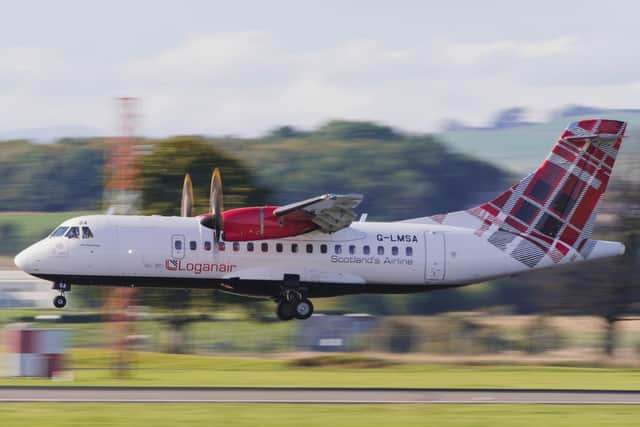
It happened en route from Sumburgh on the southern tip of Shetland just after noon on July 23 last year when the seven-year-old plane was some 32 miles north east of Aberdeen.
A report published on Thursday by the UK Government Department for Transport air accidents investigation branch (AAIB) said: “The commander described hearing a ‘big thump’, or a ‘muffled bang’.
“The aircraft immediately yawed to the left, which was corrected by the rudder trim under the control of the autopilot.
“The aircraft suffered a contained failure of the No 1 engine and a subsequent fire inside its cowlings due to a leak from the fuel return line which had become sufficiently loose following the engine failure to result in fuel leakage.
“The co-pilot declared a Mayday to Scottish Control while the commander initiated a descent and called the cabin crew to stations.
“The flight crew correctly followed the checklist procedures to shut down the engine, and the fire was extinguished. The aircraft landed on one engine without further incident.
“Although this is the only known instance of this fuel line becoming loose, the aircraft manufacturer has commenced a safety review to identify any possible safety actions which would further reduce the likelihood of leakage from the fuel return line.”
The report said the engine failure was due to “significant degradation of its No 6 main bearing which resulted in the rotating high-pressure turbine being no longer correctly located.
“This allowed the rotating parts to contact adjacent parts causing significant damage to the turbine stages.
“There was an under-cowling fire which was due to leaking fuel igniting on hot engine parts.
“It was detected and extinguished by the crew using onboard systems. Both fire bottles were discharged. “
The AAIB said there have been no other similar events in the history of the aircraft, but the engine involved had been installed only five months before the incident.
However, it said the aircraft manufacturer has launched a safety review to be completed by the end of the year “to identify any possible safety actions which would further reduce the likelihood of leakage from the fuel return line”.
A Loganair spokesperson said: "While the recommended actions are on the engine manufacturer, we will continue to work with all parties involved to support as is appropriate.
“We thank our pilots and cabin crew who acted in an exemplary manner.
“As always, the health and safety of our customers and staff is our highest priority.”
Comments
Want to join the conversation? Please or to comment on this article.