
How the Irish love of horses led to 20,000 working on Glasgow's trams and buses


New book by former bus conductor and driver charts huge influx from Donegal
Their affinity with horses made them perfect recruits for the burgeoning pre-motorised transport system in Scotland’s largest city - and led to a remarkable influx which became a key part of its workforce.
The significant role that immigrants from Donegal played on Glasgow’s trams, buses and Subway is highlighted in a new book, with an estimated 20,000 finding jobs there.

As author Hugh Dougherty explained in Glasgow Corporation Transport & The Donegal Connection: “Thanks to the rural origin of most Donegal incomers, some were employed as drivers and stable boys given their familiarity with horses, many of which were also imported from Ireland.”
Dougherty, who described himself as a “proud member of the Glasgow-Donegal diaspora”, said the success of the Irish arrivals is gaining such employment came at a time when many jobs were barred to Catholics because of the prevailing Scottish Protestant prejudice - including on the railways.
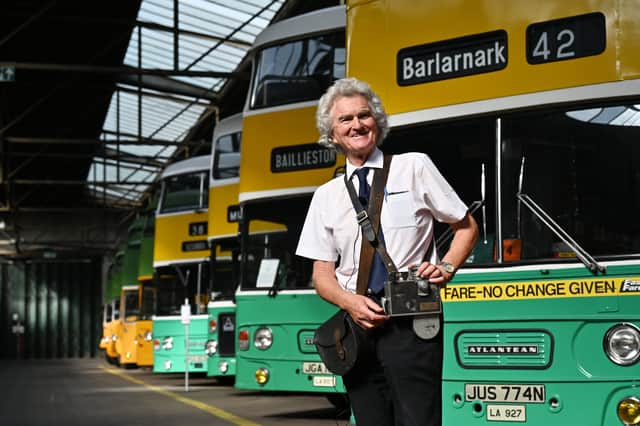
Roles such as driving buses and trams were also prestigious in an era before mass car ownership, while Glasgow’s municipally-run trams also produced profits which funded the building of libraries and public baths.
Large scale emigration from Donegal to Glasgow dates back to the so-called “Scotch boat” sailings from Derry from 1817, when many came over as farm workers. The numbers increased dramatically after the major famine of 1847.
Some of the first to work on the city’s transport networks were those employed on the horse-drawn trams which operated from 1872 to 1902, when they became electric hauled.

Dougherty said: “Glasgow Corporation Tramways was an early example of an equal opportunities employer. The trams were the latest in technology with a job on them a much-valued line of work and the trams were the fastest vehicle on the streets.
“Working on the trams was seen as real advancement by Donegal immigrants, and the work was highly preferable to labouring for men or domestic service for women and girls.
“The driver at the controls of his or her electric tramcar - the wonder of the late Victorian and early Edwardian age - was venerated in the pre-motor car age.
“At that time, most people were not in charge of any vehicle at all, so Donegal staff enjoyed considerable prestige.
“It was that steady work on the trams and, later, buses, trolleybuses and the Subway which, over several decades, made it possible for Donegal migrants to access reasonably well-paid, steady and pensionable employment.”
Among the arrivals was legendary Celtic goalkeeper Packie (Pat) Bonner’s father Dan, who came over to become a tram conductor but only stayed in the job two days.
Others included Madge Boyle, who became a tram conductress in 1950, two years after coming to Scotland for seasonal work tattie-hoking, then herring gutting in Shetland. She was later promoted to driver, or motorwoman.
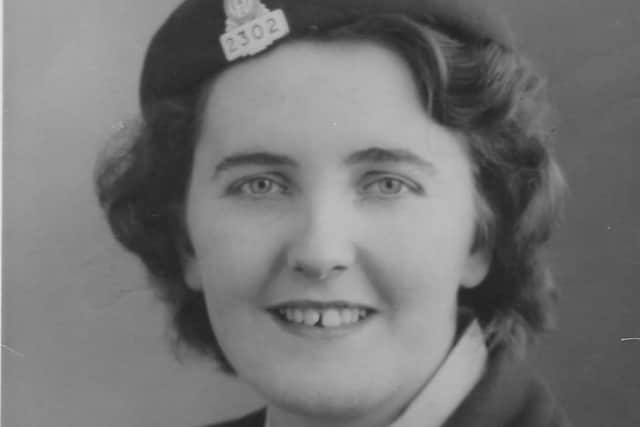
Her son, Hugh Gallagher, recalled in the book that during her role as a clippie, she would always make fare dodgers get off, enlisting her driver’s help if necessary.
Glasgow’s green, white and orange bus and tram livery - reminiscent of the Irish flag - was also said to make staff from Donegal feel at home.
Dougherty said when the buses were repainted orange - officially called “Strathclyde red” - in 1975, some saw it as “an attempt to redress the Irish tricolour regime of the past”.
Meantime, Bonner will help launch a free exhibition celebrating the working lives of Donegal women and men in Scotland, which opens at the Mitchell Library in Glasgow on Wednesday September 24.
The Working Over By: Donegal Emigrant Working Lives in Scotland 1940-1990 display at the North Street building in Charing Cross will continue until January and is accompanied by a free booklet.
It includes photographs of work on buses, railways, shipbuilding and at major construction sites including tunnels, bridges and dams.
Comments
Want to join the conversation? Please or to comment on this article.