
'Greedy' cyclists must not be given more space than pedestrians - Edinburgh architect Malcolm Fraser
Concern over path width allocations for riders and walkers on popular routes

Cyclists have become "greedy" by being allocated more path space than pedestrians, Edinburgh architect Malcolm Fraser has argued.
Mr Fraser, who cycles every day, said he felt guilty seeing walkers being funnelled along narrower pavements than adjacent cycle lanes.
He said the problem was worst on popular walking routes in Edinburgh such as Middle Meadow Walk through The Meadows, Wester Coates in the west end, and Leith Walk.

Mr Fraser said the city council’s “sustainable transport hierarchy” placed walking and wheeling at the top, above cycling, followed by public transport, then taxis, with cars at the bottom.
He told the annual general meeting of Living Streets Edinburgh, which campaigns for pedestrians: “That is what the city says is important, but it doesn’t seem to be following it.
“Don’t take more space than pedestrians - make sure that cycle lanes are always narrower than footways.”
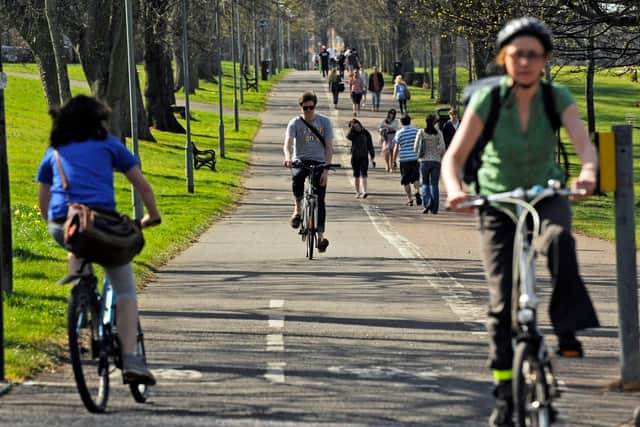
Mr Fraser, who uses Middle Meadow Walk to commute to work, said: “Most days I cycle across there, I’m one bike and there’s hundreds of people who don’t have enough space, and I feel really guilty.
“On Wester Coates, I’ve seen mums with pushchairs having to go in single file because they have got much less width [than cyclists], and that’s the wrong way round.
“I worry that we’ve been greedy.”

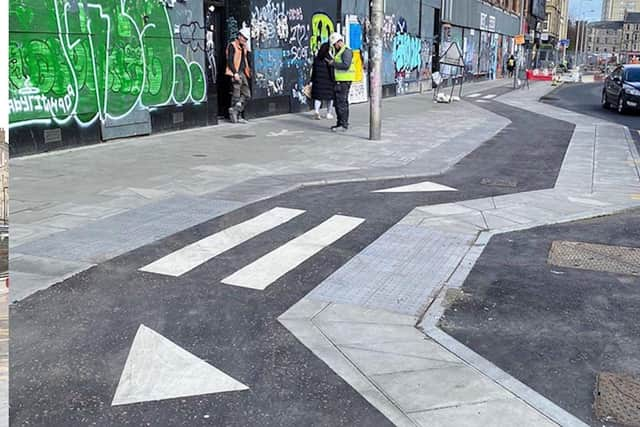
The architect was particularly critical of the zig-zag cycle lanes on the pavements on Leith Walk, which he compared unfavourably to the straight lines of those on Sauchiehall Street in Glasgow.
He said: “I don’t know what’s going on here because the safety of foot traffic has not been respected.
“It’s ridiculous - it’s creating maximum chances to knock somebody down.”
He said later: “Leith Walk has the most dangerous and complex cycle lanes I know, jiggling in and out on the pavement.
“It bamboozles pedestrians and cyclists alike, raises costs, puts cyclists off from using it and sits very poorly with the simplicity of the urban townscape.”
Living Streets Edinburgh convener David Hunter later said the group had become “increasingly concerned” that the council's prestige active plans “don't reflect the importance of walking, supposedly top of the sustainable travel hierarchy”.
He added: “ Several recent schemes, including Dundee Street and Craigmillar, propose taking away pavements to accommodate new cycleways."
Dave du Feu, of Spokes, the Lothian cycle campaign, said: “Malcolm Fraser is right that space for walking in many parts of the city is inadequate.
“But additional space should be taken from car traffic, not from another vulnerable category, people cycling.
“Spokes traffic counts have shown huge amounts of road space occupied by single-occupancy cars.”
Mr du Feu added: “The bike lane design on Leith Walk leaves a lot to be desired.
“However, the perception of danger to pedestrians is very different to the official data which shows pedestrian casualties there have fallen astonishingly since the road was remodelled, from an average of over ten a year to less than two.”
A spokesperson for Cycling Scotland, the official development body, said: “To make walking, wheeling and cycling safer, we need more separate, dedicated cycle lanes and to reduce the amount of space allocated to vehicles on our residential and shopping streets.”
City council transport convener Stephen Jenkinson said his focus was ensuring people could walk, wheel and cycle “as easily and safely as possible”.
He said: “In the last few years, we’ve completed several flagship active travel routes which have enhanced accessibility and safety for both pedestrians and cyclists, including the City Centre West to East Link [which includes Wester Coates].”
The council added: “The need to support businesses with loading provision impacts on the straightness of a route.”
Comments
Want to join the conversation? Please or to comment on this article.