
Ember: Why Scotland's biggest inter-city coach operator has rejected dynamic pricing
Edinburgh-based firm to double in size with plans to expand into England and abroad

A Scottish coach operator with one of the largest electric networks in the world is planning major expansion into England and abroad with its staff and fleet expected to double by the end of next year.
Ember already boasts the biggest inter-city coach operation north of the Border and plans to add another 100 vehicles to its 120-strong fleet while increasing its workforce from some 450 to nearly 1,000 within 18 months.
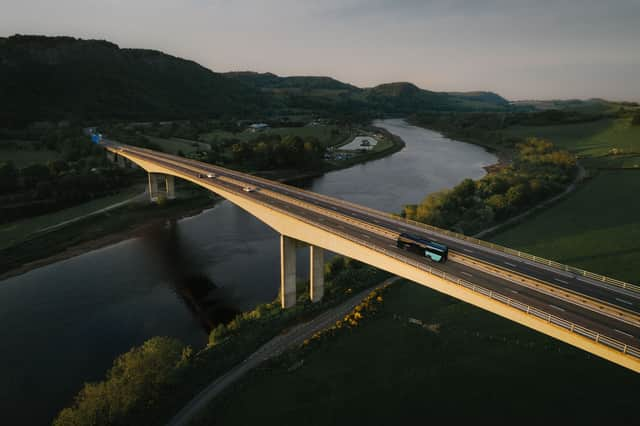

The growth will include increased frequency and new routes into England, which could include to Carlisle and Newcastle.
The Edinburgh-based company is also looking to replicate its operation in other countries, where it sees a gap in the market for routes involving smaller towns rather between major cities.
Its focus is on attracting drivers to switch to buses for journeys of between ten and 200 miles, for which most people travel by car while only around 3 per cent take the bus.
Ember co-founder Pierce Glennie told The Scotsman: “We see a lot more growth in Scotland. We’re looking to purchase 100 more vehicles.
“That’s going to make us much larger because we view this market is much deeper as we believe in modal shift from cars to buses.
“We don’t need to persuade that many people out of their cars to double the size of the bus market.
“We are focused on public transport that’s embedded in daily life - going to the airport, to work, to meet a friend, up to the Highlands or having a weekend away.”

One of Ember’s big successes since launching its first route between Edinburgh and Dundee six years ago has been its use of “dynamic stops” in villages, which are bypassed if no passengers are booked to board or alight there.
Mr Glennie said these had included in Bridge of Earn, off the M90 south of Perth, where passengers previously had to travel via the city then double back to Edinburgh. Trips took two hours, along with the uncertainty of a connection, compared to 45 minutes by car.
He said: “As soon as we offered a bus service that went direct, we got huge numbers of passengers because it made sense for them, and also saved on parking in town.” Buses stay on the motorway when there are no passengers to pick up or drop off.
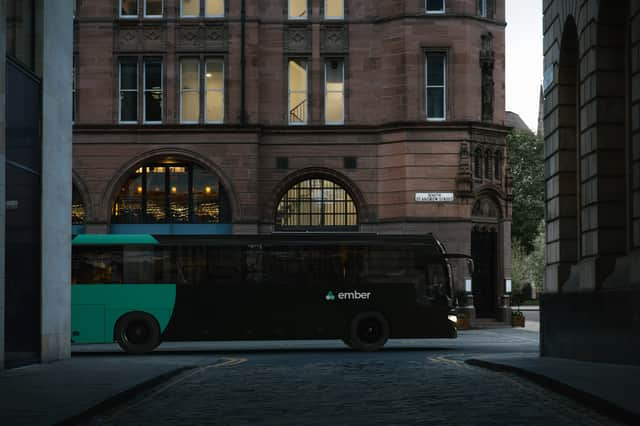
Mr Glennie said: “That’s allowed us to add many more stops and serve many more villages, including some really small places which now have access to an hourly bus service.”
Ember has also created stops, such as the first at Glenshee - also Britain’s highest - on its Dundee-Aberdeen route via Braemar.
Its expanding network stretches north from Glasgow and Edinburgh to Ullapool and Thurso and is now expected to extend south and across the Border - but not to London.

Mr Glennie said: “People in Carlisle don’t just want to go down to London, and people in the Borders might want to get to Newcastle Airport.”
The same goes should Ember expand internationally. Mr Glennie said: “There’s thousands of such bus routes in the US if we wanted to launch there, or in Brazil, but it’s not necessarily Rio de Janeiro to Sao Paulo - it’s all the smaller places, the villages and towns to their nearest small city.
“A lot of car journeys happen because many people are not travelling between the centre of cities.
“We are trying to appeal to people who are going by car because it’s the easier choice for that journey.”
However, unlike other longer-distance operators like Citylink and Flixbus, Ember does not operate “dynamic pricing” where fares increase at busy times and can be cut to the bone to fill empty seats on less popular services.
Mr Glennie said: “If I’m taking a bus to work, I don’t want to have to think about that.
“Most people end up paying far more for the same product and we didn’t want to create something that makes people feel exploited every time they travel.”
He said it meant prices don’t surge when demand suddenly increases, such during a train strike.
He said: “People who choose to travel with us on that day aren’t going to feel resentful and wish they had a car.”
Ember depends on its reputation, spending virtually nothing on marketing.
Mr Glennie said: “A huge driver for us is word of mouth. We’re believers in building up loyalty by delivering day-in, day-out.
“A lot of companies lose sight of the fact that the product is what matters - there’s no quicker way to piss off a customer than let them down with a bad experience.”
He said the trial £2 fare cap introduced across the Highlands, Argyll & Bute and Moray in the spring had produced only a “small uptick” in passengers - of 10-15 per cent.
He said that was unsurprising because most people don’t chose car over bus on price, but for frequency, reliability and comfort.
Mr Glennie said the name Ember reflected “the end of combustion, which seemed to be appropriate for starting to use electric vehicles”.
He said the concept was born during a 24-hour bus journey through Namibia when he calculated the cost of the diesel it was using. He founded the company with Keith Bradbury, both of them from a tech background.
Mr Glennie said Ember now had up to 90 per cent of the UK’s electric coaches, with its fleet the largest in at least Europe and Scotland the only country in the world with all-electric national network.
He said it had succeeded thanks to Ryanair-style intensive use of the vehicles, which could be recharged within an hour - five times faster than when the company launched in 2020 and the fastest for any type of vehicle in the UK.
He said: “I wouldn’t compare us too much to Ryanair, but they figured out how to turn their planes round quickly and we are doing something similar, hopefully with much more focus on passenger experience.”
Comments
Want to join the conversation? Please or to comment on this article.