
Direct Scotland-Europe Sleeper trains plan through Channel Tunnel revived by SNP

Feasibility study launched 30 years after original scheme scrapped
Plans for direct sleeper trains between Scotland and Europe which were abandoned 30 years ago could be revived after ministers honoured an SNP manifesto commitment to launch a feasibility study.
The move announced on Tuesday would see the Caledonian Sleeper extended from London via the Chanel Tunnel into mainland Europe to help reduce air travel.
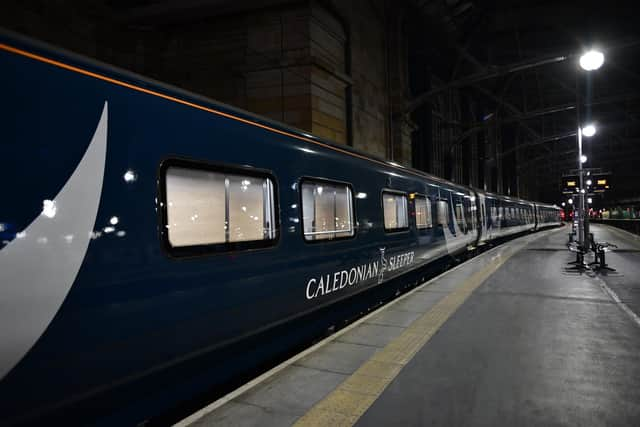

Such services were planned when the tunnel opened in 1994, with a dedicated fleet, named Nightstar, built, and a Eurostar train coming to Glasgow to test depot maintenance facilities.
However, the plans were ditched in 1997 and the Nightstar trains were sold to Canada.
Another operator, Midnight Trains, abandoned plans for Edinburgh-Paris trains two years ago.
The Scottish Government nationalised Caledonian Sleeper three years ago when ministers terminated their contract with operator Serco after refusing to provide extra funding it had sought to keep the service running.
The SNP manifesto stated: “As many people look for options to reduce their use of air travel, we will commission a feasibility study to examine potential options for a Caledonian Sleeper service from Scotland to the continent via the Euro Tunnel.
“Such as service was envisaged in the original proposals for the Channel Tunnel and are worthy of consideration still.”
The Scottish Conservatives had pledged to re-privatise the service, while the Scottish Greens said it would cap the fares.
Transport Scotland said a working group involving Caledonian Sleeper and its parent body Scottish Rail Holdings had been established “to investigate direct routes between Scotland and Europe on the Caledonian Sleeper”.
It said a “high-level feasibility study” would explore how such a service could operate, with the group expected to report to ministers later this year.
Launching a service could be very expensive since the new Caledonian Sleeper fleet introduced in 2019 cost £150 million alone.
It would also need “paths” on the busy east or west coast main lines, although capacity in the tunnel is not seen as an issue.
However, it is understood that there is sufficient space at the Polmadie depot in Glasgow to maintain any new fleet.
That is in contrast to Virgin’s plans to introduce London-Paris/Brussels/Amsterdam trains by 2030 to compete with Eurostar.
The project is being hampered by a dispute over whether the only depot in London capable of handling such trains, which is used by Eurostar, has enough space for more carriages.
Cabinet Secretary for Economy, Tourism and Transport, Stephen Flynn said: “We committed to exploring the potential for a direct Caledonian Sleeper service to mainland Europe.
“The establishment of this working group marks an important first step in delivering that commitment and will help ensure the feasibility study is informed by the expertise of our rail partners.
“This is an early-stage exercise and the study will focus on understanding the practical, technical and commercial considerations involved.
“The findings will provide an evidence base to inform any future decisions.”
France is Scotland’s fifth biggest international tourism market with some 250,000 visits a year.
The Sleeper operates every night except Saturdays between Edinburgh, Glasgow, Aberdeen, Fort William, Inverness and London, with two separate trains serving the lowland and highland routes and intermediate stations in Scotland.
Sleeper historian David Meara said: “Setting up a working group to produce a feasibility study doesn’t mean that we shall see through sleeper trains to the Continent happening any time soon, but it shows that the Scottish Government are taking the idea seriously.
“In the 1990s, there were serious plans to introduce Nightstar trains from destinations in Britain, including Glasgow, running to Paris and Brussels, an overnight sleeper service using the Channel Tunnel with brand new sleeping cars.
“However because of delays, rising costs and the competition from budget airlines, the project was shelved in 1997 and the coaches that had been built were sold to Canada.
“There were also issues about the lack of suitably powerful locomotives, and the cost of installing security systems at stations to process international passengers.
“It's encouraging the concept is being looked at again, especially as the travelling public have increasingly fallen out of love with air travel, and rail travel is very much in favour.
“The success of the Caledonian Sleeper is an incentive to extend the service to the Continent if the various practical and logistical problems can be solved.
“There is an undoubted attraction for those living in Scotland with the concept of a seamless journey from say Glasgow to Paris, with a large part of the journey being covered overnight, so that your save a day’s travel.”
Comments
Want to join the conversation? Please or to comment on this article.