
CalMac's biggest ferry boost in its 175-year history ahead in 2026

Operator says the positive impact of three new large vessels “cannot be understated”
The biggest boost to CalMac’s fleet in its 175-year history will be among the most significant - and keenly-awaited - transport developments in Scotland in 2026.
The scheduled arrival of a unprecedented three large new ferries in a single year is expected to come as work accelerates on the massive A9 road dualling project.
Britain’s biggest ferry operator is due to receive the new vessels for its Arran and Islay routes, which will help rejuvenate its ageing fleet, and, crucially, provide much-needed additional resilience when things go wrong on its west coast network.
However, all three were scheduled to be delivered in 2025 and further delays were announced in December.
The first, Isle of Islay, is due to reach Scotland early in the New Year from the Turkish shipyard where it is being finished, which will be followed by several weeks of berthing and other trials before it enters service on the route between Kennacraig in Kintyre and Port Askaig in Islay.
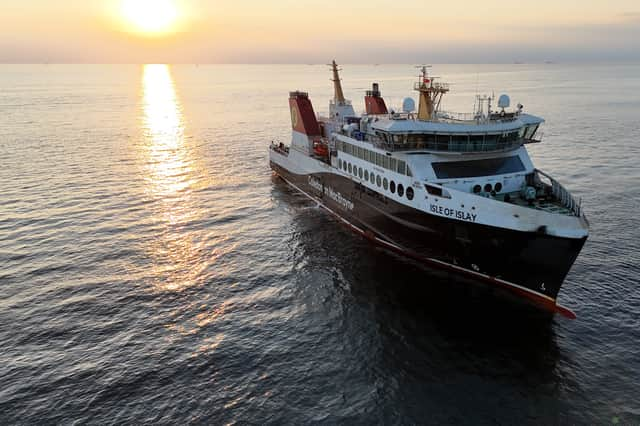

The ferry, which can carry 450 passengers and 100 cars or 14 lorries, is running more than a year late because of supply problems and shipyard staff being redeployed to assist after a major earthquake. Final inspections are scheduled for next week.
It is due to be followed by sister vessel Loch Indaal six months later, which is earmarked for the same route.
Meanwhile, a significantly more delayed ferry, Glen Rosa, is scheduled to be finally completed at the Scottish Government-owned Ferguson Marine shipyard in Port Glasgow by December - now eight-and-a-half years late.

Capable of accommodating 850 passengers and 127 cars or 16 lorries, it has been plagued by design and other problems that also beset its twin, Glen Sannox, which entered service in January between Troon in South Ayrshire and Brodick in Arran. Glen Rosa is also due to operate on that route.
CalMac said the new ferries “should mark the point where communities will see improvements in how we deliver for them.”
Chief operating officer Diane Burke told The Scotsman: "Welcoming three new major vessels into service in a single year would be a first in our 175-year history, and the positive effect this new tonnage will have cannot be understated.
"Each new vessel not only greatly enhances service provision on the route she serves, but also improves our ability to improve service resilience on all major vessel routes by giving us more flexibility in how we deploy the entire fleet.”
Islanders on Islay said the new ferries would be “hugely welcome” but initially only be able operate from only one of its two ports.
Jim Porteous, secretary of the Islay Community Council Ferry Committee, said: “A lot of damage has been caused to our service for the past few years by service disruptions and inadequate capacity.
“Although the new vessels with their increased capacity will be hugely welcome, it will take some time to rebuild confidence and increase traffic volumes.
“The timing of their entry to service is still in question and the funding necessary to develop Port Ellen to accommodate these vessels has not yet been signed off.
“We have fingers crossed on this as the island’s road network is in a sorry state and could not cope with all the commercial heavy lorry traffic being handled via only Port Askaig.

“If the funding is approved, it will take at least two years to complete the planned Port Ellen development.”
Scottish Government firm port and ferry-owning firm Caledonian Maritime Assets Limited said funding approval for the work was expected by March following the successful completion of ground investigations for a new ferry terminal at Port Ellen, but it was unable to provide a completion date.
Elsewhere, roads will be a major focus with the construction of the fourth of 11 sections of the A9 dualling project due to get underway between the Tay Crossing north of Dunkeld and Ballinluig.
Completion of one of the biggest schemes in Scottish history has already been delayed a decade to 2035, but it faces new uncertainty because ministers are expected to reject private funding for part of the £3.7 billion upgrade, as The Scotsman revealed in December.
A decision is due to be announced in the Scottish Budget on January 13 followed by further details on the progress of the Perth-Inverness scheme in a statement from Transport Secretary Fiona Hyslop.
Transport Scotland said it was also assessing the “most suitable” way to fund dualling of the only section of the A96 between Inverness and Aberdeen to be approved, between the Highland capital and Nairn, so that a “timetable for progress can then be set in line with available budgets”.
The Scottish Conservatives are likely to continue to press ministers in the run up to May’s Holyrood elections over what they see as slow progress over the A96 - which the SNP had pledged to fully dual by 2030 - and upgrading other major roads.

Transport Scotland has indicated a public inquiry might be required into plans for a rockfall shelter to protect the A83 from landslides near the Rest and Be Thankful pass in Argyll if objections are not withdrawn.
But there should be good news for motorway drivers in Glasgow in the autumn when the eastbound carriageway of the M8 is due to fully re-open “subject to no further unforeseen challenges”, following extended repairs to the Woodside Viaduct where four lanes have been narrowed to two since 2021.
The westbound carriageway is due to follow suit in 2027, but completion of the project has been put back several times because of its complexity, and it remains to be seen whether the road will just fill back up with extra traffic.

A long-awaited year-long trial of bus fares capped at £2 is scheduled to get underway across the Highlands and Islands, although the start date has yet to be announced.
Originally recommended as part of the “Fair Fares” review under the SNP-Scottish Greens’ power-sharing deal, the proposal was shelved in January 2025 due to lack of money and opposition from bus operators but then reinstated a week later as part of the Greens supporting the Scottish Budget.
On the railways, new trains to replace ScotRail’s ageing inter-city fleet are due to be announced “early in the New Year”, although they are likely to be second hand trains from south of the Border.
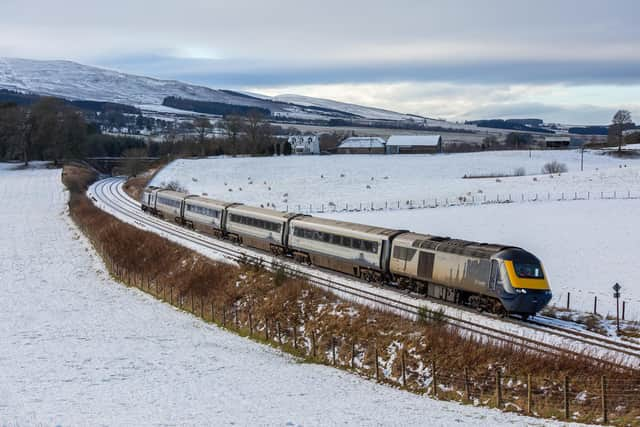
A fatal accident inquiry into the deaths of three people in a derailment at Carmont, near Stonehaven, in 2020 which involved one of the trains, is scheduled to start on January 26 and last four weeks.
The Glasgow Subway’s new trains are due to go driverless in the second half of the year - making them the first in Britain to operate with no staff routinely aboard.
In Edinburgh, traffic restrictions are due to be lifted from North Bridge in the spring, with the refurbishment project expected to be completed “later in the summer” after eight years, according to the city council.
The £86 million overhaul has taken four times as long and cost four times as much as original estimates because the 1879 link between Old and New Towns was in a far worse condition than expected.

Meantime, councillors will be considering the huge public response to plans for a new north-south tram line comprising nearly 11,500 submissions, while city council officials continue to explore how to fund it.
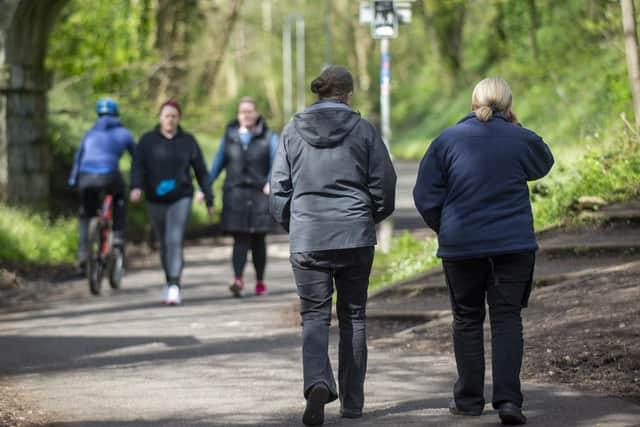
It’s likely that many of the responses will be over the contentious potential use of the Roseburn Path - a former railway line that’s been a walking and cycling route for decades - for the route.
In Glasgow, the city council said 2026 would be a “very significant year” for the Avenues programme - upgrading routes into the city centre to boost walking, cycling and wheeling, and create more attractive public space.
Seven of them are due to be finished, marking the completion of two-thirds of the scheme.
Comments
Want to join the conversation? Please or to comment on this article.