
Biggest change to Edinburgh and Glasgow air routes for 70 years unveiled in 'significant milestone'

Three-month consultation launched to shorten flights and cut emissions
Long-awaited proposals that could radically alter flight paths at Scotland’s two busiest airports were unveiled on Monday in the biggest changes to their airspace since the 1950s.
Details of the planned changes to enable aircraft to fly more direct routes and cut emissions and noise at Edinburgh Airport and Glasgow Airport come two years later than planned as part of the first stage of a major scheme to redraw airspace across the UK.
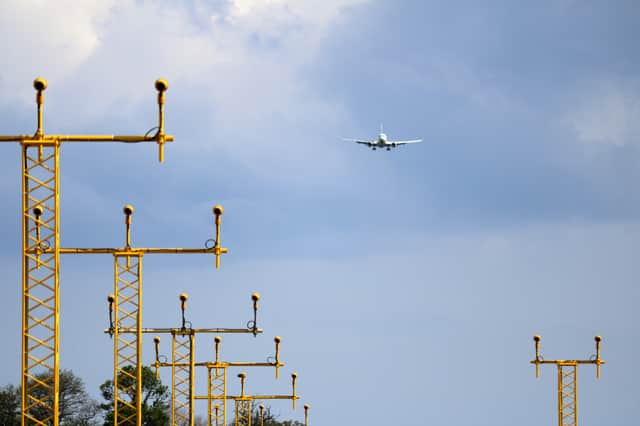

The project was triggered by the UK Government in 2019 by an “unacceptable” level of delays to a large proportion of flights the previous year. One in three flights are predicted to run 30 minutes late by 2030 unless action is taken.
More efficient routing is possible because of technological improvements such as navigation.
Gain full access to in-depth reporting, expert analysis, and exclusive stories that matter to Scotland and beyond. From just £6.99, our subscription packages are designed to bring you trusted, high-quality journalism with no distractions.
👉 Explore our subscription options and support quality journalism in Scotland
The two airports will embark on three months of consultation until January in the Scottish Airspace Modernisation project along with air traffic control firm Nats.
The airports will set out planned changes to flight paths up to 7,000ft, with Nats’ proposals affecting aircraft flying up to 25,500ft. The firm controls airspace across the northern half of the UK from Prestwick in South Ayrshire.
The Scotsman revealed three years ago that changes could include include a new shorter route between Edinburgh and London’s airports via the east coast rather than the current path over Manchester, by directing aircraft along the Forth.
Consultation on Edinburgh’s plans was originally due to start late in 2023 and any changes implemented by now. Glasgow’s consultation had been scheduled for the first half of last year.
However, they were delayed in part by Edinburgh’s plan for its consultation being rejected by the Civil Aviation Authority (CAA) last year.
The airport said it had to ensure its consultation dovetailed with those by Glasgow and Nats, such as by calculating aircraft noise in the same way.
The setback followed separate plans by the airport to introduce new flight paths being refused by the CAA in 2018.
The Edinburgh consultation summary document states: “The noise assessment shows an overall reduction in total adverse effects on health and quality of life from noise.”
But it added: “It is important to note that in some areas the proposed option changes where aircraft fly compared to today.
“There could therefore be local positive benefits and negative impacts to some areas surrounding Edinburgh Airport.”
These statements were also included in the Glasgow Airport consultation.
The Edinburgh consultation added: “There is a mix of positive and negative effects with respect to potential noise impact on designated tranquillity areas such as regional and country parks.
“Overall, we believe the impact on tranquillity is negligible, although we recognise that individual perception may differ depending on whether their area of interest is overflown more or less.”
One of the Glasgow consultation documents stated: “No significant change to the perception of tranquillity.”
The Edinburgh document also stated: “The proposed option is not expected to increase capacity although the reconfiguration of our routes does mean more routes going out over the North Sea and that some of our flights will avoid pre-departure delays currently resulting from congestion in the network over the north of England.”
The airport said interactive noise maps had been created to enable residents to see how they would be impacted by entering their address.
Local MP Christine Jardine said delays to be Edinburgh Airport process had been “intolerable” for those living nearby.
The Liberal Democrat member for Edinburgh West said: “Too many of my constituents will be feeling a frustrating sense of déjà vu as they take part in what will be their third consultation on this issue in eight years.
“I am sure it is frustrating for the airport too, but for residents in the current flight path it is intolerable they have had so many false starts with this exercise.
“Ensuring the UK airspace is well managed is of course vital for economic growth, and with a third runway at Heathrow now likely to go ahead, it just adds to the pressure to get this right.
“But it is also important for residents that we have no hiccups this time and we can make progress towards flight paths that are safe, efficient and cause as little disruption to residents’ life as possible.”
However, UK aviation, maritime and decarbonisation minister Keir Mather claimed the process was being accelerated.
He said: “We are fast-tracking airspace modernisation to deliver more reliable, efficient, and greener flights, while giving passengers greater choice and a better experience.
“Airports across the UK will be following in Scotland’s footsteps as we drive forward our plans for a modern aviation sector to support jobs, grow the economy and improve passenger experiences.”
The changes are expected to reduce emissions by 18,000 tonnes of carbon dioxide a year, the equivalent of the energy used by some 5,000 households.
Aircraft would fly 91,000 fewer miles a year, or 3.5 times round the world.
There is also expected to be a 6 per cent reduction in aircraft being held before landing - more than 7,000 flights a year.
The area to be covered by the changes is some 23,500 square miles (61,000 sq km) and used by more than 200,000 flights a year.

The planned changes follow alterations to flying above 25,500ft which were introduced in Scotland four years ago, in which airlines were permitted to choose their own routes in what’s classed as free route airspace.
Edinburgh Airport chief executive Gordon Dewar: “The modernisation of our skies has been needed for some time, and the proposals we’re presenting today have been shaped through our engagement and discussion with our local communities and our partners across various industries and sectors.
“We know this is a complex topic, and the consultation period will allow us to continue that engagement and explain the potential benefits for communities, the airport, and the environment, while maintaining an open dialogue.”
Glasgow Airport managing director Mark Beveridge said: “We’ve collaborated with a range of stakeholders to shape these proposals and are pleased to now present them publicly, inviting further input from our communities, their representatives, and other interested parties.
“Our proposals aim to reduce the total adverse effects of noise from aircraft, improve capacity and minimise delays, and lower emissions per flight through more direct routing.”
Mark Swan, Head of the UK Government’s Airspace Change Organising Group, which is co-ordinating the process, said: “This consultation marks a significant milestone in the national programme of airspace change, with Scotland at the vanguard of the programme.
“We have worked closely with Edinburgh, Glasgow, and Nats to integrate their proposals into one vision for modernised airspace.
“Airspace is critical national infrastructure which drives the economy by enabling tourism and business.
“Upgrades will enhance the efficiency of this infrastructure, to reduce passenger delays, lower emissions per flight, and prepare for potential future growth.”
Nats head of operations development Lee Boulton said: “Above 7,000ft, Scottish airspace is among the busiest in the UK, handling over 40 per cent of UK traffic.
“With demand expected to rise over the next decade, airspace modernisation will help ensure the network can meet future needs by enabling more direct routes while reducing emissions per flight.”
Comments
Want to join the conversation? Please or to comment on this article.