
The Modern Mary Shelley - Jenni Fagan shines light in dark places in The Delusions and Frankenstein
The Scottish author’s latest novel takes us into the afterlife, and in a modern take on Frankenstein she reinvents the creature.
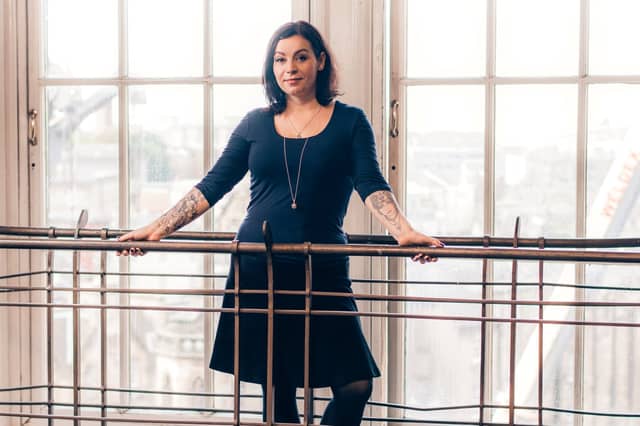

“Culture has got quite beige, quite boring,” says award-winning novelist and poet Jenni Fagan who is anything but. Sitting in a cafe in Leith on a frosty spring morning she says, “I was speaking to a publicist in London recently and they were asking why has literature got so all the same and I said because you keep publishing the same stories and the same people.”
Fagan is the opposite of beige; she’s a one-off, producing work of such originality that it has defied categorisation and earned its own descriptor - Fagan-esque.
“I came out of the ether in a way. And maybe that's where I write into. I've been writing since I was seven years old. It's my oldest baby and has travelled with me over 40 years.”
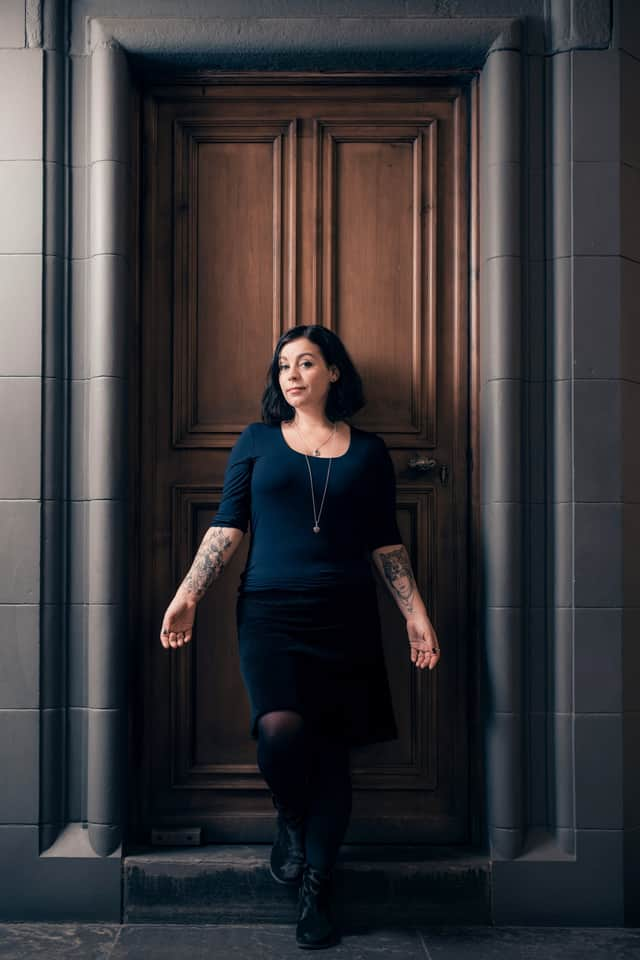
Born in a Scottish psychiatric hospital in 1977, Fagan had three different legal names by the time she was five, grew up in the Scottish care system, living in 29 different placements, and after leaving school with no qualifications moved into homeless accommodation at 16, where she borrowed a typewriter and wrote her life story.
At 48, she’s now the author of five works of fiction, a memoir, screenplays, eight volumes of poetry and is launching her fifth novel, The Delusions, this month. She is a Doctor of Philosophy, a Royal Society of Literature Fellow and a mother, settled in Edinburgh with her son and their cat Belle.
Stopping for a coffee is a brief moment of respite in Fagan’s busy life. Eloquent and funny, she’s just had major surgery, her son’s school year is busy and she’s renovating her home as well as appearing at book launch events. Someone who always has several projects on the go, she’s already working on another two books - a retelling of Frankenstein, along with the sequel to her first novel, The Panopticon, as well as a screenplay for the six-part TV series version of Irvine Welsh’s The Blade Artist starring Robert Carlyle, and making a short film.
“I work on so many projects all the time, I’m constantly writing,” she says. “And I need to. I can't earn enough money from any one thing. There's a very real reason why there's not very many working class people writing great literature.”
Fagan made waves from the start with her 2012 debut, The Panopticon, which saw her selected as a Granta Best Young British Novelist. She was named Scottish Author of the Year for her second novel, The Sunlight Pilgrims (2016), while the third, Luckenbooth (2021), led The New York Times Book Review to announce her ‘The Patron Saint of Literary Street Urchins’. In 2022 she published Hex, a retelling of the North Berwick witch trials and a poetry collection, The Bone Library, written during her time as writer in residence at the former Dick Vet school in Edinburgh. Then in 2023 her memoir Ootlin won the Gordon Burn Prize and was longlisted for the Women's Prize for Non-Fiction.
The Delusions has already earned praise, including from Irvine Welsh who called it ‘brilliant, original, daring, a 1984 for the afterlife and a fabulous satire. It really makes you think about what it means to be human.’
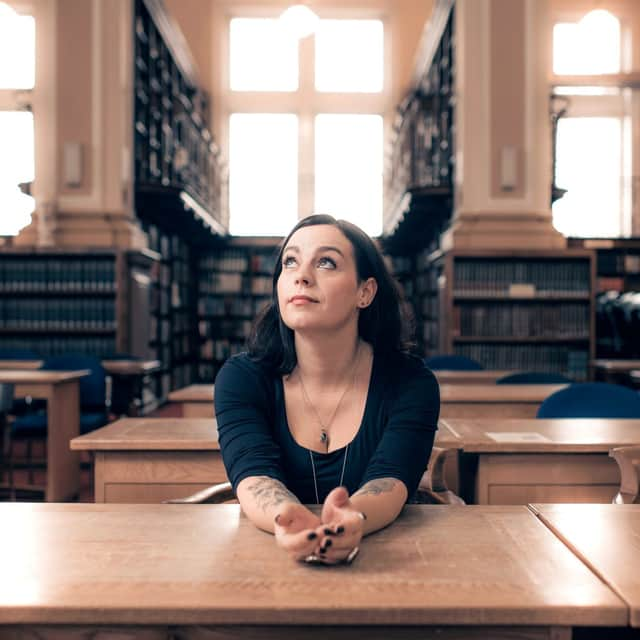
Set in the afterlife, The Delusions centres on Edi who has worked for 47 years in Admin, processing new arrivals who must follow a procedure of extracting their delusion then answer a questionnaire truthfully. As a tsunami of the dead arrives from Earth, rumours of a mass extinction event swirl and Edi hopes she will be there when the son she left behind as a child arrives.
Fagan reaches for the hardback, which she’s just received, delighted with the cover design featuring her late fluffy half-Maine Coon cat Bathshiva, the name shared by one of the main characters in the book. Spoiler alert, cats do well when they arrive in the afterlife, sailing through Admissions with fluffy heads held high, unlike the humans whose efforts to hang onto their delusions cover all kinds of behaviour from frantic to fiendish to funny and everything in between.
“Cats just don’t do delusion,” says Fagan. “Ever.”
The Delusions is Fagan’s response to the world we are living in where wars rage and climate crisis escalates, and ordinary people suffer while those responsible are immune.
“As a writer you have a chance to create a piece of work that allows you to explore things that are very difficult and complex in the world, and I think the structures society has been built upon are not all serving us at all. They’re difficult things to change and hold on to themselves.
“Every book I write is about individuals living within wider structures or situations, often completely out of their control. I'm interested in the people at the centre of that.
“I grew up in the local authority care system, was raised by government policy and the things involved in devising our care system, health system, schooling system, so I've been studying government and the very real impact on individuals all of my life. There’s never been a point where I wasn't aware that somebody from the government was coming and was going to have an opinion or might take me somewhere.”

The Delusions came out of Fagan's assessment of the repercussions of the Covid years, the effects of which she argues are still with us.
“When we were all put into lockdown, it felt very familiar to me, that external bodies could flex their wings and in some ways see how far they could go. It was an interesting experiment - aside from the medical side of the virus - in complicity and what state control can achieve, how societies are told that they can or cannot function within those systems. And I think we are still in the belly of the outcome of that. Some of the things we see - a real disregard for individuals and what people want from bodies all over the world is fascinating.
“We have the war in Ukraine, Iran, there’s the genocide in Gaza, Sudan is in crisis, America's loopy, Britain has the rise of the far right. There’s ‘what if we kill you?, what if we drop the nuclear bomb?, what if this virus kills everybody?' To rule society by fear is very effective.
“I wanted to explore what happens after all of this. If we are living through a mass extinction or beset by the very real fear of delusional global leaders placing the world, its citizens and animals in very real peril, what happens afterwards?”
“I wanted to engage with the theme of delusion. I’m fascinated by how people in ordinary and gargantuan ways can function through their entire lives with delusion and how we can be expected to be complicit.
“I thought what happens if everybody one day has to face exactly who and what they are and every single thing they've ever done. And they are not allowed their opioid comfort of delusion.”
In Admissions there are some tricky customers, the entitled who are immune to the consequences of their actions.
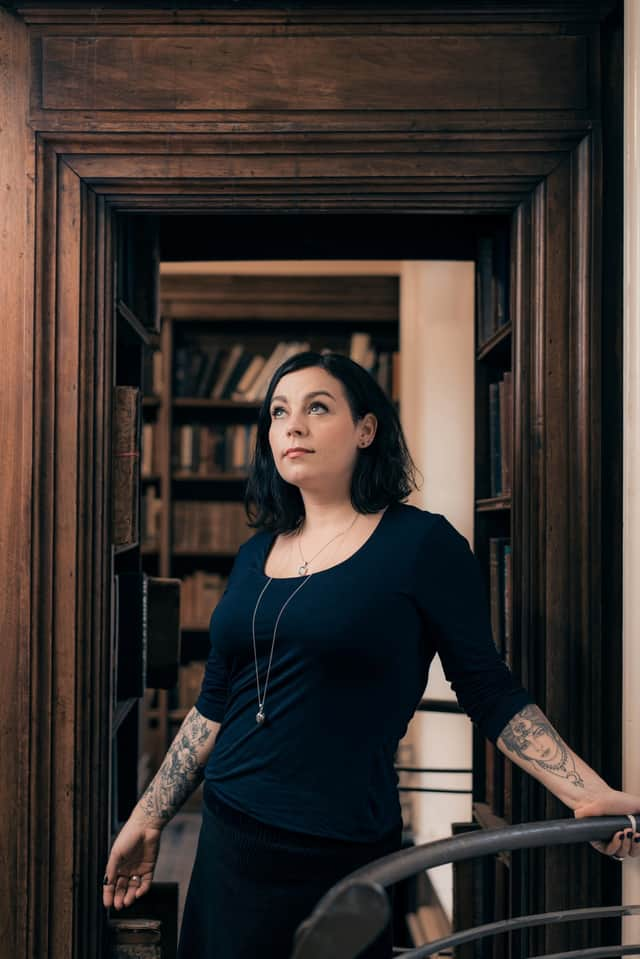
“We're seeing the spectacle of the Epstein files and former Prince Andrew but what we don't see is accountability. When the circus is in town, all you see is the circus. I want to see what actually happens when reality intervenes with delusional, powerful people. The Delusions is somewhere that happens, whether you're Betty that works in the knitting shop or the orange man that has his finger on the button.”
“What if the only currency you have is your soul? You arrive in life with just that, you're going to leave with just that, you're not taking the house, the cat or the car. The only thing that genuinely means something is the journey and how you took it. What kind of condition is your soul in? Have you looked at it lately?”
“I always knew that the only thing you own is your soul, because I never owned anything else. I didn't own my name, didn't have parents, family, a house that was always going to be there, I've almost never had financial stability. So even as a young person, I wasn’t looking at people’s clothes or car or house, I was watching that quality that makes them them.
“We don't use words like evil anymore so much. They say, oh, that's a war. The actual reality is little girls have taken 150 bullets and you’re creating bombs that melt people. Tell me that's not evil. I actually think it is a social obligation at this point to call out what we see.”
If all this sounds stark or brutal, it is, but Fagan’s Delusions is also a world of beauty and humour. In the afterlife, inhabitants enjoy the overview effect that astronauts experience looking back at Earth, spending their evenings stargazing, the Admins drinking in bars and hoodwinking HR to have affairs, sneak out into the cosmos and take day trips back to Earth.
“I wanted to create this utterly beautiful experience where you're surrounded by the stunning cosmos and can look at your own planet and say, ‘we have absolutely everything we need. How silly to waste that.”
“And part of the point of The Delusions is what would you be willing to do for those you love at the doors of eternity? What is the thing that actually is important and human? And it's love. We're not really there for any other reason.”
As ever, Fagan’s main characters are witty and sharp, and the individuals populating The Delusions range from the ordinary to the exotic, from elderly Scottish couples calling out shady politicians to the likes of Eva Perón and Galileo.
“If your characters list is everyone who's ever lived and died, you've lots of people to play with, and I wanted to have famous deaths that were fascinating to me,” she says, amid the lively chatter and clatter recounting tales of the abduction of Peron’s preserved body, Rasputin’s pickled penis, Einstein’s brain stored in jars and Jeremy Bentham’s skeleton, dressed in his clothes and displayed at University College in London.
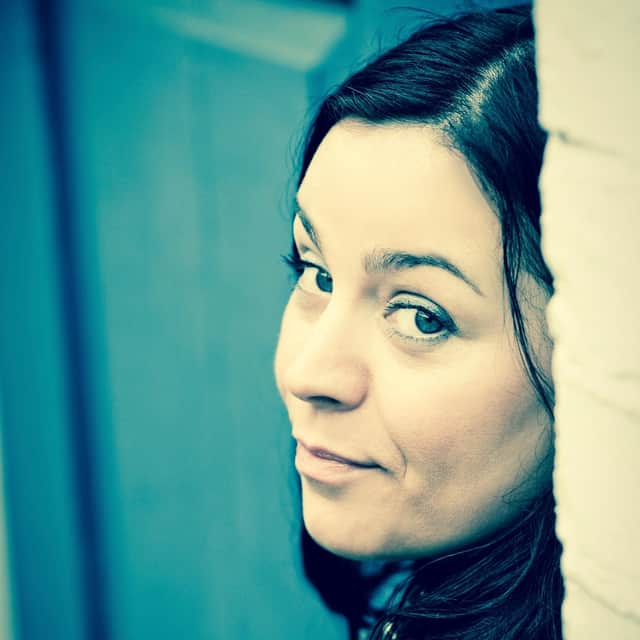
All of this talk of body parts leads us back to her days as poet in residence at the Dick Vet Bone LIbrary in Edinburgh, when she dragged boxes of leftover dissection bones down from an attic and learned how to engrave her words onto them.
“It’s really smelly so you have to wear a full mask. The guys looking after the building were very kind and said you can use our workshop but after a couple of days they said ‘it smells so bad we can’t eat our sandwiches’ and I ended up engraving outside, sometimes in the snow. So they gave me a little shed. I do a little bit at home now - outside!” she laughs, “ but I’d love to do more.”
For now she’s got her hands full, breathing life into the bones of the Creature as she finishes her modern adaptation of Mary Shelley’s Frankenstein, entitled The Fall of Frankenstein for Polygon’s new Dark Futures series. Scheduled for release later this year the series is a follow up to the publisher’s Darkland Tales series which saw authors highlight stories from Scotland's history, myth and legend, with Fagan’s Hex, sitting alongside Denise Mina’s Rizzio and Val McDermid’s Queen Macbeth.
“The Fall of Frankenstein is set in East Lothian and Edinburgh in the near-future and it's very dark, probably my darkest comedy. I’m enjoying it. Humour’s really important to me. And The Delusions, you know, these guys are funny people. My characters are always funny people.
“I like funny, flawed, brilliant, broken, ordinary people. That's what interests me. Sitting on a bus next to somebody I don't know and chatting, love that. I get asked a lot, why do you write about those kinds of people and I say, well, I am one of those kinds of people.”
“I’m having a very Mary Shelley year this year. I'm really enmeshed with her just now,” she says, fresh from writing a foreword for a new edition of Shelley’s Frankenstein.
“Like her, my work engages with the dead, gnosis, the life force, elemental nature, sci-fi/futurism and original invention, and it pushes people into dark places and doesn't compromise.”
Just as the 18-year-old Mary Shelley wasn’t acknowledged as the author of her debut novel until several years after it was published, people assuming it was the work of her husband the poet Percy Bysshe Shelley, Fagan found from the start that people struggled to contextualise her work.
“For the first 12 years after Frankenstein was published nobody said she'd written it. They didn't accept a woman as the author of this monster. Eventually her father, William Godwin, put the book in the window of his bookshop and said it's my daughter. Initially she was nameless, like the Creature. I like that writers can be judged for their minds.
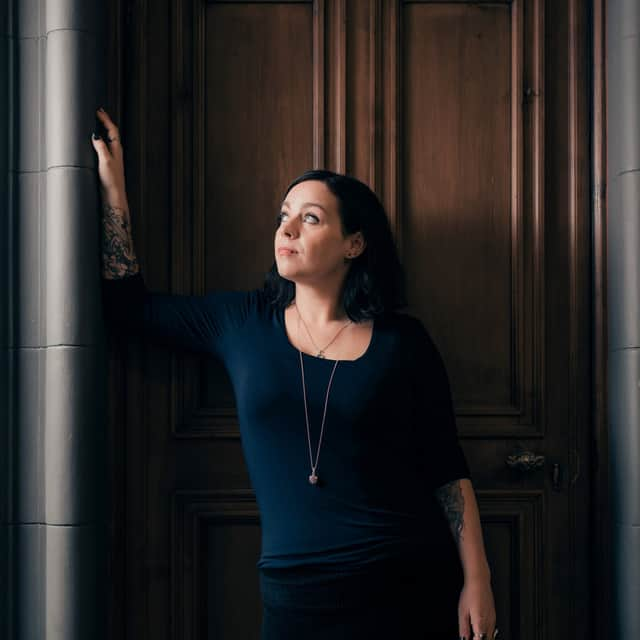
“I write literary fiction that's quite edgy, it's got things to say, and sometimes it takes a little while for that commercially to find its spot. And I've been very reticent about speaking in the media because I'm quite shy and don't play the game. And I write existential philosophy…”
“I didn't engage with the media for the first 14 years of my career because all they wanted to do was ‘the poor child from care’. They were obsessed in ways that undermine me as an artist and as a writer. I want to be known for the work. I don't play the game, because I am not interested in the game. I'm deadly serious about what I'm doing.
“For me the energy goes to the work and I have always wanted the work to speak for itself. Every author becomes a myth in the end. Every author disappears. We just become one of the characters in our books eventually. And I'm completely down for that.”
But recently Fagan has chosen to be more visible and engage more, not just let her words do the talking. She will appear in St Andrew’s in April and at the Edinburgh International Book Festival and Hay Festival this summer.
“I've chosen with this book to do more interviews and engage a bit more because I think visibility is important and that conversation is important. Within the literary world, I'm a minority of a minority; you don't meet many kids who grew up the way I did.”
With her unblinking view of the world and the people in it, surely Fagan can’t have many delusions, but she’s not one to claim she has rid herself of them all.
“No. Some of them are quite comforting,” she smiles. But I'm a person who sees very clearly. Some people are uncomfortable with dark subjects or trauma and I'm not. I've been raised in variations of it all my life. I know how to navigate that.
“And actually, if we can't inspect our monsters, how can we grow daffodils?”
The Delusions by Jenni Fagan is published by Hutchinson Heinemann, hardback and eBook, £18.99.
Jenni Fagan will appear on The Delusions book tour on 3 April, 2026 at Topping & Company Booksellers of St Andrews, 7 Greyfriars Garden, St Andrews, Fife KY16 9HG, tickets from www.toppingbooks.co.uk/events/st-andrews/Jenni-Fagan-Delusions/
For details of further appearances see www.jennifagan.com/events
Comments
Want to join the conversation? Please or to comment on this article.