
The 'bewildering' moment inside Scottish Labour as Sarwar's bombshell dropped
There was no plot behind Anas Sarwar’s move into the new Labour government - but look closely enough and the signs were there, writes Alan Roden


Jackie Baillie was fielding questions from disgruntled party members on a Zoom call when the news broke.
The Scottish Labour deputy leader was clearly distracted, informing members that her phone wouldn’t stop ringing as the bombshell announcement that Anas Sarwar was heading to the House of Lords filtered through.
The various Whatsapp groups with MPs and MSPs were blowing up. Hardly anyone was aware this was coming.
The indefatigable Baillie – one of the few who was probably in the know – then had to spend around two hours on Zoom as part of an ongoing post-election review, listening to members who wanted to vent their spleen about the campaign.
It was, however, perhaps preferable to answering the calls from every political editor in Scotland desperate to ‘stand up’ the rumours.

It was the first major media leak from the Burnham administration, which earlier in the week had managed to blindside Westminster watchers with the appointment of John Healey as Chancellor.
The most common reaction from MPs and MSPs was bewilderment.
While it was inevitable that Sarwar would stand down as leader at some point in the months ahead, it hadn’t been expected quite so soon – and certainly not before the party’s post-election review was concluded.
There was anger too – not that Sarwar was heading to the Lords (that too felt inevitable at some point), but because it would trigger a leadership battle.
Scottish Labour is rarely at its best when embroiled in one of its many internal contests.
The circle of trust around Sarwar was tiny, but this wasn’t a secret that anyone had kept for long.
The Westminster commentariat, who so frequently misunderstand Scottish politics, leapt to the conclusion that this was Sarwar’s “reward” for calling on Keir Starmer to resign last February.
At the time, there had been suggestions that Burnham would follow suit, yet he remained silent.
The truth is there was no co-ordinated plot; Sawar took that decision because he was fed up with doorstep conversations which wouldn’t get beyond the anger towards Starmer.
The idea of becoming a trade minister was raised, I understand, only days ago. This was nothing to do with what happened in February.
The roots, however, do go back further.
In 2010, Sarwar was elected for the first time to the Commons as MP for Glasgow Central at the age of 27.
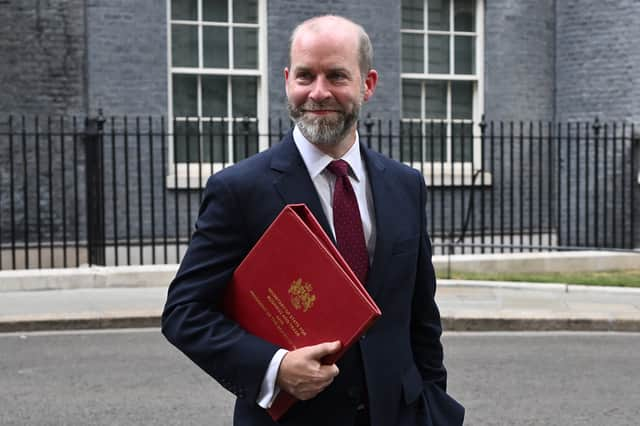
At the same time, 29-year-old Johnny Reynolds was elected for the first time in Stalybridge and Hyde near Manchester.
In what was a bruising result for Labour, heralding 14 years of Conservative rule, newbie MPs forged lasting friendships.
Sarwar was ousted after just one term in the SNP’s landslide victory in 2015, but Reynolds went on to become a shadow minister and ultimately the country’s Business Secretary under Starmer.
Once in government, he was regularly in Scotland alongside Sarwar to engage with businesses.
He made sure to attend Scottish Labour gatherings, chatting away long into the night with MSPs and MPs.
Sarwar was determined to position Labour as a credible economic alternative to the Scottish Government, mirroring the work undertaken by Alex Salmond in the SNP ahead of 2007.
He was frustrated by what he saw as a “social policy parliament” in Edinburgh, rather than an “economic policy parliament”.
The party’s business days at conference time were major events, with resource piled in to ensure there was genuine engagement – not just window dressing.
Ever-present on such occasions was Reynolds, who after being demoted to party whip by Starmer following a reshuffle, is now back in the job he loved – in charge of a beefed-up business and trade department under Burnham.
So when the role of trade minister was put to Sarwar in recent weeks, working with Reynolds, it was an opportunity he couldn’t refuse.
Burnham has such a tight-knit team that it is impossible to know when the prime minister decided he was going to make the offer.
But in the weeks running up to his ascent to power, Sarwar was one of only a handful of Scottish politicians he listened to for advice.
The pair go back a long way – it was Sarwar who ran Burnham’s previous failed leadership campaign in Scotland.
And the outgoing Scottish Labour leader was fascinated with how the then-mayor of Greater Manchester had transformed his local economy.
He repeatedly told business leaders that planning applications in Manchester were granted quicker than in Glasgow – and asked why can’t that happen here?
There is also a telling line in Sarwar’s foreword to his party’s ‘business plan’ for the country. “If Scotland’s economy had grown at the same rate as the north west of England it would be £11.5 billion bigger.”
You can see why the idea of making him a minister appealed to Burnham.
The move does, however, leave Scottish Labour with a headache. Sarwar won’t be thanked by members for leaving the party to find its 11th leader since devolution.
The scene is now set for talk of Labour’s many ‘factions’ – amplified by a media desperate for briefings and counter-briefings – and inward-looking debates about how much autonomy Scottish Labour should have.
Yet the last few years have demonstrated how tied the fortunes of Scottish Labour are to the fortunes of the UK party – and no break-away attempt is going to change that.
The frontrunner to replace Sarwar, Michael Marra, is gaining early support with a push for unity.
His many backers believe he offers something different: rooted in the same community-based politics that drive Burnham.
The new prime minister has promised to have a respectful relationship with the SNP government, focused on conversation not confrontation.
Perhaps it’s time for the next Scottish Labour leader to do the same at Holyrood.
When he was Scottish Secretary, Edinburgh South MP Ian Murray – no fan of nationalism – made a concerted attempt to build a relationship with his SNP counterparts, delivering joint investment in local communities.
Voters want their governments to work together. And so too do businesses.
So in his new role as trade minister, Sarwar now has the same opportunity to demonstrate how the Burnham government can work constructively to deliver for Scotland’s economy.
It’s a job he will relish.
Alan Roden is co-founder of Quantum Communications and a former adviser to Anas Sarwar.
Comments
Want to join the conversation? Please or to comment on this article.